
Dive into the 13-slide analysis of Instagram’s pitch deck that secured $500,000 in seed funding from notable investors like Steve Chen and Jack Dorsey in 2010.
Building your own pitch deck?
Get expert guidance from the team behind $2B+ in investor interest.
Instagram’s origin story began in 2010 when Kevin Systrom, a Stanford graduate with experience at Google and Nextstop, was building a location-based check-in app called Burbn. However, Systrom and his co-founder Mike Krieger quickly recognised that users were gravitating towards the photo-sharing feature rather than the location functionality. This pivot moment proved crucial—they stripped away everything except the photo-sharing core, creating what would become one of the most successful social media platforms in history. This kind of strategic decision-making is often enhanced through professional pitch deck development, which can help entrepreneurs refine their vision.
The app launched on October 6, 2010, exclusively for iOS, and the growth was nothing short of explosive. Within just two weeks, Instagram had acquired 100,000 users, and within two months, they reached the milestone of 1 million users. This viral adoption was driven by Instagram’s unique combination of beautiful filters that made any photo look professional and seamless sharing capabilities that connected users across multiple platforms.
The rapid user growth created both opportunities and challenges. Server costs were exploding as photo uploads scaled exponentially, and the two-person team needed resources to expand to Android and build their infrastructure. This pressure prompted the seed funding round, where Systrom leveraged the company’s incredible traction metrics to attract high-profile angel investors including Twitter co-founder Jack Dorsey, early Facebook employee Chris Sacca, and YouTube co-founder Steve Chen.
The pitch deck was crafted post-launch, allowing the founders to lead with real data rather than projections. This approach proved highly effective, enabling them to raise $500,000 at a $5 million pre-money valuation. Just two years later, Facebook would acquire Instagram for $1 billion, making this seed round one of the most successful early-stage investments in Silicon Valley history and validating the power of mobile-first, visually-driven social platforms.
Instagram’s cover slide exemplifies the power of simplicity in pitch deck design, featuring just the iconic camera logo and the tagline “Photo-sharing for everyone.” This minimalist approach immediately communicates the product’s core value proposition whilst reflecting the clean, uncluttered aesthetic that would become Instagram’s signature design philosophy. The tagline positions Instagram as democratising photography, making professional-quality photo sharing accessible to any smartphone user rather than just photography enthusiasts.
The strategic choice to lead with “everyone” rather than targeting a specific demographic signals Instagram’s massive market ambition from day one. Unlike competitors who focused on photography purists or specific use cases, Instagram positioned itself as the universal solution for mobile photo sharing. This broad positioning would prove prescient, as Instagram’s user base would eventually span all age groups, geographies, and use cases from personal sharing to business marketing.
What investors see: A founding team that understands the importance of mass market appeal and brand simplicity. The cover slide suggests a product-first approach where the technology serves a clear, universal need rather than complex feature sets. This positioning indicates scalability potential and the ability to capture network effects across diverse user segments.
Instagram identifies a fundamental pain point in the fragmented digital landscape of 2010: photos were getting lost across multiple platforms including Facebook, Twitter, email, and various photo-sharing services. The slide effectively illustrates how users were forced to navigate different interfaces, formats, and audiences for each platform, creating friction in what should be a natural act of sharing memories. This fragmentation meant that photos often reached limited audiences or disappeared entirely in crowded social feeds.
The problem statement implicitly acknowledges the rise of smartphone photography whilst highlighting the gap between improved camera capabilities and sharing experiences. Users had better tools for capturing moments but lacked a dedicated, beautiful platform optimised for visual storytelling. This timing was crucial—Instagram recognised that mobile photography was evolving from functional documentation to creative expression, requiring a platform built specifically for this new behaviour.
What investors see: A team that has identified a genuine market inefficiency during a major technology transition. The problem validates the smartphone photography trend whilst positioning Instagram as the solution to platform fragmentation. This suggests both immediate user pain and a large addressable market as mobile adoption accelerates.
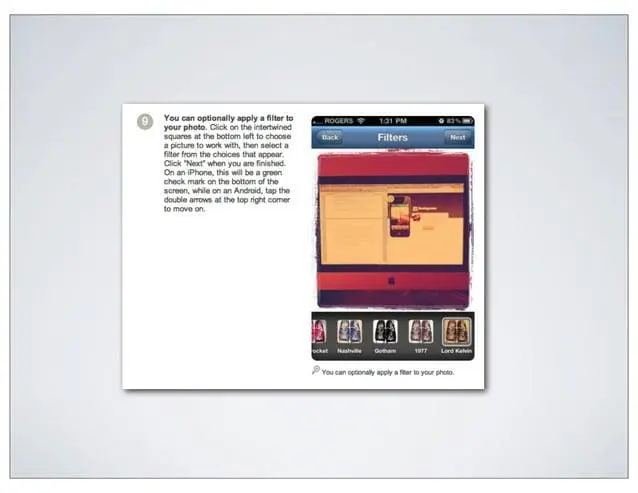
Instagram’s solution elegantly addresses the identified problem through a single, focused mobile application that transforms ordinary smartphone photos into visually compelling content. The slide showcases the app’s intuitive interface and signature filters, demonstrating how users can capture, enhance, and share photos in just a few taps. This streamlined workflow eliminates the complexity of multiple platforms whilst elevating the quality of mobile photography through carefully designed filters that mimic professional photography techniques.
The strategic focus on filters as a differentiator was particularly astute, as it addressed a core limitation of early smartphone cameras: poor image quality in various lighting conditions. By applying vintage-inspired filters that masked technical deficiencies whilst adding aesthetic appeal, Instagram turned every user into a potential artist. The solution also emphasises instant sharing across multiple platforms, positioning Instagram as the central hub for photo distribution rather than another walled garden.
What investors see: A product that creates immediate value through enhanced user experience rather than complex technology. The solution demonstrates product-market fit by solving a real problem with an elegant, differentiated approach. The focus on filters suggests potential viral mechanics and user engagement, critical factors for social platform success.
Instagram’s market opportunity slide captures the explosive growth of smartphone adoption and the corresponding increase in mobile photo creation, positioning the company at the intersection of two massive technology trends. The presentation likely includes data on iPhone sales growth, mobile internet usage, and the exponential increase in digital photo uploads, demonstrating that photo sharing was becoming a primary smartphone use case. This timing coincided with improved mobile cameras and data connectivity, creating the perfect storm for a mobile-first photo platform.
The slide also projects the potential for social media advertising revenue, recognising that visual content would become increasingly valuable for brand marketing. In 2010, display advertising was transitioning from desktop to mobile, and Instagram’s founders anticipated that photo-based advertising would command premium rates due to higher engagement levels. This foresight positioned Instagram not just as a social platform but as a future advertising powerhouse built around visual storytelling.
What investors see: A team that understands macro technology trends and can position their product within larger market shifts. The opportunity sizing demonstrates both immediate addressable market through smartphone users and future monetisation potential through advertising. This suggests scalability and multiple paths to significant returns.
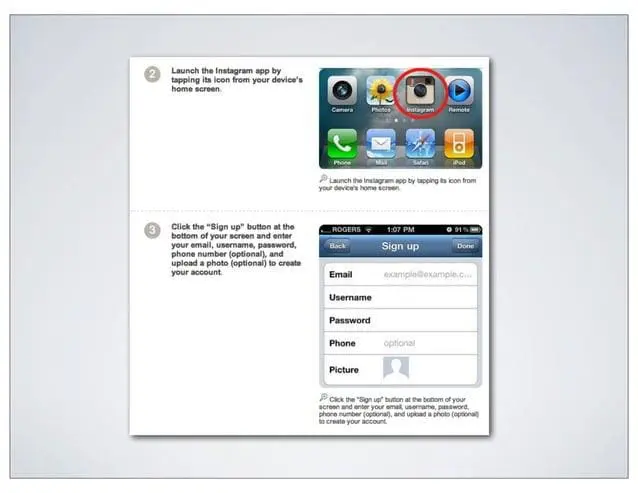
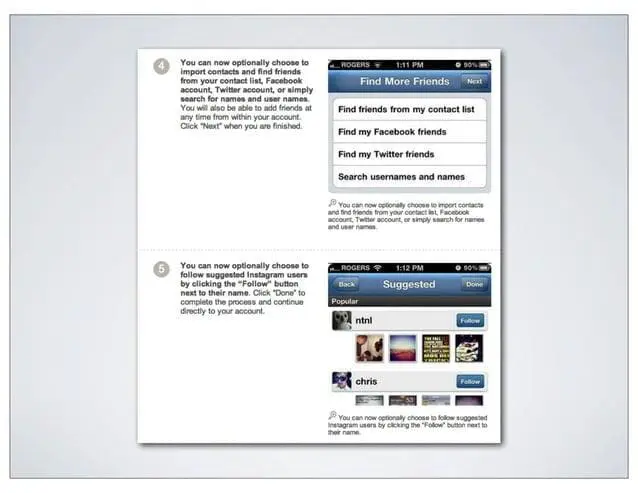
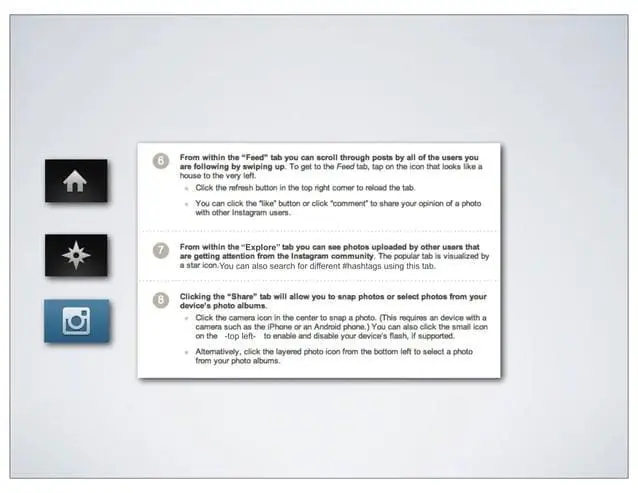
The product slide provides a detailed walkthrough of Instagram’s core user experience, showcasing the elegant simplicity that would become the app’s signature strength. The demonstration likely includes the step-by-step process from photo capture through filter application to final sharing, emphasising how complex photo editing is reduced to intuitive gestures and one-tap actions. This focus on user experience design reflects the founders’ understanding that social platforms succeed through ease of use rather than feature complexity.
The slide also highlights Instagram’s viral mechanics through features like follows, likes, and comments, demonstrating how the platform creates engagement loops that drive user retention and growth. The feed-based discovery system and social interactions create what would later be recognised as highly effective network effects, where each new user adds value for existing users. The presentation likely includes early data on user engagement metrics, showing how filters and social features drive repeated usage.
What investors see: A product built with deep understanding of mobile user behaviour and social dynamics. The emphasis on simplicity suggests scalability and broad appeal, whilst viral mechanics indicate potential for organic growth. This combination of user experience excellence and engagement design suggests sustainable competitive advantages.
Instagram’s business model slide outlines a freemium approach with clear monetisation pathways through advertising, specifically highlighting opportunities for photo sponsorships and brand integrations. The model acknowledges that the primary focus is user growth and engagement rather than immediate revenue generation, reflecting the social media playbook of building audience first and monetising later. This approach was well-validated by Facebook and Twitter’s success, giving investors confidence in the revenue potential.
The slide likely demonstrates how visual content creates premium advertising opportunities compared to text-based platforms, positioning Instagram to capture higher CPM rates due to increased user engagement with photo content. The model anticipates native advertising integration, where brand content appears naturally within user feeds, a concept that would later prove highly successful. This sophisticated understanding of digital advertising trends shows the founders’ strategic thinking beyond just product development.
What investors see: A business model aligned with proven social media monetisation strategies whilst offering differentiated value through visual content. The focus on audience building before monetisation shows strategic patience and understanding of network effect dynamics. This approach suggests potential for significant revenue scale once critical mass is achieved.
The traction slide represents Instagram’s strongest asset in the fundraising process, showcasing truly exceptional growth metrics that few startups can match. The data points—100,000 users within two weeks of launch and targeting 1 million users shortly after—demonstrate clear product-market fit and viral adoption patterns. Additional metrics likely include daily active users, photo uploads per day, and user retention rates, all showing sustained engagement rather than just initial download spikes.
The organic nature of this growth is particularly compelling, as Instagram achieved these numbers through App Store rankings and word-of-mouth sharing rather than paid acquisition. The growth trajectory suggests network effects are taking hold, where each new user increases the platform’s value for existing users. This viral coefficient indicates scalability potential and suggests the product addresses a genuine market need rather than manufactured demand through marketing spend.
What investors see: Undeniable evidence of exceptional product-market fit and massive market demand. The growth metrics de-risk the investment significantly, showing the product resonates with users organically. This traction suggests potential for venture-scale returns and validates the market opportunity sizing from earlier slides.
Instagram’s competitive analysis positions the platform against established players like Flickr and emerging mobile apps like Hipstamatic, using a matrix format to highlight differentiating factors. The comparison likely emphasises Instagram’s superior combination of simplicity, filter quality, and social integration, showing how they’ve synthesised the best elements from multiple categories into a single, focused experience. This analysis demonstrates the founders’ strategic understanding of the competitive landscape whilst positioning Instagram’s unique value proposition.
The slide acknowledges legitimate competition whilst highlighting Instagram’s advantages in mobile-first design, ease of use, and social engagement features. Rather than dismissing competitors, the analysis shows how Instagram learned from existing solutions and improved upon them, particularly in areas like user experience and viral mechanics. This mature competitive assessment suggests the founders understand market dynamics and have built sustainable advantages rather than just first-mover benefits.
What investors see: A founding team that understands competitive dynamics without being intimidated by established players. The analysis shows clear differentiation and suggests sustainable competitive advantages through superior execution. This positioning indicates potential for market leadership rather than just participation.

Instagram’s go-to-market strategy centres on organic viral growth through the iOS App Store, leveraging both algorithmic rankings and user sharing to drive adoption. The approach includes influencer seeding strategies and cross-promotional opportunities, showing how the founders planned to accelerate growth without significant marketing spend. This strategy was particularly suited to Instagram’s visual nature, as shared photos naturally promoted the app through watermarks and social proof from attractive filtered images.
The slide also outlines expansion plans, particularly the critical Android launch that would dramatically expand the addressable market beyond iOS users. This platform expansion strategy acknowledges the importance of reaching broader demographics and international markets where Android adoption was higher. The timing of Android development shows strategic resource allocation, focusing first on proving the concept on iOS before expanding to additional platforms.
What investors see: A capital-efficient growth strategy that relies on product excellence rather than marketing spend. The organic approach suggests sustainable unit economics and viral mechanics that can scale globally. The platform expansion roadmap shows strategic thinking about market development and international growth potential.
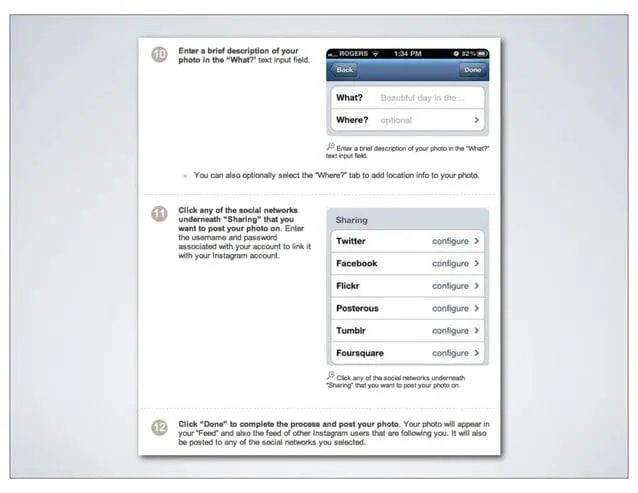
The team slide introduces founders Kevin Systrom and Mike Krieger, highlighting their complementary skills and relevant experience in technology and product development. Systrom’s background includes experience at Google and Nextstop, along with his Stanford education, whilst Krieger brings technical expertise as a Stanford and MIT graduate. The slide likely emphasises their mobile development capabilities and understanding of social platform dynamics, crucial for Instagram’s success.
Beyond the founders, the presentation acknowledges the small engineering team they’ve assembled, showing ability to attract technical talent despite being an early-stage startup. The team composition reflects Instagram’s focus on product excellence and technical scalability rather than broad functional areas. This lean approach aligns with the startup’s growth stage whilst demonstrating the founders’ ability to execute with limited resources.
What investors see: Credible founders with relevant experience and technical capabilities to execute on the vision. The combination of product intuition and engineering talent suggests ability to iterate quickly and scale effectively. The lean team structure indicates capital efficiency whilst showing leadership capabilities in talent attraction and retention.
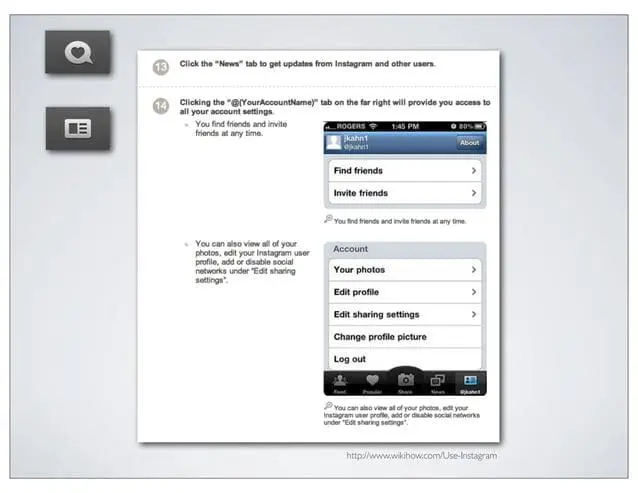
Instagram’s financial slide presents a clear picture of burn rate, runway projections, and high-level user growth forecasts, demonstrating efficient capital deployment and strategic resource allocation. The presentation likely shows how the current team can achieve significant milestones with relatively modest funding, extending runway to 12+ months post-raise. This financial discipline reflects the founders’ understanding of startup economics and ability to prioritise growth investments effectively.
The projections include user growth targets and preliminary thinking about future revenue streams, showing how the business model translates into financial outcomes over time. Whilst specific revenue projections may be limited given the pre-revenue stage, the slide demonstrates understanding of key metrics that drive social platform value. The financial planning shows preparation for scaling challenges including server costs, international expansion, and team growth.
What investors see: Financial discipline and strategic thinking about capital efficiency. The runway projections show realistic planning and milestone-driven funding approach. This suggests responsible stewardship of investor capital and understanding of venture funding dynamics for subsequent rounds.

Instagram’s funding ask is refreshingly straightforward: $500,000 at a $5 million pre-money valuation, representing a 10% equity stake for investors. The clarity of this ask, accompanied by a detailed breakdown of fund allocation across product development, Android platform launch, and team expansion, demonstrates mature financial planning and realistic valuation expectations. This transparent approach builds trust with investors and facilitates faster decision-making processes.
The use of funds allocation shows strategic priorities, with significant investment planned for Android development to capture the broader smartphone market and infrastructure scaling to support explosive user growth. The emphasis on product development over marketing spend aligns with Instagram’s organic growth strategy and reinforces the focus on building sustainable competitive advantages. This capital deployment strategy suggests the founders understand how to maximise investor returns through product excellence and market expansion.
What investors see: A reasonable valuation backed by exceptional traction and clear capital deployment strategy. The specific ask and fund allocation demonstrate preparation and strategic thinking about growth priorities. This approach suggests founders who respect investor capital and have realistic expectations about valuation and milestones.
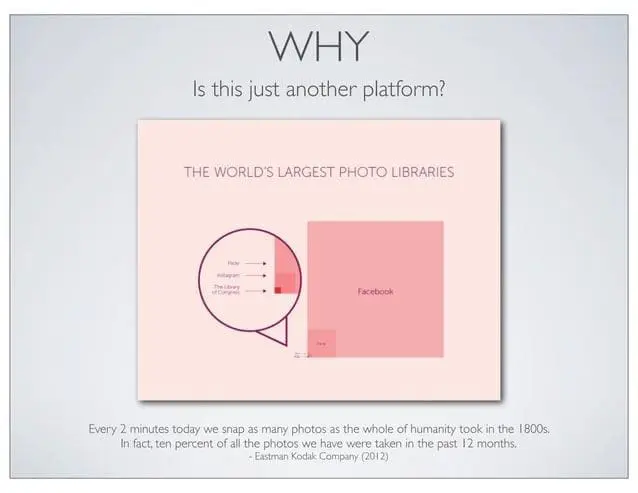
The closing slide provides comprehensive contact information for both founders whilst extending an invitation for live product demonstrations and deeper engagement with potential investors. The inclusion of Instagram handles and app download encouragement shows confidence in the product experience and encourages investors to become users themselves. This hands-on approach allows investors to experience the viral appeal and user engagement that drives Instagram’s growth metrics firsthand.
The slide likely features a collage of user-generated content, showcasing the diversity and quality of photos being shared on the platform. This visual proof-of-concept demonstrates community engagement and content creation, key indicators of social platform health and growth potential. The user photos serve as testimonials for product value and hint at the advertising opportunities that will drive future monetisation.
What investors see: Founders who are accessible and confident in their product experience. The invitation to demo and use the product shows transparency and belief in user engagement metrics. This approach facilitates deeper investor relationship building and allows for experiential validation of the investment opportunity beyond just financial projections.
From insight to investor-ready, in weeks not months.
Apply these lessons to your raise — we’ll build your deck, financial model, and IM together.
While Instagram’s seed deck successfully secured crucial early funding and laid the foundation for one of history’s most successful social media acquisitions, it reflects the simpler fundraising environment of 2010 and lacks several elements that today’s investors routinely expect. Modern pitch decks must navigate increased competition, more sophisticated due diligence processes, and heightened expectations around financial transparency, risk mitigation, and social responsibility. For those looking to enhance their own presentations, consulting with pitch deck experts for fundraising can provide valuable insights.
Lacks multi-year revenue forecasts, CAC/LTV, or unit economics. Modern decks require these to show path to profitability and scalability.
No quotes from users or influencers. Today’s decks use social proof to build credibility beyond raw metrics.
No discussion of network effects barriers or IP. Investors now demand clarity on sustainable competitive advantages.
Team slide omits advisors or diverse hires. Modern VCs prioritise inclusive teams and expert guidance.
No acknowledgment of risks like platform dependence (App Store) or photo fatigue. Proactive risk slides build trust.
Absent vision for acquisition or IPO paths. Current decks hint at realistic outcomes to align investor expectations.
No mention of privacy, data ethics, or sustainability. 2020s decks integrate ESG to appeal to impact-focused funds.
These gaps reflect the evolution of venture capital due diligence and changing investor expectations around transparency, responsibility, and strategic planning. At Projects RH, we help founders navigate these modern requirements whilst maintaining the compelling narrative and traction focus that made Instagram’s original deck so effective, ensuring startups are prepared for today’s more demanding fundraising environment.
Instagram led with user growth metrics despite being early-stage. Founders should highlight real data to prove product-market fit, even if features are minimal.
Matched deck design to product aesthetic—clean, photo-heavy. Use your product’s visual language to make the deck memorable and on-brand.
Clear $500K ask with use of funds. Avoid vagueness; specify amount, valuation, and allocation to close faster.
Classic structure built quick conviction. Start with pain, show fix, prove with numbers—still the gold standard.
Team slide focused on relevant experience without fluff. Weave credentials into traction narrative for authenticity.
13 slides max kept attention high. Aim for 10-15 slides; brevity respects investor time and sharpens messaging.
Screenshots and flows sold the product. Always include live demos or visuals—investors buy the experience.
Ready to raise? Let’s talk.
We’ve helped founders secure $2B+ in investor interest. Your round could be next.
The distance between the Instagram that presented this seed deck in 2010 and the Instagram that exists today represents one of the most extraordinary value creation stories in venture capital history. What began as a simple photo-sharing app seeking $500,000 has evolved into a global advertising powerhouse generating over $40 billion in annual revenue as Meta’s crown jewel.
For the early angel investors who backed Instagram’s seed round, the returns were nothing short of spectacular. The $500,000 raised at a $5 million pre-money valuation in 2010 represented a 10% stake that would be worth approximately $20 billion based on Instagram’s estimated current contribution to Meta’s overall valuation. This represents a return multiple of roughly 40,000x over 15 years, making it one of the most successful early-stage technology investments ever recorded.
The transformation from Instagram’s modest seed metrics—100,000 users and zero revenue—to today’s 2.5 billion monthly active users and $40+ billion annual revenue demonstrates the incredible scalability of network effect businesses when they achieve true product-market fit. This case study continues to influence how investors evaluate social platforms and mobile-first companies, proving that exceptional user engagement and viral growth can translate into unprecedented value creation when combined with effective monetisation strategies.
At Projects RH, we help companies across all industries create investor-ready materials that close deals. Our integrated capital raising package ensures consistency across all your investor documentation.
Built in-house for accuracy and investor confidence.
Comprehensive investor documentation following global best practices.
12-slide investor-ready presentation with supporting materials.
High-impact snapshot to capture investor attention fast.
Browse our collection of real pitch deck breakdowns from the world’s most successful companies.
Instagram's seed pitch deck had exactly 13 slides, focusing on problem, solution, traction, and a clear ask. Its brevity and visual focus made it highly effective.
They raised $500,000 in seed funding at a $5M pre-money valuation from angels including Jack Dorsey, Chris Sacca, and Steve Chen. This fueled rapid scaling.
Explosive traction (100K users in weeks), stunning visuals mirroring the app, simple structure, and founder credibility. It proved massive potential in mobile photo sharing.
Yes, as a template for structure and traction emphasis, but adapt to your stage—add financials, moats, and ESG. Its 2010 context (pre-revenue OK) differs from today's data demands.
Seed stage, just months after October 2010 launch. They had strong early traction but no revenue, pitching angels for product and growth capital.
Creating an effective pitch deck requires more than following a template — it demands strategic clarity about your value proposition, a deep understanding of your target investors, and rigorous financial modelling to support your narrative. At Projects RH, we combine financial expertise with strategic storytelling to build pitch decks, information memorandums, and financial models that meet the standards of institutional investors worldwide. Our team has generated over USD 2.0 billion in expressions of interest across mining, energy, technology, medtech, and financial services sectors. Schedule a consultation to discuss how we can help position your company for successful capital raising.