
Dive into the 15-slide pitch deck that helped Rappi secure $217.51M in Series C funding from renowned investors including SoftBank and Sequoia Capital in 2018.
Building your own pitch deck?
Get expert guidance from the team behind $2B+ in investor interest.
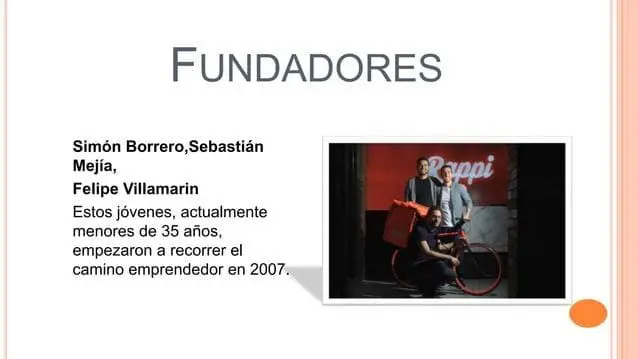
Rappi’s origin story begins in 2015 Bogotá, where three entrepreneurs—Simon Borrero, Sebastian Mejia, and Felipe Villamarín—found themselves frustrated by the inefficiencies plaguing Latin America’s delivery ecosystem. What started as a simple WhatsApp group coordinating bike couriers for food and errands quickly evolved into something much larger, as busy urban professionals flocked to their makeshift service. The trio recognised they had stumbled upon a fundamental pain point: Latin America’s fragmented, slow delivery infrastructure was failing to meet the demands of increasingly connected consumers. To navigate such challenges effectively, many businesses turn to pitch deck consulting services for expert guidance.
The early journey was far from smooth, with the founders navigating scaling logistics amid poor infrastructure whilst battling established competitors who viewed their “deliver anything” model with scepticism. Their strategic pivot from food-only to a comprehensive super app approach proved prescient, allowing them to capture market share that traditional players had overlooked. By 2017, armed with seed funding from local angels, they had successfully expanded to Mexico and Brazil, reaching 100,000 users despite regulatory hurdles and operational complexities unique to each market.
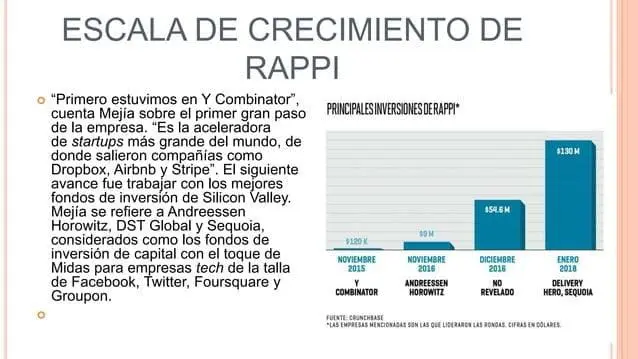
The Series C fundraising process in 2018 represented a watershed moment for Latin American tech, as global venture capital giants like SoftBank began placing substantial bets on the region’s digital transformation. The founding team refined their pitch deck through multiple iterations, focusing intensively on demonstrating traction and network effects that would resonate with international investors. Their timing proved impeccable, as the pitch coincided with a broader recognition that Latin America’s mobile-first consumer base represented one of the world’s last major untapped markets.
The resulting $217.51 million raise at a $1 billion valuation not only established Rappi as Latin America’s first delivery unicorn but also validated the super app model for emerging markets. This funding round became a catalyst for the region’s entire startup ecosystem, demonstrating that LatAm companies could compete for the same calibre of investment as their Silicon Valley counterparts.

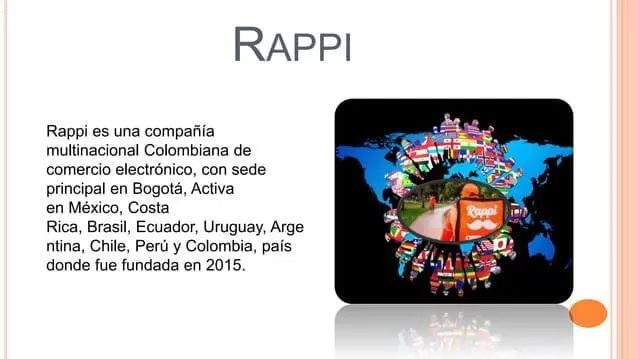
Rappi’s cover slide immediately establishes credibility through its clean, professional design whilst simultaneously conveying the energy and dynamism that defines the brand. The prominent display of the founders’ names signals transparency and personal accountability, whilst the tagline “Everything app for Latin America” boldly positions Rappi not just as another delivery service, but as a comprehensive digital ecosystem. The inclusion of vibrant mobile app screenshots provides immediate visual context for what the company builds, making the value proposition tangible from the first impression.
The strategic decision to emphasise Latin America in the tagline demonstrates sophisticated market positioning, acknowledging that regional expertise and cultural understanding represent core competitive advantages. Rather than positioning themselves as a global player attempting to enter LatAm, they present as the indigenous solution built specifically for the region’s unique challenges. This framing becomes particularly powerful when pitching to international VCs who recognise the complexity of emerging market operations but may lack the local expertise to execute effectively.
What investors see: A management team that understands presentation discipline and brand consistency, combined with clear regional positioning that suggests defensible competitive moats. The professional execution of this opening slide signals that founders have mastered the fundamentals of institutional fundraising, whilst the “everything app” positioning hints at the massive market opportunity and multiple revenue streams that sophisticated investors seek in late-stage investments.
The problem slide masterfully articulates the systemic inefficiencies that plague Latin America’s delivery landscape, with the 2-3 hour wait time statistic serving as a powerful anchor that immediately resonates with anyone familiar with the region. By highlighting fragmented services and limited access to essential goods like groceries and medications in urban areas, Rappi frames the opportunity as addressing fundamental quality of life issues rather than mere convenience. The emphasis on cash-only payment systems demonstrates deep understanding of LatAm’s financial infrastructure limitations, positioning digital payment integration as a core value driver.
What elevates this problem statement beyond typical “things are slow and expensive” narratives is its focus on access equity and financial inclusion. The slide implies that existing solutions serve only affluent consumers with credit cards and flexible schedules, whilst the broader population remains underserved. This framing transforms Rappi from a luxury convenience play into a democratising force, which resonates particularly well with impact-conscious institutional investors who seek both returns and positive social outcomes.
What investors see: A massive, systemic market failure that incumbent players have been unable to solve, suggesting sustainable competitive advantages for whoever cracks the code. The multi-dimensional problem set (speed, access, payments, fragmentation) indicates multiple vectors for value creation and monetisation, whilst the focus on essential goods like medications signals a sticky, recession-resistant user base that goes beyond discretionary food delivery.
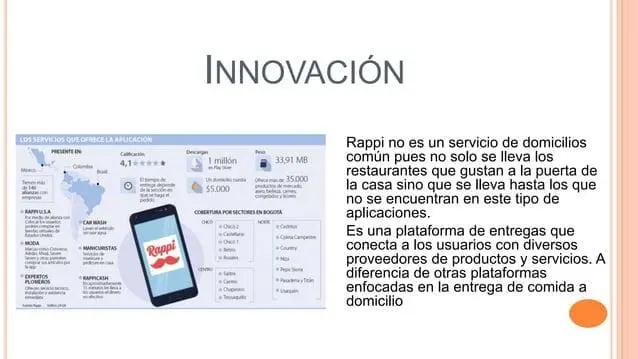
Rappi’s solution slide delivers a masterclass in value proposition clarity, with the “30 minutes or less” promise providing a quantifiable improvement that’s 4-6x better than the stated problem. The introduction of “Rappitenderos” as a branded courier network demonstrates sophisticated platform thinking, recognising that successful marketplaces require strong supply-side engagement and identity. The comprehensive payment acceptance (cash, card, digital) directly addresses the financial inclusion barriers highlighted in the problem, showing systematic solution design rather than feature additions.
The positioning as an “all-in-one super app” signals ambitious platform thinking that extends far beyond delivery logistics into lifestyle integration. App screenshots provide immediate proof of concept whilst demonstrating user interface sophistication that matches international standards. The solution architecture implies network effects and multi-sided marketplace dynamics, where value increases exponentially with scale—precisely the type of business model that venture capitalists seek for late-stage investments requiring substantial capital deployment.
What investors see: A defensible moat built through operational excellence and brand loyalty, combined with platform economics that improve with scale. The branded courier network suggests superior supply-side control compared to gig economy competitors, whilst the super app positioning indicates multiple revenue streams and higher customer lifetime values through increased engagement frequency and basket diversity.
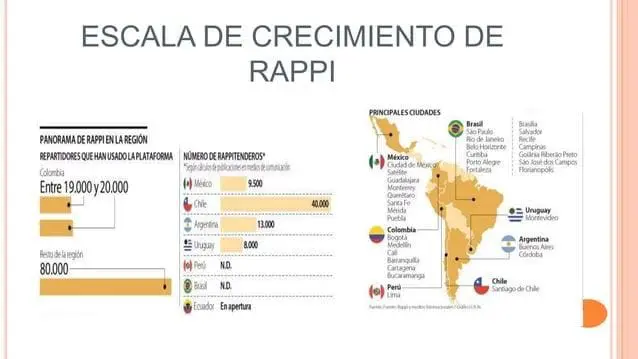
The market validation slide strategically combines proven performance metrics with compelling macro trends to build investment conviction. Rapid user growth in Colombia provides concrete evidence of product-market fit, whilst early traction in Mexico and Brazil demonstrates scalability across diverse LatAm markets with different regulatory, cultural, and economic characteristics. The presentation of this multi-country traction as validation rather than expansion shows sophisticated positioning that addresses investor concerns about market-specific solutions that don’t travel well.
The “why now” narrative anchored by 70% smartphone penetration and urbanisation trends provides macro-level validation that transcends company-specific execution. This data-driven timing argument suggests that Rappi is riding secular tailwinds rather than creating demand through pure marketing spend—a crucial distinction for investors evaluating sustainable growth potential. The urbanisation trend particularly supports the hyperlocal delivery model, as density economics become increasingly favourable with concentrated urban populations.
What investors see: Risk mitigation through multi-market validation and macro trend alignment, suggesting sustainable growth tailwinds beyond company execution. The smartphone penetration data indicates massive runway for continued user acquisition, whilst cross-border traction demonstrates management’s ability to navigate complex emerging market expansion—a key competency for capturing the broader LatAm opportunity.
The product demonstration slide showcases Rappi’s technical sophistication through intuitive app interface design that rivals international standards whilst addressing local market needs. The ability to order from 1000+ stores represents significant catalogue depth that creates barrier to entry for competitors, whilst real-time tracking capabilities demonstrate logistics technology infrastructure that many incumbents lack. The integrated ratings system for Rappitenderos shows sophisticated two-sided marketplace thinking, recognising that supply-side quality control drives demand-side retention and growth.
Mobile app workflows provide tangible proof that Rappi has solved complex user experience challenges that often plague emerging market applications, including payment integration, inventory management, and logistics coordination. The emphasis on app screenshots rather than technical architecture diagrams demonstrates user-centric product thinking whilst making the value proposition immediately accessible to non-technical investors. This presentation approach suggests a team that understands both product sophistication and market communication—crucial capabilities for scaling consumer platforms.
What investors see: Technical execution capabilities that can compete with Silicon Valley standards whilst serving emerging market constraints, suggesting scalable platform architecture. The 1000+ store network indicates strong B2B relationships and supply-side network effects, whilst the ratings system demonstrates product sophistication that drives quality improvement and user retention—key components for achieving sustainable marketplace leadership.
Rappi’s market sizing employs sophisticated bottom-up analysis that demonstrates deep market understanding whilst avoiding the inflated TAM numbers that often plague early-stage pitches. The $50 billion LatAm delivery TAM provides massive scale context, whilst the $15 billion SAM focused on core countries shows realistic geographic prioritisation and market entry strategy. The $2 billion SOM represents aggressive but achievable market capture, suggesting management understands both opportunity size and competitive dynamics required to win significant share.
The pyramid visualisation effectively communicates market opportunity whilst maintaining credibility through conservative capture assumptions. This methodical approach to market sizing demonstrates analytical rigor that institutional investors expect from late-stage companies, whilst the focus on delivery markets rather than broader e-commerce shows strategic focus and category expertise. The sizing methodology likely incorporates multiple data sources and bottom-up validation, showing investor-grade financial analysis capabilities within the founding team.
What investors see: A massive, underpenetrated market with room for multiple large winners, combined with realistic capture assumptions that suggest thoughtful competitive analysis. The bottom-up methodology indicates management sophistication and data-driven decision making, whilst the LatAm focus provides geographic concentration that enables operational excellence and market leadership rather than global dilution of resources and attention.
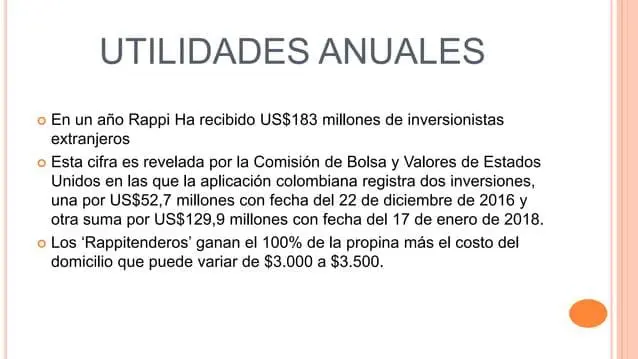
The business model slide demonstrates sophisticated platform monetisation through multiple revenue streams that compound rather than compete with each other. The 20% store commission represents the core marketplace take rate that scales with GMV growth, whilst the 10% delivery fee creates direct consumer revenue that improves unit economics and customer commitment. Premium subscriptions add recurring revenue predictability whilst driving increased usage frequency—a trifecta of revenue optimisation that shows mature platform thinking.
The roadmap projection toward advertising and partnership revenues indicates long-term platform thinking that extends beyond transaction fees into higher-margin, more defensible income streams. This evolution path mirrors successful global platforms like Amazon and Uber, showing management’s understanding of platform maturation cycles. The flowchart presentation makes complex multi-sided economics immediately comprehensible whilst demonstrating systematic revenue architecture rather than opportunistic fee collection.
What investors see: A diversified revenue model with improving unit economics and multiple paths to profitability, reducing execution risk through income stream redundancy. The progression from transaction fees to subscription and advertising revenue shows platform maturation potential that can drive margin expansion and competitive moat strengthening over time—precisely the business model evolution that creates sustainable venture returns.
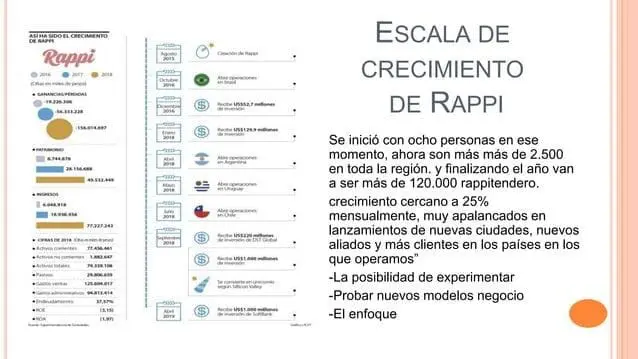
Rappi’s traction metrics demonstrate the holy grail of platform businesses: simultaneous growth in users, engagement, and revenue that reinforces positive feedback loops. One million monthly active users provides substantial scale whilst 50,000 daily orders indicates healthy engagement depth, with the ratio suggesting strong user retention and frequency patterns. The 30% month-over-month growth rate shows hypergrowth momentum that justifies high valuations, whilst $10 million ARR provides revenue validation that distinguishes Rappi from pure growth-stage companies burning cash for vanity metrics.
The inclusion of a breakeven path demonstrates mature financial planning that addresses profitability sustainability—a crucial concern for late-stage investors who’ve witnessed numerous high-growth companies fail to achieve unit economics viability. These metrics collectively paint a picture of a company that has achieved product-market fit and is ready for scaling capital rather than discovery capital. The combination of growth and revenue metrics suggests management sophistication in balancing expansion with financial discipline.
What investors see: De-risked growth metrics that demonstrate platform traction across multiple dimensions, reducing execution risk for scaling capital deployment. The progression from users to revenue to profitability path shows management’s understanding of investor priorities whilst the 30% MoM growth indicates market momentum that can absorb substantial capital deployment productively—essential for venture returns at this scale.

The competitive analysis matrix strategically positions Rappi’s unique value proposition against established players like iFood, Uber Eats, and Cornershop through objective differentiation criteria. The emphasis on superior speed (30 minutes versus industry standard), broader catalogue breadth (“anything” versus category-specific), and local network advantages demonstrates clear competitive positioning that’s defendable through operational excellence. This matrix approach shows sophisticated competitive intelligence whilst avoiding the common pitfall of claiming no competition exists.
The selection of comparison criteria reveals strategic thinking about sustainable competitive advantages rather than temporary feature gaps. Speed and catalogue breadth require operational infrastructure and partnership development that create natural barriers to competitive replication, whilst local network effects compound over time. The matrix presentation format makes complex competitive dynamics immediately accessible to investors whilst demonstrating management’s analytical capabilities and market awareness.
What investors see: Clear competitive differentiation through operational capabilities rather than just product features, suggesting sustainable competitive advantages. The local network emphasis indicates understanding of emerging market dynamics where global platforms often struggle with execution, whilst the matrix format demonstrates analytical sophistication and competitive intelligence that reduces investment risk through strategic awareness.
Rappi’s competitive advantage slide articulates three distinct but interconnected moats that compound to create sustainable market leadership. The proprietary Rappitendero network of 10,000 couriers represents a substantial supply-side asset that requires years to build and provides quality control advantages over pure gig-economy competitors. Hyper-local logistics AI demonstrates technical sophistication that improves delivery efficiency whilst creating data advantages that strengthen over time with increased order volume and route optimisation.
The exclusive store partnerships create demand-side differentiation whilst building switching costs for both merchants and consumers seeking unique inventory access. The moat diagram visualization effectively communicates how these advantages reinforce each other: better couriers enable faster delivery, which attracts more stores, which increases selection, which drives user growth, which supports more courier recruitment. This virtuous cycle demonstrates sophisticated platform thinking that goes beyond individual feature advantages to systematic competitive positioning.
What investors see: Network effects and operational scale advantages that create natural barriers to competitive entry, reducing long-term competitive risk for their investment. The combination of supply-side control, technical capabilities, and exclusive partnerships suggests a business that becomes stronger with scale rather than simply larger—the foundation of venture-scale returns through sustainable market leadership.

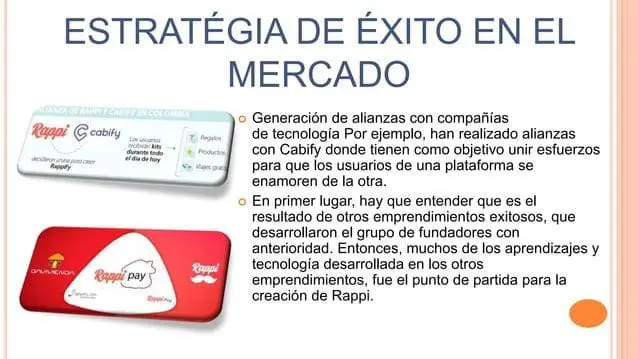
The go-to-market strategy demonstrates ambitious but systematic expansion planning through major city prioritisation and multi-channel customer acquisition. The blitzscaling approach acknowledges that marketplace dynamics reward speed and scale, with first-mover advantages in each city creating sustainable competitive positioning. Viral referral programs leverage existing user satisfaction to drive organic growth whilst reducing customer acquisition costs, and the B2B store onboarding focus recognises that supply-side density drives demand-side engagement in two-sided marketplaces.
The $50 million marketing budget allocation demonstrates serious commitment to market capture whilst showing investors that management understands the capital requirements for competitive expansion. The expansion roadmap provides geographic clarity that helps investors understand market prioritisation logic and resource allocation strategy. This systematic approach to growth distinguishes sophisticated platform companies from opportunistic expansion attempts that often fail due to insufficient market preparation or competitive response.
What investors see: A capital-efficient expansion strategy that leverages network effects and viral growth mechanics to capture market share systematically. The substantial marketing budget commitment shows management’s understanding of competitive dynamics whilst the multi-city launch approach demonstrates operational capabilities for managing complex expansion logistics—crucial competencies for deploying venture capital productively.

The founding team represents an optimal combination of strategic consulting experience, entrepreneurial track record, and technical expertise specifically relevant to emerging market platform challenges. Simon Borrero’s Bain background provides strategic frameworks and analytical rigor essential for complex marketplace dynamics, whilst Sebastian Mejia’s serial entrepreneur experience offers practical startup execution knowledge that many consulting-heavy teams lack. Felipe Villamarín’s technical leadership ensures product sophistication can match international standards whilst serving local market constraints.
The 200-employee team size demonstrates substantial operational scale whilst suggesting successful talent attraction and retention capabilities in competitive LatAm tech markets. The generous space devoted to founder biographies shows confidence in leadership credentials whilst providing personal connection points for investor relationship building. This team presentation approach recognises that late-stage investors are backing management teams as much as business models, particularly for complex emerging market operations requiring local expertise and international execution standards.
What investors see: A complementary founding team with relevant experience for the specific challenges of building platform businesses in Latin America, reducing execution risk through proven leadership capabilities. The substantial team size suggests operational maturity and scaling capabilities, whilst the combination of strategic, operational, and technical expertise indicates comprehensive competencies for navigating complex marketplace dynamics and competitive challenges.
The financial projections demonstrate aggressive but achievable growth trajectories with $100 million revenue in Year 1 post-funding, showing management’s confidence in market opportunity and execution capabilities. The three-year path to profitability provides realistic timeline expectations whilst acknowledging the investment period required for marketplace scaling and competitive positioning. Positive unit economics validation addresses the fundamental viability question that distinguishes sustainable platforms from unsustainable growth-at-any-cost models that dominated earlier venture cycles.
The revenue projection graph likely incorporates multiple scenario planning and bottom-up validation through existing market performance data, showing analytical sophistication that institutional investors expect from late-stage companies. The emphasis on unit economics rather than just top-line growth demonstrates management’s understanding of sustainable business model requirements and investor priorities around long-term value creation. This financial presentation approach builds confidence in capital deployment efficiency and return potential.
What investors see: Realistic financial planning that balances aggressive growth targets with sustainable unit economics, reducing the risk of capital deployment inefficiency. The clear path to profitability combined with positive unit economics indicates management sophistication around venture capital expectations and business model validation—crucial factors for achieving the scale and returns that justify late-stage investment commitments.
The $220 million funding request at $1 billion valuation positions Rappi as Latin America’s first delivery unicorn whilst providing specific, measurable deployment targets that justify the substantial capital requirement. Expansion to five new countries demonstrates systematic regional strategy rather than opportunistic market entry, whilst the plan to hire 5,000 additional Rappitenderos shows operational scaling capabilities and supply-side investment priorities. The 10 million user target provides clear success metrics that align investor capital with measurable growth outcomes.
The use of funds pie chart likely demonstrates thoughtful capital allocation across expansion, operations, and technology development, showing investors how their money will be deployed productively. The specific nature of these targets—countries, couriers, users—provides accountability frameworks that sophisticated investors use to monitor progress and validate management execution capabilities. This precision in capital deployment planning distinguishes mature platform companies from earlier-stage ventures with less operational sophistication.
What investors see: A precisely defined capital deployment strategy with measurable outcomes that justify the substantial investment commitment whilst providing clear milestone tracking capabilities. The specific targets for countries, couriers, and users demonstrate operational maturity and accountability frameworks that reduce investment risk through transparent progress monitoring and management evaluation criteria.
The closing slide masterfully combines practical next steps with inspirational vision, providing clear contact information whilst reiterating the massive opportunity that Rappi seeks to capture. The vision of becoming the super app for 600 million Latin American consumers elevates the conversation beyond immediate business metrics to transformational regional impact, positioning investors as partners in reshaping an entire continent’s digital commerce infrastructure. This aspirational closing reinforces the venture-scale opportunity whilst maintaining accessibility through straightforward contact details.
The emphasis on email contacts demonstrates professional accessibility whilst the grand vision statement serves as a memorable call to action that distinguishes Rappi from incremental improvement companies. The 600 million consumer number provides concrete scale context that helps investors visualise the total addressable market opportunity beyond immediate financial projections. This combination of practical information and inspirational messaging creates an effective transition from formal presentation to ongoing investor relationship development.
What investors see: A founding team that thinks at scale commensurate with their capital requirements whilst maintaining professional accessibility for ongoing due diligence conversations. The 600 million consumer vision provides appropriate ambition level for venture-scale returns whilst the straightforward contact approach suggests management confidence and availability for investor partnership development throughout the fundraising process.
From insight to investor-ready, in weeks not months.
Apply these lessons to your raise — we’ll build your deck, financial model, and IM together.
While Rappi’s pitch deck successfully secured one of Latin America’s most significant venture capital rounds, establishing the company as the region’s first delivery unicorn, it reflects the fundraising standards of 2018 rather than today’s more sophisticated institutional requirements. Modern investors, particularly at the Series C level, expect greater analytical depth, risk transparency, and strategic roadmapping that extends beyond immediate growth metrics to encompass long-term value creation and sustainable competitive positioning. For companies looking to meet these expectations, seeking fundraising-grade pitch deck consulting can be crucial.
Lacks a clear long-term vision or potential exit paths (IPO/M&A), crucial for modern decks to align investors on 10x returns.
No detailed LTV:CAC ratios or cohort analysis; modern VCs demand granular proof of scalable economics.
Omits identified risks like regulation or competition; transparency builds trust in today’s decks.
Missing quotes or case studies from users/stores; social proof is standard for validation.
No future features timeline; investors want insight into innovation pipeline.
No mention of team diversity or sustainability; increasingly vital for 2020s institutional investors.
Absent ownership structure; helps assess dilution and founder alignment.
These gaps reflect the evolution of institutional investor expectations rather than fundamental flaws in Rappi’s original presentation. Today’s founders can learn from Rappi’s core strengths whilst incorporating modern requirements for transparency, risk management, and strategic depth. At Projects RH, we help founders address these evolving standards whilst maintaining the compelling narrative structure that made Rappi’s deck successful in capturing investor attention and securing transformational capital for regional expansion.
Rappi’s heavy emphasis on real metrics (1M users, $10M ARR) built credibility; founders should lead with validated growth data before forecasts.
Clean, vibrant design with minimal text per slide kept attention; apply 40-word rule and app screenshots for instant comprehension.
Direct contrast between pain (slow delivery) and UVP (30-min anything) created memorable narrative; structure slides as problem-solution pairs.
Network effects via rappitenders highlighted defensibility; quantify unique advantages with data to preempt competition questions.
Specific use of funds tied to expansion/user growth closed the deal; link every dollar to measurable outcomes.
Generous bios with relevant experience humanised founders; invest in storytelling for ‘why you’.
Contact slide reiterated massive LatAm opportunity; leave investors excited about the journey.
Ready to raise? Let’s talk.
We’ve helped founders secure $2B+ in investor interest. Your round could be next.
The distance between the Rappi that presented this deck and the Rappi that exists today represents one of the most remarkable growth stories in Latin American technology history. What began as a $1 billion valuation company seeking to expand across five countries has evolved into a $5.5 billion super app serving 50 million monthly users across nine countries, fundamentally reshaping how hundreds of millions of consumers access goods and services throughout the region.
For investors who backed Rappi’s Series C round, the returns have been extraordinary. The company’s growth from $10 million to $2.8 billion in annual revenue represents a 280x increase, whilst the valuation expansion from $1 billion to $5.5 billion delivers approximately 5.5x returns on the initial investment—exceptional performance for a venture capital commitment, particularly given the relatively short timeframe and the additional value created through subsequent funding rounds.
More significantly, Rappi’s success has catalysed an entire ecosystem of Latin American technology companies, demonstrating to global investors that the region can produce venture-scale returns whilst serving massive underserved populations. The company’s evolution from a Colombian delivery service to a regional super app validates the original thesis that Latin America represented one of the world’s last great digital transformation opportunities, creating a template that continues to attract substantial international investment into the LatAm technology sector.
At Projects RH, we help companies across all industries create investor-ready materials that close deals. Our integrated capital raising package ensures consistency across all your investor documentation.
Built in-house for accuracy and investor confidence.
Comprehensive investor documentation following global best practices.
12-slide investor-ready presentation with supporting materials.
High-impact snapshot to capture investor attention fast.
Browse our collection of real pitch deck breakdowns from the world’s most successful companies.
The Rappi Series C pitch deck consists of 15 slides, balancing essential elements like problem, solution, traction, and the ask without overwhelming investors.
Rappi raised $217.51M in their Series C round using this deck, achieving a $1B unicorn valuation just three years after founding.
Success stemmed from strong traction metrics, clear business model, visual simplicity, and a compelling 'anything in 30 minutes' UVP tailored to LatAm's fragmented market.
Yes, as a template for on-demand marketplaces, but adapt for your stage/metrics; add modern elements like unit economics and risks absent in Rappi's deck.
Rappi was at Series C (later-stage VC), post-Series B, with proven revenue and regional expansion seeking fuel for hypergrowth.
Creating an effective pitch deck requires more than following a template — it demands strategic clarity about your value proposition, a deep understanding of your target investors, and rigorous financial modelling to support your narrative. At Projects RH, we combine financial expertise with strategic storytelling to build pitch decks, information memorandums, and financial models that meet the standards of institutional investors worldwide. Our team has generated over USD 2.0 billion in expressions of interest across mining, energy, technology, medtech, and financial services sectors. Schedule a consultation to discuss how we can help position your company for successful capital raising.