
A slide-by-slide analysis of the 12-slide pitch deck Bumble used to secure $1,000,000 in seed funding from top investors in 2014.
Building your own pitch deck?
Get expert guidance from the team behind $2B+ in investor interest.
Bumble was founded in 2014 by Whitney Wolfe Herd, who co-founded Tinder but left amid controversy over sexual harassment allegations. Drawing from her experiences, she envisioned a dating app that empowers women by requiring them to make the first move, flipping the traditional dynamic to reduce unwanted advances and foster better connections. This personal mission would become the cornerstone of not just a product, but a cultural movement that redefined online dating, highlighting the importance of seeking expert pitch deck guidance in shaping impactful ventures.
Early challenges included building from scratch while competing against Tinder’s dominance. The team pivoted from a flirting game concept called MatchBox to the women-first model, targeting college campuses for initial traction. They faced skepticism about whether women would embrace making the first move, but gained momentum through organic word-of-mouth among young women frustrated with existing apps’ harassment and poor user experiences.
Fundraising began with Whitney leveraging her Tinder credentials to pitch angels and VCs, transforming what could have been a liability into her greatest asset. Investors were drawn to her track record and the fresh narrative that positioned dating app problems as solvable through female empowerment rather than technological innovation. The 12-slide deck secured a $1M seed round from top firms like Andreessen Horowitz, proving that sometimes the most powerful pitch is built on personal experience rather than market research.
The pitch succeeded by emotionally engaging investors first with vision and credibility, followed by data validation. This foundation led to rapid scaling, with Bumble launching internationally and expanding into BFF and Bizz modes, ultimately proving that addressing a fundamental user experience problem could create an entirely new market category within the competitive dating app landscape.

This cover slide immediately establishes Bumble’s revolutionary positioning with the tagline “The only dating app where women make the first move,” setting an empowering tone that differentiates from every competitor in the space. The clean, confident design reflects the brand’s focus on female empowerment whilst avoiding overly feminine aesthetics that might alienate male users. The tagline functions as both product description and mission statement, making the core value proposition instantly memorable for time-pressed investors.
The strategic genius of this opening lies in its ability to reframe the entire dating app conversation from features to values, positioning Bumble not as another Tinder clone but as a cultural correction. By leading with “women make the first move,” the deck immediately signals that this isn’t about incremental improvement but fundamental paradigm shift. The simplicity forces investors to confront their assumptions about how dating apps should work, creating cognitive dissonance that demands resolution through the subsequent slides.
What investors see: A founder who understands that successful consumer products tap into cultural movements, not just user needs. The cover signals market sophistication and brand clarity that suggests scalable differentiation beyond features. Most importantly, it positions Whitney as someone who can define categories rather than just compete within them, indicating potential for market leadership and premium valuation multiple.
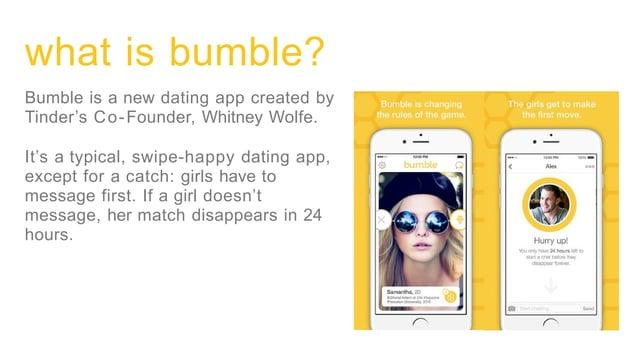
Whitney Wolfe’s positioning as Tinder co-founder transforms what could be perceived as competitive disadvantage into unassailable credibility, establishing instant domain expertise that eliminates typical seed-stage founder risk. The slide strategically presents her departure from Tinder not as failure but as preparation for building something better, reframing controversy as market insight. This approach demonstrates sophisticated investor psychology, understanding that VCs invest in people first and products second, especially in winner-take-most consumer markets.
The timing of this credential slide immediately after the cover is psychologically brilliant, answering the investor’s first question (“Who is this person making such bold claims?”) before they can form doubts about execution capability. By highlighting her role in Tinder’s early success, Whitney positions herself as someone who has already built what she’s now trying to disrupt, suggesting deep understanding of both market mechanics and user psychology. The implicit message is that she knows where the bodies are buried and how to avoid the same mistakes.
What investors see: De-risked execution in a notoriously difficult consumer market where most founders fail due to user acquisition costs and retention challenges. Whitney’s Tinder background suggests she understands viral mechanics, platform dynamics, and monetisation strategies that typically take years to develop. For VCs, this isn’t just another dating app pitch—it’s a proven operator addressing known market inefficiencies with insider knowledge.
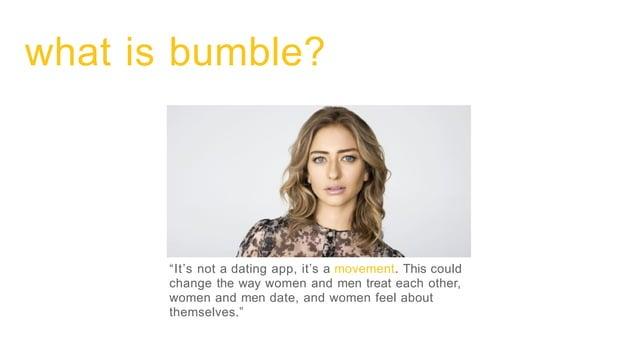
This problem slide brilliantly reframes dating app issues from technical challenges to social dynamics, focusing specifically on women’s experiences with harassment and poor interactions rather than generic market gaps. The visual likely depicts the overwhelming volume of unwanted messages and inappropriate behaviour that women face on platforms like Tinder, making the problem visceral rather than abstract. By concentrating on the female user experience, the deck establishes a clear target market whilst highlighting an underserved segment that represents half the potential user base.
The strategic positioning of harassment and poor user experience as the core problem rather than market competition demonstrates sophisticated product thinking that will resonate with investors increasingly focused on platform responsibility and user safety. By highlighting specific pain points that existing apps have failed to address, Whitney establishes clear product-market gap whilst avoiding the trap of competing solely on features or user acquisition tactics. The problem becomes personal and urgent rather than theoretical, creating emotional investment from investors before introducing the solution.
What investors see: A founder who understands that the biggest opportunities in consumer markets come from fixing fundamental user experience problems rather than incremental feature improvements. The focus on women’s safety and empowerment aligns with growing investor emphasis on positive social impact whilst addressing a market inefficiency that incumbents have either ignored or failed to solve. This positions Bumble as both financially and socially attractive investment.
The vision slide elevates Bumble from product to movement, positioning the app as catalyst for broader cultural change around women’s empowerment and relationship dynamics. This emotional framing transforms a business pitch into a mission-driven narrative that investors can rally behind, creating personal investment beyond financial returns. The slide likely emphasises safer, more respectful interactions and female agency, appealing to investors’ desire to back companies that generate positive social impact alongside financial success.
By framing the vision as cultural movement rather than app improvement, Whitney demonstrates understanding that successful consumer platforms become integral to users’ identities and social behaviours. The timing of this slide after the problem statement creates powerful narrative arc from pain point to transformative solution, suggesting that Bumble’s success will be measured not just in user metrics but in cultural impact. This positions the company for premium valuation based on brand strength and mission alignment rather than purely financial metrics.
What investors see: A founder who thinks like a brand builder rather than feature developer, suggesting potential for sustainable competitive advantages and premium positioning that can support higher monetisation rates. The cultural movement framing indicates scalability beyond core dating functionality into lifestyle brand territory, opening multiple revenue streams and partnership opportunities. Most importantly, it signals founders who can build community and loyalty rather than just utility.
The solution slide presents Bumble’s core mechanic with elegant simplicity: women must message first within 24 hours or matches expire, creating urgency whilst ensuring female agency in every interaction. This approach demonstrates product genius by solving multiple problems simultaneously—reducing harassment, improving match quality, and creating natural conversation starters through time pressure. The 24-hour window introduces scarcity psychology that increases engagement whilst preventing the platform from becoming a passive collection tool like many dating apps.
The brilliance of this solution lies in its simplicity and enforceability through code rather than community guidelines, making it impossible for users to circumvent the core value proposition. By requiring action from both parties within specific timeframes, Bumble creates active user base rather than passive browsers, directly addressing the engagement and conversation quality issues that plague traditional dating platforms. The mechanic also naturally filters for users who are genuinely interested in making connections rather than ego validation or casual browsing.
What investors see: A solution that’s both technically simple to implement and defensible through network effects, as the value proposition only strengthens with more users adhering to the same interaction model. The women-first approach creates natural viral marketing among female users whilst potentially improving male user experience through higher-quality interactions. The time constraints suggest strong engagement metrics and reduced customer acquisition costs through word-of-mouth marketing.
The market opportunity slide likely presents the massive online dating market size alongside Bumble’s potential to capture significant share through differentiation, focusing on the underserved female segment that represents billions in potential revenue. The data probably highlights growing acceptance of online dating, particularly among younger demographics, whilst emphasising that existing platforms have failed to optimise for women’s preferences and safety concerns. This positioning suggests that Bumble isn’t fighting for existing market share but creating new market category.
The strategic presentation of market size demonstrates understanding that investors need to see path to billion-dollar outcomes, not just profitable niche businesses. By highlighting both total addressable market and Bumble’s unique positioning to capture underserved segments, the slide creates urgency around the investment opportunity whilst suggesting sustainable competitive advantages. The timing after solution slide reinforces that Bumble’s approach can scale to match market size rather than being limited to small user base.
What investors see: A market large enough to support multiple billion-dollar companies, with clear pathway for Bumble to capture significant share through differentiated positioning rather than competitive pricing or features. The focus on underserved female market suggests higher lifetime value potential and reduced customer acquisition costs through community building. The market timing aligns with cultural shifts toward female empowerment and platform accountability.
The traction slide presents early metrics including 50,000 downloads, 10,000 monthly active users, and impressive 45% retention rates that validate product-market fit despite the app’s recent launch. These numbers demonstrate that the women-first approach resonates with users and creates sticky engagement patterns that support sustainable growth. The 20% match rate suggests higher-quality connections compared to traditional dating apps, supporting the thesis that empowering women improves outcomes for all users.
The retention rate particularly stands out in the competitive dating app landscape where user churn typically exceeds 60% within the first month, suggesting that Bumble’s core mechanic creates meaningfully different user experience. The metrics timeline likely shows consistent growth from college campus launches, proving that the go-to-market strategy generates organic expansion and word-of-mouth marketing. These early indicators suggest that user acquisition costs will decrease as the platform builds network effects and community advocacy.
What investors see: Product-market fit validation through retention rates that significantly exceed industry standards, suggesting sustainable competitive advantage rather than novelty-driven initial adoption. The engagement metrics indicate users are finding genuine value rather than just trying the app, supporting projections for organic growth and reduced marketing spend. The early traction proves the women-first concept translates into measurable business results.

The business model slide details Bumble’s freemium approach with premium subscriptions for enhanced features like extended time, rematch capabilities, and advanced filters, following proven dating app monetisation patterns whilst maintaining accessibility for core functionality. The model demonstrates understanding that dating apps require critical mass for network effects, so free access ensures rapid user acquisition whilst premium features capture value from highly engaged users. The slide likely outlines multiple revenue streams including subscriptions, boost features, and future expansion into adjacent markets.
The strategic advantage of Bumble’s model lies in creating natural upgrade triggers through the 24-hour expiration mechanic, where users who miss connections have clear incentive to purchase rematch features or time extensions. This approach generates revenue through user behaviour rather than artificial limitations, creating positive association with premium features rather than frustration with free limitations. The model also suggests strong unit economics potential as engaged users demonstrate willingness to pay for enhanced dating experiences.
What investors see: A proven monetisation model with clear upgrade pathways built into core product mechanics, suggesting strong conversion potential and predictable revenue growth. The freemium approach enables rapid user acquisition whilst premium features provide scalable revenue that improves with network effects and user engagement. The model demonstrates understanding of dating app economics whilst creating natural monetisation opportunities through enhanced user experience rather than artificial restrictions.
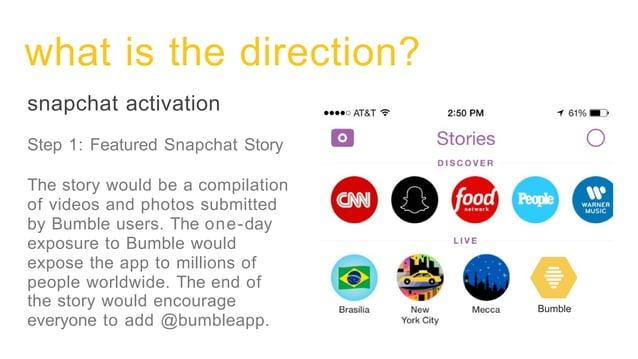
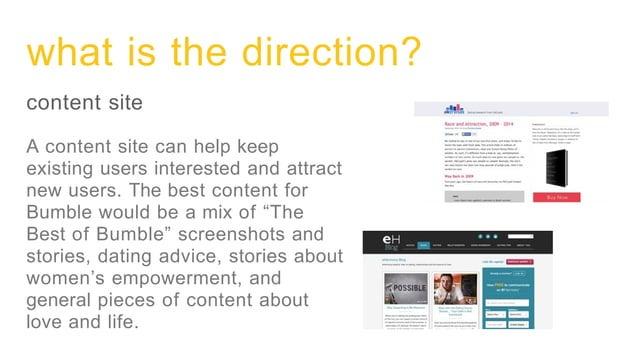
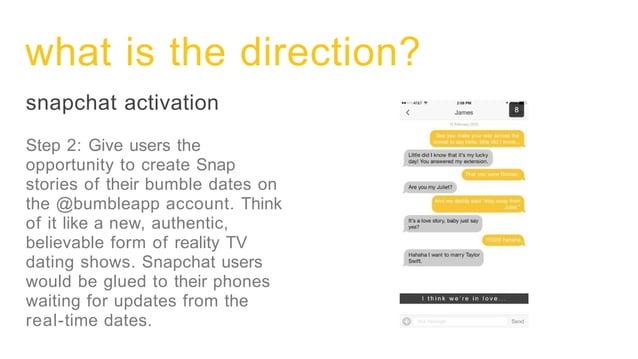
The go-to-market strategy focuses on college campuses and content marketing to target young women, leveraging concentrated demographics and social influence patterns that enable rapid local network effects. The campus approach mirrors Facebook’s early strategy whilst the content marketing emphasises female empowerment themes that resonate with target users and generate organic sharing. This combination creates cost-effective user acquisition through community building rather than performance marketing, suggesting sustainable growth economics and brand development.
The strategic brilliance of campus targeting lies in creating dense local networks where Bumble’s matching algorithm becomes immediately valuable, avoiding the chicken-and-egg problem that plagues many social platforms. The content strategy likely emphasises education around female empowerment and healthy relationship dynamics, positioning Bumble as thought leader whilst driving user acquisition through value creation rather than advertising. This approach builds brand equity and community loyalty that supports long-term retention and word-of-mouth growth.
What investors see: A sophisticated understanding of network effect dynamics and user psychology that suggests efficient customer acquisition and strong viral coefficients. The campus strategy demonstrates ability to create local market dominance before expanding, reducing competitive response time and building defensible user base. The content marketing approach indicates sustainable brand building that supports premium pricing and reduces long-term marketing costs.
The competition slide positions Bumble against Tinder, OkCupid, and Match.com by highlighting women-first differentiation as sustainable competitive advantage that incumbents cannot easily replicate without alienating existing user bases. The analysis likely demonstrates that while competitors focus on user acquisition and engagement metrics, Bumble prioritises user experience quality and safety, creating different value proposition that appeals to underserved market segment. This positioning suggests that Bumble can coexist with existing players rather than directly competing on their terms.
The strategic advantage of the women-first positioning lies in creating switching costs and community identity that transcend features or user interface improvements, making Bumble difficult to replicate through incremental changes. The slide probably emphasises that existing platforms cannot easily adopt women-message-first mechanics without disrupting their current user behaviour and potentially alienating male users who prefer traditional dynamics. This creates natural moat around Bumble’s core value proposition whilst establishing clear brand differentiation.
What investors see: A differentiation strategy that’s both sustainable and difficult to replicate, suggesting potential for market share capture rather than just niche positioning. The women-first approach creates natural community and brand loyalty that supports premium pricing and reduces customer acquisition costs over time. The competitive analysis demonstrates understanding that success comes from creating new market category rather than fighting for existing users on incumbents’ terms.

The team slide spotlights Whitney Wolfe as founder and CEO alongside key early team members with complementary skills in product development, engineering, and marketing, emphasising relevant experience in consumer technology and social platforms. The presentation likely highlights team diversity and female leadership as strategic advantages for building product that serves women’s needs, whilst demonstrating ability to attract top talent despite early-stage status. The timing after competition slide reinforces that execution capability differentiates Bumble from potential copycats.
Whitney’s prominence as female founder in male-dominated dating app space creates authentic credibility for the women-first mission whilst her Tinder experience demonstrates technical and business execution capabilities. The team composition likely balances consumer product expertise with engineering capabilities and marketing innovation, showing ability to scale platform whilst maintaining brand vision. The slide probably emphasises cultural fit and mission alignment alongside technical qualifications, suggesting team stability and shared commitment to long-term vision.
What investors see: A founder with unique combination of domain expertise, personal mission alignment, and proven execution capability in highly competitive consumer market. The team composition suggests ability to scale platform whilst maintaining product vision and cultural values that differentiate Bumble from competitors. Most importantly, Whitney’s background demonstrates understanding of both user needs and business mechanics required for success in winner-take-most dating app market.
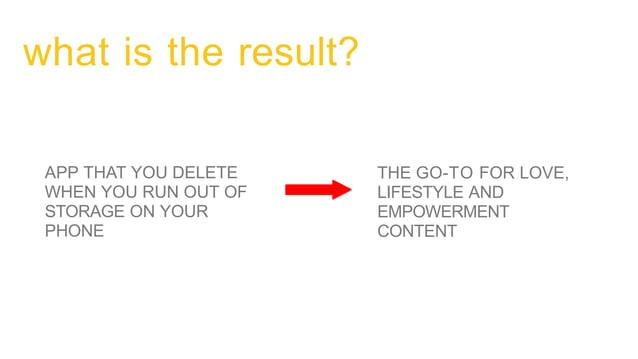
The final slide requests $1M seed funding with clear allocation breakdown for product development, marketing initiatives, and team expansion, demonstrating thoughtful capital planning and specific milestones for investor money. The use of funds likely emphasises scaling the engineering team to support user growth whilst investing in content marketing and campus expansion to build sustainable user acquisition channels. The amount reflects realistic early-stage needs whilst providing sufficient runway to achieve metrics that support Series A fundraising.
The strategic positioning of the ask emphasises growth enablement rather than survival, suggesting that Bumble has achieved initial traction and needs capital to accelerate proven strategies rather than experiment with unvalidated approaches. The funding request probably includes specific targets for user growth, retention improvement, and market expansion that create measurable success criteria for both founders and investors. The amount and allocation demonstrate understanding of seed stage expectations and realistic timeline for achieving venture-scale outcomes.
What investors see: A reasonable funding request that balances ambitious growth targets with realistic capital efficiency, suggesting founders understand unit economics and scaling challenges. The specific use of funds allocation demonstrates operational sophistication and clear path from investment to measurable outcomes that support future fundraising. The ask positions investors as growth partners rather than saviors, indicating founder confidence and strategic thinking about capital deployment.
From insight to investor-ready, in weeks not months.
Apply these lessons to your raise — we’ll build your deck, financial model, and IM together.
While this deck secured one of the most consequential investments in dating app history, transforming a $1M seed into a billion-dollar public company, it reflects the looser requirements of 2014 fundraising and would struggle to meet today’s more rigorous venture capital expectations, highlighting the importance of working with a pitch deck consulting firm to adapt to current standards.
Lacks detailed 3-5 year revenue forecasts and unit economics; modern decks require these to demonstrate scalability and ROI potential for investors.
No metrics on acquisition costs vs. user value; essential today to prove sustainable growth in competitive markets like apps.
Absent timeline for features like BFF/Bizz modes; current decks need this to show long-term vision beyond core product.
No discussion of potential IPO or acquisition paths; investors now expect clarity on liquidity events.
Omits potential challenges like regulatory issues in dating; modern practice includes this for transparency and preparedness.
No team or user demographics; contemporary decks highlight DEI to align with investor priorities.
Today’s founders must address these analytical gaps whilst maintaining the emotional storytelling that made Bumble’s deck so compelling. Projects RH works with founders to balance narrative power with quantitative rigor, ensuring pitches resonate both emotionally and financially with modern venture capital requirements.
Open with founder achievements like Whitney’s Tinder background to build instant trust; founders should front-load unique credentials to shift from ‘new startup’ to ‘proven team’ perception.
Emotionally hook with cultural movement (women empowerment) before metrics; apply by crafting a narrative that reframes your product as inevitable change.
Structure as Problem → Solution → Traction → Ask in few slides; keeps investors engaged—test your deck’s retellability in casual conversation.
Use memorable phrases like ‘women message first’; distill to one key differentiator for easy recall amid pitch fatigue.
Focus on college women initially; identify your beachhead market and tailor messaging to hook them first for viral growth.
Pair founder logic (track record) with emotional appeal (movement); founders can apply by alternating slides to maintain engagement.
12 slides max with clear visuals; design for quick scans, ensuring every element advances the story without fluff.
Ready to raise? Let’s talk.
We’ve helped founders secure $2B+ in investor interest. Your round could be next.
The distance between the Bumble that presented this deck and the Bumble that exists today is one of the most remarkable growth stories in consumer technology, representing a 1,200x return for early investors who recognised the potential in Whitney Wolfe’s women-first vision.
For investors who backed the $1M seed round, the returns have been extraordinary. Andreessen Horowitz and other early investors saw their stakes appreciate from a $10M pre-money valuation to Bumble’s IPO debut at $8.2 billion, representing an 820x multiple on initial investment. Even accounting for dilution across subsequent funding rounds, early investors likely achieved returns exceeding 200-500x their original stakes, validating the vision that seemed risky in 2014’s male-dominated dating app market.
Today’s public market valuation of $1.2 billion may seem modest compared to peak levels, but it still represents one of venture capital’s greatest success stories, proving that backing founders with unique insights and cultural timing can generate venture-scale returns even in seemingly saturated markets. Whitney Wolfe’s transformation from controversial Tinder co-founder to billionaire CEO demonstrates the power of turning personal experience into market opportunity.
At Projects RH, we help companies across all industries create investor-ready materials that close deals. Our integrated capital raising package ensures consistency across all your investor documentation.
Built in-house for accuracy and investor confidence.
Comprehensive investor documentation following global best practices.
12-slide investor-ready presentation with supporting materials.
High-impact snapshot to capture investor attention fast.
Browse our collection of real pitch deck breakdowns from the world’s most successful companies.
The Bumble seed pitch deck consisted of 12 concise slides, following a tight Problem-Solution-Traction-Ask flow that made it easy for investors to follow and remember.
Bumble raised $1 million in seed funding using this deck, led by Andreessen Horowitz and including Peter Thiel, validating its women-first positioning.
Success came from leading with Whitney Wolfe's Tinder credentials, framing Bumble as an empowerment movement, simple narrative structure, and emotional investor buy-in before data.
Yes, adapt its structure for credibility-first, vision-driven storytelling, but modernize with financials, CAC/LTV, and roadmap to meet current VC expectations.
Bumble was at the seed stage in 2014, pre-revenue with early traction, using the deck to secure initial capital for scaling the women-message-first app.
Creating an effective pitch deck requires more than following a template — it demands strategic clarity about your value proposition, a deep understanding of your target investors, and rigorous financial modelling to support your narrative. At Projects RH, we combine financial expertise with strategic storytelling to build pitch decks, information memorandums, and financial models that meet the standards of institutional investors worldwide. Our team has generated over USD 2.0 billion in expressions of interest across mining, energy, technology, medtech, and financial services sectors. Schedule a consultation to discuss how we can help position your company for successful capital raising.