
A slide-by-slide analysis of the 17-slide pitch deck Slack used to secure $42.75 million in Series B funding from Andreessen Horowitz and Accel in 2014.
Building your own pitch deck?
Get expert guidance from the team behind $2B+ in investor interest.
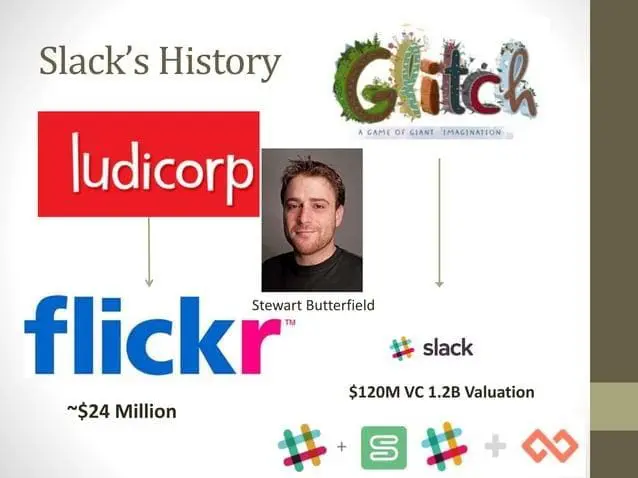
Slack’s origin story is one of accidental brilliance born from failure. In 2013, Stewart Butterfield, fresh from selling Flickr to Yahoo, co-founded Tiny Speck with Eric Costello, Cal Henderson, and Serguei Mourachov to build Glitch, an ambitious multiplayer online game. The game consumed years of development and significant capital, but despite the team’s best efforts, it failed to achieve the user engagement and retention needed for commercial success. Faced with dwindling resources and mounting pressure, the team made the difficult decision to shut down Glitch and pivot entirely, a move that highlights the importance of seeking expert guidance, such as investor-ready pitch deck consulting, in navigating challenging transitions.
During Glitch’s development, the distributed team had built an internal communication tool to coordinate their work across time zones and disciplines. This tool combined real-time messaging, file sharing, and integrations with their development stack in ways that email and existing solutions couldn’t match. As they prepared to wind down operations, team members realised they couldn’t imagine working without this internal system—it had become indispensable to their productivity and collaboration. The lightbulb moment came when they recognised that if their small team found this tool transformative, countless other teams were likely struggling with the same fragmented communication challenges.
The pivot from gaming to enterprise software required a complete mental shift, but it proved prescient. The team launched Slack as a preview in August 2013, and the response was immediate and overwhelming. Within 24 hours, they had 8,000 sign-ups without any marketing spend. Word-of-mouth spread rapidly through Silicon Valley’s tech community, with teams at companies like Rdio and Medium becoming early adopters and evangelists. The viral coefficient was unlike anything the team had experienced—users weren’t just adopting Slack, they were actively recruiting their colleagues and networks to join.
By the time they created this Series B pitch deck in late 2014, Slack had achieved what most SaaS companies take years to accomplish. With 15,000 daily active users, $1 million in annual recurring revenue, and month-over-month growth rates of 500%, they had undeniable product-market fit. The deck became a masterclass in presenting traction-driven narratives to investors, ultimately securing $42.75 million from Andreessen Horowitz as part of a $120 million round that valued the 18-month-old company at over $1 billion. This fundraising success positioned Slack to dominate the team communication market and eventually achieve a $27 billion acquisition by Salesforce in 2021.
Slack’s cover slide immediately establishes the company’s value proposition with the tagline “Be Less Busy”—a promise that resonates with every knowledge worker drowning in email and fragmented communication. The clean, professional design reflects the product’s user experience philosophy, avoiding the cluttered interfaces that characterise legacy enterprise software. This opening positions Slack not as another messaging tool, but as a productivity solution that addresses a universal pain point across organisations of all sizes.
The strategic choice to lead with outcome rather than features demonstrates sophisticated positioning for a B2B SaaS company. By focusing on reducing business rather than increasing communication, Slack frames itself as delivering efficiency gains rather than adding complexity to teams’ workflows. This positioning becomes crucial for justifying premium pricing and driving adoption across departments that might otherwise resist new software implementations.
What investors see: A company that understands the difference between features and benefits, with messaging that speaks to C-level executives concerned about productivity rather than IT managers focused on technical specifications. The professional presentation quality suggests a team capable of selling to enterprise customers, while the simplicity indicates product-market fit that doesn’t require complex explanations. This cover slide signals a mature go-to-market approach that can scale beyond early adopter segments.
The problem slide anchors Slack’s narrative with hard data, highlighting that email consumes 28% of the average knowledge worker’s week while delivering diminishing returns on productivity. This statistic transforms a vague sense of email overwhelm into a quantified business problem, making the pain point tangible for investors who understand labour costs. The visual presentation of fragmented communication tools—email, phone, instant messaging, file sharing—illustrates how teams waste time context-switching between platforms rather than focusing on core work.
Slack’s problem framing demonstrates sophisticated market understanding by addressing both individual and organisational pain points. While individuals struggle with email overload and tool fragmentation, organisations suffer from lost institutional knowledge, delayed decision-making, and reduced collaboration effectiveness. This dual-level problem definition creates urgency for both end users who will adopt the product and executives who will approve the budget, essential for successful enterprise software sales.
What investors see: A massive, universal problem with clear economic implications that affects virtually every potential customer in the addressable market. The data-driven approach suggests a team that understands enterprise sales require ROI justification, not just feature comparisons. By quantifying time waste, Slack positions itself as delivering measurable value that can be easily calculated by prospects, creating a compelling business case that accelerates sales cycles and reduces customer acquisition friction.
Slack’s solution slide presents their platform as the antidote to communication fragmentation, emphasising real-time messaging that’s searchable, organised, and integrated with existing workflows. The strategic focus on centralisation addresses the core inefficiency identified in the problem slide—instead of juggling multiple tools, teams can consolidate communication, file sharing, and collaboration in one platform. This positioning transforms Slack from a messaging app into a productivity platform, expanding the addressable market and justifying higher per-seat pricing.
The emphasis on searchability and persistence differentiates Slack from ephemeral messaging solutions and positions it as a knowledge management system. By making team communications searchable and permanent, Slack transforms conversations into institutional memory, addressing the enterprise need for compliance, knowledge retention, and new employee onboarding. This strategic positioning enables expansion beyond communication into workflow management and team coordination.
What investors see: A solution that directly maps to the quantified problem while expanding the definition of team communication to include broader productivity workflows. The integration focus suggests strong potential for network effects and customer stickiness, as teams become increasingly dependent on connected workflows. The platform approach indicates multiple monetisation opportunities beyond basic messaging, from premium features to enterprise integrations, supporting higher lifetime value and sustainable growth rates.
The product demonstration showcases Slack’s intuitive interface through carefully selected screenshots that highlight channels, direct messaging, and search functionality. This visual approach allows investors to immediately understand the user experience without lengthy feature explanations, demonstrating the product’s accessibility for non-technical team members. The clean, modern design stands in stark contrast to legacy enterprise communication tools, signalling Slack’s potential to win on user experience rather than just feature parity.
The strategic focus on channels as organising principles reveals Slack’s sophisticated understanding of team dynamics and information architecture. Unlike email threads that become unwieldy or instant messages that lack context, channels provide persistent, topic-focused spaces that naturally organise team knowledge. This organisational approach creates significant switching costs once teams establish channel structures and workflows, contributing to the high retention rates that make SaaS businesses valuable.
What investors see: A product that prioritises user experience as a primary competitive moat, essential for winning market share from entrenched incumbents with superior distribution or resources. The interface quality suggests strong product-led growth potential, as satisfied users become advocates who drive organic adoption within their networks. The channel-based organisation creates network effects within customer organisations, making Slack more valuable as more team members join and contributing to the viral growth metrics presented elsewhere in the deck.
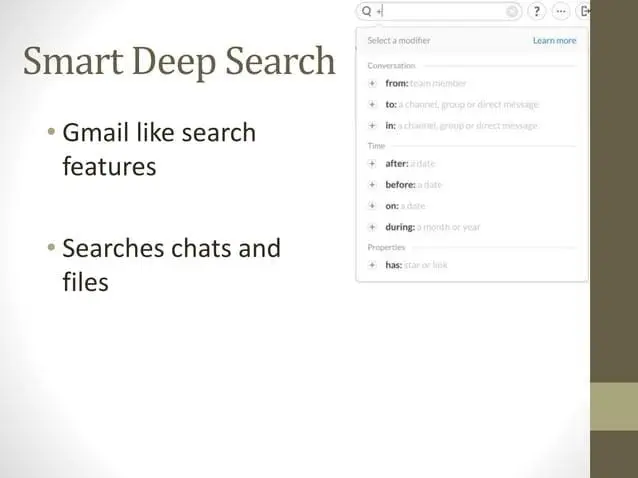
This workflow diagram illustrates Slack’s platform strategy by showcasing integrations with over 100 applications, from development tools like GitHub to business applications like Google Drive and Salesforce. The integration ecosystem transforms Slack from a communication tool into a central nervous system for team workflows, where notifications, updates, and actions from disparate systems converge in one interface. This strategic positioning creates tremendous value for customers while building significant competitive moats through integration partnerships and development investment.
The emphasis on mobile and desktop synchronisation addresses the hybrid work reality even before remote work became mainstream, demonstrating forward-thinking product strategy. By ensuring seamless experience across devices, Slack positions itself as essential infrastructure rather than optional software, increasing usage frequency and deepening customer dependence. This omnichannel approach also enables higher engagement metrics that support premium pricing and retention.
What investors see: A platform strategy that creates multiple barriers to customer churn while opening numerous expansion opportunities through deeper workflow integration. The 100+ integrations demonstrate strong developer ecosystem engagement and suggest viral growth potential as third-party applications drive Slack adoption. The cross-platform synchronisation indicates technical sophistication and user experience focus that can sustain competitive advantages as competitors attempt to replicate features.
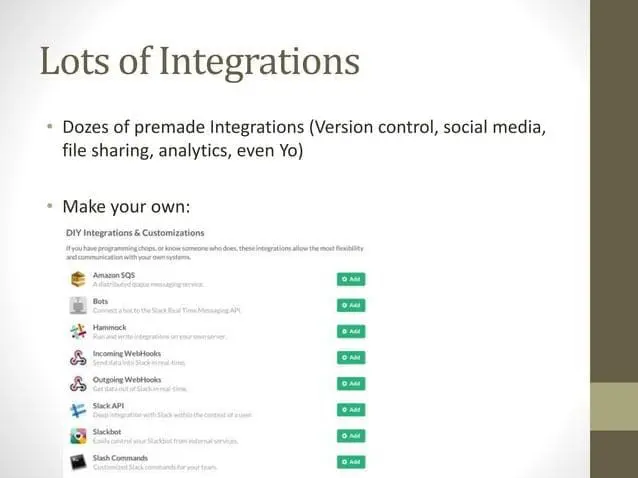
Slack’s traction slide presents extraordinary growth metrics that immediately capture investor attention: 15,000 daily active users, 500% month-over-month growth, and $1 million in annual recurring revenue from 200+ paid teams. These numbers demonstrate not just product-market fit, but explosive viral adoption that suggests massive market opportunity. The 500% monthly growth rate is particularly compelling, as it indicates organic demand that reduces customer acquisition costs and suggests strong network effects driving expansion.
The progression from user metrics to revenue conversion illustrates Slack’s successful freemium model execution, with clear evidence that free users convert to paid plans at meaningful rates. Reaching $1 million ARR within months of launch validates both product value and pricing strategy, while the 200+ paid teams metric demonstrates broad market appeal beyond early adopter segments. These metrics collectively suggest sustainable growth patterns that can support large-scale venture investment.
What investors see: The holy grail of SaaS metrics—rapid user growth combined with strong revenue conversion in a massive addressable market. The 500% monthly growth suggests winner-take-all market dynamics, while $1M ARR validates willingness to pay at scale. These numbers indicate potential for venture-scale returns, with growth rates that could support aggressive expansion investment and market leadership positioning. The combination of usage and revenue metrics reduces investment risk while suggesting enormous upside potential.
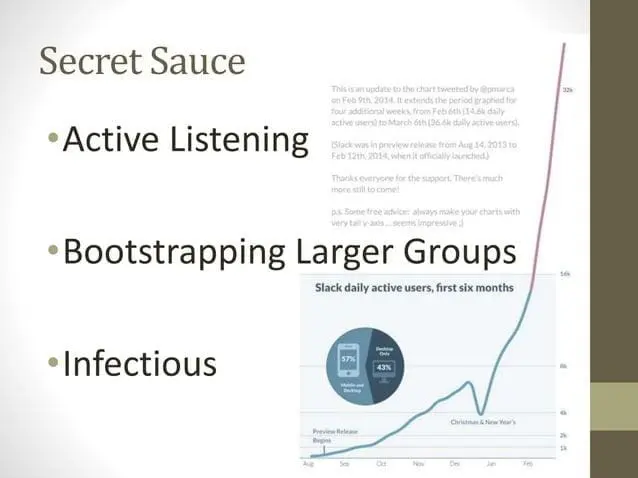
Slack’s market sizing presents a $4 billion total addressable market in enterprise software, with a $1 billion serviceable addressable market in team communication growing at 20% annually. This conservative approach to market definition demonstrates sophisticated understanding of investor skepticism around inflated TAM calculations, while the 20% CAGR indicates secular growth trends supporting long-term expansion. The focus on team communication rather than broader collaboration software creates a defensible market definition that aligns with Slack’s core competencies.
The market growth drivers extend beyond simple digitisation to include distributed teams, knowledge work expansion, and enterprise software modernisation trends. These structural shifts suggest sustained demand for Slack’s solution beyond early adoption phases, supporting premium valuations and long-term revenue growth. The geographic expansion opportunities within this market framework provide additional growth vectors for scaling beyond initial customer segments.
What investors see: A massive market opportunity with conservative sizing methodology that reduces execution risk while maintaining venture-scale upside potential. The 20% growth rate indicates tailwinds that can accelerate customer acquisition and expansion, while the $1B SAM provides sufficient room for multiple successful competitors. The market definition aligns with Slack’s demonstrated traction, suggesting achievable market share capture rather than speculative opportunity expansion.
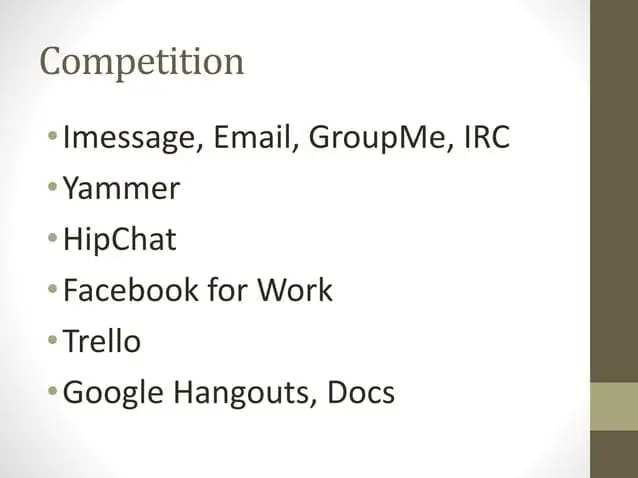
The competitive matrix positions Slack against email, HipChat, and Campfire across key differentiation factors including search capability, integrations, and viral growth mechanisms. This strategic framing acknowledges existing solutions while highlighting Slack’s superior approach to persistent communication, workflow integration, and organic adoption. By comparing against both legacy communication (email) and direct competitors (HipChat, Campfire), Slack demonstrates understanding of competitive dynamics across different customer segments and use cases.
The emphasis on search and integrations as competitive moats reflects deep product strategy thinking, as these capabilities create compounding value over time and increase switching costs. While competitors can replicate messaging features, the combination of comprehensive search, extensive integrations, and viral adoption mechanics creates a defensive position that becomes stronger with scale. This positioning suggests sustainable competitive advantages rather than temporary feature differentiation.
What investors see: A realistic competitive assessment that acknowledges existing solutions while articulating clear differentiation factors that drive customer preference and retention. The focus on viral growth as a competitive advantage suggests scalable customer acquisition that improves unit economics over time. The integration strategy creates network effects and switching costs that protect market share, while search capabilities address enterprise needs for knowledge management and compliance.
Slack’s freemium model balances accessibility with monetisation through a tiered pricing structure: free for small teams, $8 per user monthly for standard features, and $15 for enterprise functionality. This pricing strategy removes adoption friction while creating natural upgrade paths as teams grow and require advanced features like unlimited message history, guest access, and compliance tools. The per-seat pricing model aligns revenue with customer value and usage, creating predictable recurring revenue that scales with team growth.
The enterprise tier pricing at $15 per seat positions Slack as premium software that delivers significant value to justify the cost, rather than competing solely on price against incumbents. This strategy enables higher gross margins and supports investment in product development, customer success, and market expansion. The clear feature differentiation between tiers creates compelling upgrade incentives while maintaining product-market fit across different customer segments.
What investors see: A sophisticated monetisation strategy that drives viral adoption through freemium access while capturing value from higher-usage customers through premium tiers. The per-seat model creates natural expansion revenue as teams grow, improving unit economics over time. The enterprise pricing suggests strong value proposition and market positioning that can support high gross margins, essential for scaling sales and marketing investment to capture market opportunity.
Slack’s go-to-market strategy emphasises bottom-up adoption through word-of-mouth and viral growth, starting with tech teams before expanding to broader enterprise segments. This approach leverages satisfied users as advocates who drive organic adoption within their organisations and professional networks, reducing customer acquisition costs while building authentic product credibility. The focus on tech teams as initial customers provides early adopters who are comfortable with new software and can provide valuable product feedback for iteration.
The transition from grassroots adoption to enterprise sales reflects a sophisticated understanding of B2B software buyer dynamics, where departmental usage often precedes organisational procurement. By proving value at the team level before seeking enterprise-wide deployment, Slack reduces sales cycle friction and demonstrates clear ROI to decision-makers. This land-and-expand strategy creates multiple touchpoints for revenue growth within customer organisations.
What investors see: A capital-efficient go-to-market strategy that leverages product-led growth to reduce customer acquisition costs while building sustainable competitive moats through network effects. The bottom-up approach creates authentic customer advocacy that scales more effectively than traditional sales and marketing spend. The progression from tech teams to enterprise suggests clear expansion pathways that can drive significant revenue growth from existing customer relationships.
The founding team brings exceptional credibility through Stewart Butterfield’s successful exit from Flickr to Yahoo, combined with technical expertise from Eric Costello, Cal Henderson, and Serguei Mourachov who built scalable systems at Yahoo and other major technology companies. This combination of entrepreneurial experience and technical depth addresses key investor concerns about team ability to execute on market opportunity while navigating the challenges of rapid scaling in competitive markets.
The team’s experience building consumer internet products provides unique insight into user experience and viral growth mechanisms that differentiate enterprise software companies in increasingly competitive markets. Their background in photo sharing, gaming, and large-scale web applications demonstrates technical capabilities required for reliable, performant software that can handle enterprise-scale usage while maintaining consumer-grade usability that drives adoption.
What investors see: A rare combination of proven entrepreneurial success, deep technical expertise, and consumer product instincts that can execute on enterprise market opportunities. Butterfield’s Flickr exit validates his ability to build and scale technology businesses, while the team’s technical background reduces execution risk for rapid growth scenarios. The consumer internet experience suggests potential for viral growth and user experience differentiation that creates sustainable competitive advantages in enterprise markets.
Slack’s financial projections target $10 million annual recurring revenue by 2015 with 80% gross margins, demonstrating the unit economics that make SaaS businesses attractive to investors. The high gross margin profile reflects software’s scalability advantages, where incremental customers add minimal variable costs while contributing full subscription value to revenue growth. These margins provide substantial operating leverage for sales and marketing investment to capture market opportunity while maintaining healthy unit economics.
The break-even pathway shows sustainable business model fundamentals, with clear visibility to profitability that reduces investor risk while maintaining growth investment capability. By demonstrating financial discipline alongside growth ambition, Slack positions itself as a mature business capable of balancing expansion with fiscal responsibility. This approach appeals to investors seeking venture-scale returns with reduced downside risk from unsustainable unit economics.
What investors see: Strong SaaS fundamentals with high gross margins that support aggressive growth investment while maintaining clear pathway to profitability and positive unit economics. The $10M ARR target with 80% margins indicates significant operating leverage potential as the business scales. The break-even projection demonstrates management’s understanding of capital efficiency and sustainable growth, reducing investor concerns about extended burn rates without clear profitability visibility.
Slack’s long-term vision positions the platform as comprehensive team infrastructure that integrates communication, file sharing, task management, and workflow automation in a unified experience. This expansion beyond messaging into broader productivity workflows significantly increases addressable market opportunity while creating stronger customer lock-in through deeper workflow integration. The platform approach enables multiple monetisation vectors and reduces vulnerability to competitive pressure in any single product category.
The roadmap demonstrates strategic thinking about customer workflow evolution and technology integration trends, positioning Slack to benefit from broader digital transformation initiatives within customer organisations. By becoming central to team operations rather than supplementing them, Slack can increase per-seat value and reduce churn risk while expanding into adjacent product categories that leverage existing customer relationships and platform capabilities.
What investors see: A compelling long-term vision that expands total addressable market while building sustainable competitive moats through platform lock-in and workflow integration. The evolution beyond communication suggests multiple expansion opportunities that can drive significant revenue growth from existing customers. The platform strategy indicates potential for partner ecosystem development and third-party innovation that can accelerate feature development while creating additional customer value and retention mechanisms.
Slack’s funding request of $120 million at $1.12 billion pre-money valuation reflects confidence in market leadership potential while providing substantial capital for aggressive expansion. The unicorn valuation acknowledges exceptional traction and market opportunity while the funding amount enables significant investment in product development and sales expansion without near-term capital constraints. This strategic approach positions Slack to capture market share during critical early market development phases.
The investment size supports multi-year strategic initiatives including international expansion, enterprise sales development, and platform capability enhancement that require sustained capital commitment to execute effectively. By raising sufficient capital to achieve multiple milestones, Slack reduces future fundraising risk and dilution while maintaining strategic flexibility to adapt to market opportunities and competitive dynamics as they evolve.
What investors see: A substantial but justified funding request that aligns with demonstrated traction and market opportunity scale, reducing execution risk through adequate capital provision. The unicorn valuation reflects exceptional growth metrics while the funding size enables aggressive market capture during critical early market development phases. The strategic approach suggests experienced management capable of capital-efficient scaling while maintaining competitive positioning and growth trajectory.
The fund allocation prioritises engineering (40%) and sales/marketing (30%) investment, reflecting Slack’s strategic focus on product leadership and market capture during critical early growth phases. The substantial engineering investment supports platform development, integration expansion, and enterprise feature development required to maintain competitive differentiation and support larger customer deployments. This technical investment creates compounding advantages through improved product capabilities and platform ecosystem development.
The balanced approach between product development and market expansion demonstrates sophisticated capital allocation strategy, with operations (20%) and reserves (10%) providing necessary infrastructure support and strategic flexibility. The sales and marketing investment enables enterprise customer acquisition and international expansion, while operational investment supports scaling customer success and support functions required for business growth and customer retention.
What investors see: Thoughtful capital allocation that balances product leadership investment with market expansion capabilities, essential for sustaining competitive advantages while capturing market opportunity. The engineering focus demonstrates commitment to technical differentiation and platform development that creates sustainable moats. The sales and marketing investment indicates serious commitment to enterprise market capture, while operational investment shows understanding of scaling requirements for sustainable growth management.
The closing slide provides clear contact information and call to action, maintaining the professional presentation quality established throughout the deck. This straightforward approach reflects confidence in the preceding presentation content while making it easy for interested investors to continue the conversation. The simplicity avoids diluting the investment narrative with unnecessary complexity or additional asks that might confuse the primary funding objective.
The professional closing reinforces Slack’s positioning as a serious enterprise software company capable of building long-term relationships with institutional investors. By maintaining consistent design quality and clear communication through the final slide, the team demonstrates attention to detail and professional execution capability that extends beyond product development into business operations and investor relations.
What investors see: Professional execution and attention to detail that extends throughout the entire investor interaction, indicating management capability to execute on complex business operations beyond product development. The clear call to action facilitates follow-up conversations while the consistent presentation quality reinforces positive impressions formed during the pitch presentation. This professional approach builds confidence in the team’s ability to manage investor relationships and business operations at scale.
The appendix provides additional metrics, customer logos from notable organisations like NASA and Oracle, and detailed financial projections that support the main presentation narrative without overwhelming the primary flow. These prestigious customer logos serve as powerful social proof that validates Slack’s enterprise readiness and market positioning, while additional metrics provide data-driven investors with deeper analytical material for due diligence processes.
The strategic placement of detailed financial models and operational metrics in appendix format allows the main presentation to maintain narrative flow while providing analytical depth for investor deep-dive sessions. This structure accommodates different investor preferences and meeting formats, from high-level partner presentations to detailed analytical sessions with investment committees that require comprehensive financial and operational data.
What investors see: Comprehensive supporting documentation that demonstrates transparency and analytical rigour while building credibility through prestigious customer references. The detailed financial projections indicate sophisticated business planning and financial management capabilities, while customer logos provide third-party validation of enterprise market traction. This appendix structure shows understanding of investor due diligence requirements and commitment to providing necessary information for investment decision-making.
From insight to investor-ready, in weeks not months.
Apply these lessons to your raise — we’ll build your deck, financial model, and IM together.
While Slack’s Series B deck stands as one of the most compelling demonstrations of traction-driven fundraising in SaaS history, securing $120 million at unicorn valuation within 18 months of launch, it reflects the fundraising norms and investor expectations of 2014 rather than today’s more rigorous analytical standards. Modern investors demand deeper unit economics analysis, more comprehensive risk assessment, and greater transparency around customer behaviour and market dynamics that weren’t standard practice when this presentation was crafted. For those looking to navigate these evolving expectations, partnering with expert pitch deck consultants can provide invaluable support.
Lacks LTV:CAC ratios or customer acquisition costs; modern decks require these to prove scalable profitability beyond top-line growth.
No retention or churn rates shown; investors now demand these for SaaS sustainability proof.
High-level projections only, missing bottom-up assumptions; current standards expect spreadsheets or linked models for scrutiny.
No direct quotes or case studies; today’s decks include social proof from paying customers to build credibility.
Omits potential risks like competition from Microsoft; modern decks address these proactively to show realism.
No mention of acquisition paths or comparables; VCs now seek clarity on liquidity events.
Team slide focuses on founders without broader diversity; inclusive decks highlight this for cultural fit.
These gaps reflect evolving investor sophistication and market maturity rather than fundamental presentation weaknesses. At Projects RH, we help founders understand how to adapt successful historical approaches to meet current investor expectations, ensuring that compelling growth stories are supported by the analytical rigour and risk awareness that today’s funding environment demands.
Slack’s deck prioritised real metrics like 500% MoM growth early; founders should showcase validated product-market fit before vision to hook investors.
Highlighted Flickr success; leverage past wins to build trust—investors bet on teams, so position founders as proven operators.
Clean design with screenshots and charts; avoid text walls—use visuals to communicate faster and memorably.
Emphasized organic growth model; demonstrate how your business scales without heavy sales spend.
Specified $120M and allocation; always tie funding to milestones for accountability and de-risking.
Matrix showed clear differentiation; map rivals honestly but highlight your moats like integrations.
Flow from problem to vision; craft a narrative arc that emotionally engages while informing.
Ready to raise? Let’s talk.
We’ve helped founders secure $2B+ in investor interest. Your round could be next.
The distance between the Slack that presented this Series B deck in 2014 and the enterprise communication platform that Salesforce acquired for $27 billion in 2021 represents one of the most remarkable value creation stories in modern enterprise software history. The transformation from a 35-person startup with $1 million ARR to a global platform serving 32 million weekly active users across 150,000+ enterprise customers demonstrates how exceptional execution can turn viral product-market fit into sustainable market dominance.
For Andreessen Horowitz and the other Series B investors, Slack’s trajectory delivered extraordinary returns on their $120 million investment. The $27 billion acquisition value represents roughly a 225x multiple on the original unicorn valuation, while the broader growth in enterprise software valuations and Slack’s market leadership position created sustained value throughout multiple financing rounds. This investment outcome validates the firm’s thesis about backing exceptional teams with strong product-market fit in large addressable markets.
The Slack success story illustrates how traction-driven fundraising narratives, when backed by exceptional execution and market timing, can compound into category-defining businesses that reshape entire industries. For founders crafting their own pitch decks, Slack’s approach demonstrates that authentic growth metrics combined with strategic vision and proven team capabilities create investment narratives that resonate with top-tier investors and support sustained value creation over extended growth cycles.
At Projects RH, we help companies across all industries create investor-ready materials that close deals. Our integrated capital raising package ensures consistency across all your investor documentation.
Built in-house for accuracy and investor confidence.
Comprehensive investor documentation following global best practices.
12-slide investor-ready presentation with supporting materials.
High-impact snapshot to capture investor attention fast.
Browse our collection of real pitch deck breakdowns from the world’s most successful companies.
Slack's Series B pitch deck consisted of 17 slides, balancing concise storytelling with key metrics, traction, and financials without overwhelming investors.
The deck helped secure $42.75M from Andreessen Horowitz as part of a $120M Series B round in 2014, achieving unicorn status at $1.12B valuation.
Explosive traction (500% MoM growth), proven team from Flickr, viral freemium model, clear market positioning, and strong visuals created investor FOMO.
Yes, as a structure for traction-heavy SaaS pitches, but adapt to your stage—add modern elements like unit economics and customize for your metrics.
Series B in 2014, after seed and Series A, when they had proven PMF with $1M ARR and rapid user growth.
Creating an effective pitch deck requires more than following a template — it demands strategic clarity about your value proposition, a deep understanding of your target investors, and rigorous financial modelling to support your narrative. At Projects RH, we combine financial expertise with strategic storytelling to build pitch decks, information memorandums, and financial models that meet the standards of institutional investors worldwide. Our team has generated over USD 2.0 billion in expressions of interest across mining, energy, technology, medtech, and financial services sectors. Schedule a consultation to discuss how we can help position your company for successful capital raising.