
In our experience advising sponsors on capital-intensive projects, one of the most costly structural errors occurs when ECA financing is treated as a late-stage option rather than an early design constraint. The pattern we see again and again looks like this: a sponsor has a strong site, a credible offtake counterparty, and a financial model that works in base case. What they do not have is a procurement strategy designed with ECA nexus requirements in mind – and by the time that gap becomes visible, equipment contracts have already been signed with suppliers from a country none of the relevant agencies cover. The project is financeable. The ECA route, which could have extended senior debt tenor materially and transferred political risk to a sovereign-backed counterparty, is closed before the conversation has even started.
That is the pattern worth understanding. Export credit agencies (ECAs) are widely referenced, frequently misunderstood, and routinely underused by the sponsors who would benefit most from engaging them early. The confusion is partly structural: ECAs are not development banks, not multilateral lenders, and not commercial institutions. They are government-backed entities created to promote exports from their home country, and that mandate shapes everything about how a project must be structured to access them. Understanding that mandate is where the practical work begins.
This article is written for project sponsors, developers, and capital raisers working in energy, infrastructure, mining, maritime, and adjacent capital-intensive sectors. It covers what ECAs are, what instruments they deploy, where they sit in the capital stack, and – crucially – what the financial model and documentation package must look like before the conversation with an ECA is worth having.
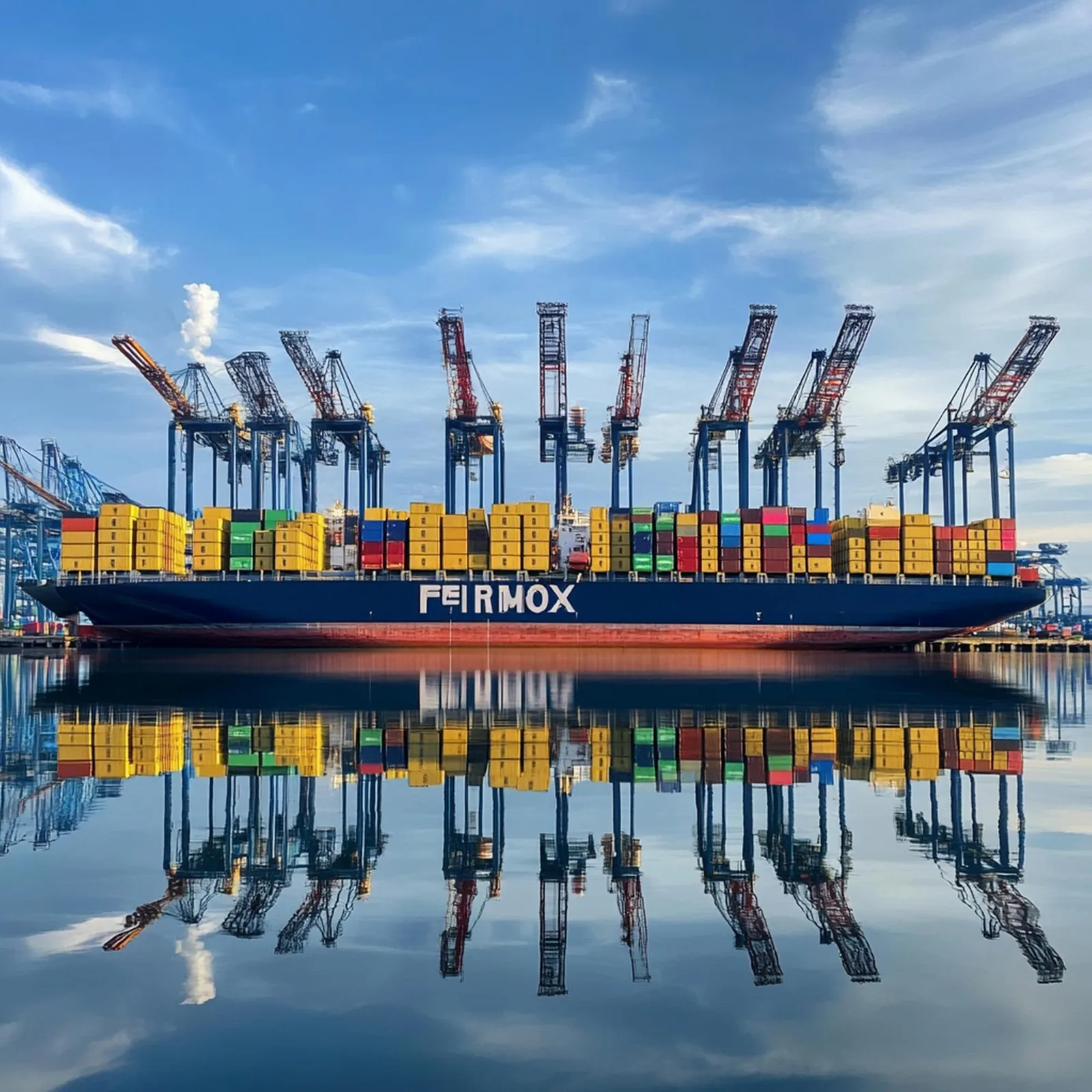
What an Export Credit Agency Is and Why It Exists
An export credit agency is a government-backed institution whose primary mandate is to support exports from its home country by extending credit, providing guarantees, or insuring against risk on behalf of exporters and, in many structures, their foreign buyers. The institution exists because private capital markets alone will not finance certain cross-border transactions. The tenors are too long, the jurisdictional risk too opaque, the counterparty too unfamiliar. ECAs fill that gap with the full faith and balance sheet of their home government standing behind the exposure.
ECAs are not aid agencies. Their support is commercially motivated: more exports mean more domestic jobs, more manufacturing output, and stronger current account positions. The benefit to the foreign project sponsor is real but secondary – a welcome consequence of the home-country export agenda, not its purpose. Sponsors who approach an ECA as a charity window tend to be surprised by the rigor of the process. Those who understand the underlying commercial logic – and who engage capital raising consulting support early enough to position the project correctly – navigate it far more effectively.
The major players are well-established and geographically broad:
- US Export-Import Bank (US Ex-Im)
- UK Export Finance (UKEF)
- Export Finance Australia (EFA)
- Korea Eximbank (K-EXIM)
- Japan Bank for International Cooperation (JBIC)
- Euler Hermes (Germany)
- Atradius DSB (Netherlands)
- China Exim
Each operates under its own legislative mandate but participates in a shared multilateral framework governed by the OECD. Cross-border projects sourcing capital equipment or services from multiple jurisdictions can, in principle, access blended ECA support from more than one agency – though the intercreditor complexity that creates is a topic of its own.
The Three Core ECA Instruments: Loans, Guarantees, and Insurance
Sponsors approaching an ECA for the first time often assume there is a single product on offer. There are three, and the distinction matters before any financing conversation is opened.
Direct loans are extended by the ECA itself to the foreign project entity (the buyer credit structure) or to the domestic exporter (the supplier credit structure). Large-scale project finance deals overwhelmingly use buyer credit, because the loan integrates cleanly into the project finance documentation, the exporter receives payment immediately upon drawdown, and the project company controls its own debt relationship.
Guarantees are the more common ECA instrument in sophisticated project finance markets. The ECA does not lend directly but instead wraps a guarantee around senior debt provided by one or more commercial banks. The guarantee – covering political risk, commercial risk, or both – reduces the risk weighting of the commercial loan, allowing lenders to extend longer tenors and, in some cases, lower pricing than they would on an uncovered basis. The ECA guarantee is where the structural value typically concentrates.
Insurance products – political risk insurance (PRI) and commercial risk insurance – can be accessed independently of a guarantee or loan. They are particularly relevant for sponsors or equity investors who need protection against expropriation, currency inconvertibility, or contract frustration in higher-risk jurisdictions. Sovereign risk is real in many of the markets where capital-intensive projects are developed, and insurance does not replace debt; it protects the other layers of the capital structure against events that debt instruments cannot absorb.
Understanding which instrument fits a specific deal requires clarity on the project’s stage, the sourcing of its capital equipment, the jurisdiction of the project entity, and the composition of its lender group. Getting that clarity before approaching an ECA – not during the conversation with the agency – is what separates a credible application from a premature one.
The Export Nexus: The Threshold Every Sponsor Must Understand
The single most common reason a project is turned away from ECA financing is failure to demonstrate a qualifying export nexus. This is not a technicality. It is the foundational eligibility test, and it is the one sponsors most often discover too late.
Each ECA defines a minimum percentage of project content that must originate from its home country. The threshold varies by agency and by the specific instrument sought, and each agency’s published mandate documentation sets out the applicable requirements. US Ex-Im’s content policy requires that a defined share of goods and services in the financed contract be of US origin. UKEF has gradually relaxed its UK content requirements in certain structures, recognising that major infrastructure projects are inherently multinational in their supply chains.
What is equally important to understand is that the export nexus is not assessed retrospectively. Procurement strategy and ECA strategy must be designed together, at the project development stage, before equipment is specified, contracts are signed, and supplier relationships are locked in. A project that has already committed to an all-domestic or third-country procurement plan may find itself structurally ineligible for ECA support regardless of how strong its underlying fundamentals are.
For sponsors working on projects in LATAM or APAC that incorporate European turbines, Australian engineering services, or Korean or Japanese heavy equipment – the kind of supply chain architecture common in the energy and mining sectors where Projects RH operates – the cross-border sourcing question is almost always live. In each case, careful mapping of the procurement plan against the nexus requirements of the relevant ECAs is foundational work, not an afterthought. Experienced capital raising consultants routinely treat this mapping exercise as a prerequisite to any ECA engagement, precisely because reversing a procurement decision after contracts are signed is rarely an option.
Where ECA Debt Sits in the Capital Stack
ECA financing does not exist in isolation. It interacts with, and in important ways constrains, every other layer of the project finance capital structure. Sponsors who discover this after soft-circling equity on terms an ECA would not accept are in a difficult position – and it is a situation that due diligence discipline at the outset would have prevented.
The standard project finance capital structure waterfall runs: equity at the base, mezzanine or subordinated debt in the middle, and senior debt at the top. ECA loans or ECA-guaranteed senior debt sit at the top of that waterfall – first claim on project cash flows, tightest covenant package, most restrictive drawdown conditions, and longest tenor. That seniority is the source of the ECA’s structural value. It also means every instrument below it in the stack must be negotiated with the ECA’s requirements in mind.
| Capital layer | Typical position | ECA interaction |
|---|---|---|
| Equity | Base / first loss | Subordinate to all debt; ECA completion guarantee often required |
| Mezzanine / subordinated debt | Middle | Pricing and PIK mechanics constrained by senior covenants |
| Commercial senior debt (uncovered) | Upper middle | Repriced when ECA guarantee is added to the stack |
| ECA loan or guaranteed senior debt | Senior / first | Sets the tenor, DSCR floor, and security architecture for the deal |
Once an ECA is in the stack, equity investors and mezzanine providers reprice their risk based on the ECA’s seniority and covenant requirements. This is not always a comfortable repricing. Long-term strategic investors who understand project finance will generally welcome ECA involvement as a quality signal – it tells them a sovereign-backed credit committee has reviewed the deal and found it serviceable. Shorter-horizon equity participants who want lighter covenant packages and faster exit paths may find the discipline constraining.
The sequencing implication is practical: the ECA conversation should happen early, ideally before equity terms are discussed in detail, so that the constraints the ECA will impose are priced into every other layer of the capital structure from the outset. Capital and structure must align from the beginning. Discovering the misalignment after term sheets have been exchanged is an expensive way to learn that lesson.
The OECD Arrangement: The Rulebook Behind Every ECA Deal
Most of the significant ECA-supporting economies are signatories to the OECD Arrangement on Officially Supported Export Credits. Sponsors who have not read it – or at least understand its key parameters – will be unprepared when they see its outputs in a term sheet.
The Arrangement sets floors and ceilings that are not negotiable agency preferences. Minimum premium rates, maximum repayment periods by sector, and minimum interest rates tied to the Commercial Interest Reference Rate (CIRR) are all governed by it. Sector-specific annexes extend the framework to ships, nuclear facilities, renewable energy projects, rail infrastructure, and water projects, each with tailored terms reflecting the asset life and risk profile of those categories.
Put simply: an ECA cannot offer a tenor that exceeds the Arrangement’s maximum for the relevant sector, nor can it price its premium below the Arrangement’s minimum floor. Understanding this upfront prevents the common error of expecting ECA pricing to dramatically undercut commercial rates. The benefit of ECA support is structural – longer tenors, political risk coverage, enhanced lender comfort – rather than a below-market subsidy of the kind sponsors sometimes imagine.
Sectors Where ECAs Are Most Active
ECAs are not sector-agnostic, and knowing where their appetite genuinely concentrates saves time on both sides of the table:
- Energy – conventional and renewable – including power generation, transmission infrastructure, LNG facilities, and solar and wind installations
- Mining and minerals projects, particularly where capital equipment is imported
- Maritime – shipbuilding, port infrastructure, and vessel financing
- Infrastructure broadly – roads, water treatment, hospitals, and datacenters
These are, not coincidentally, the sectors where Projects RH focuses its capital raising practice. It is important to remember that ECA appetite is not static: agencies periodically adjust their sector priorities in response to home-country industrial policy, and the current emphasis on energy transition and critical minerals in several OECD member countries has translated into expanded ECA mandates covering hydrogen, geothermal, and battery storage projects that would not have qualified in earlier cycles. Sponsors in energy, resources, infrastructure, and maritime should treat ECA eligibility as a standard item on the project development checklist – not an exotic instrument to be evaluated only when commercial debt falls short. Engaging project finance advisors who track these shifting agency mandates in real time is one of the more practical ways to stay ahead of the eligibility question.
The Financial Model as ECA Pre-Qualification Infrastructure
This is the angle that most generic ECA articles miss entirely, and it is the one that matters most to sponsors who want to move efficiently through the process.
An ECA credit committee asks precisely the same questions a well-built project finance model should already be answering: What is the base-case cash flow projection? Where does the debt service coverage ratio (DSCR) break under stress? What happens to coverage under input price sensitivity? Is there a completion guarantee in place? A DSCR of 1.0x means cash flow exactly equals debt service – that definitional floor is where ECA credit committees begin their stress testing, not where they stop. If the financial model cannot demonstrate serviceable debt coverage at the tenors an ECA is willing to offer, the ECA route is not viable – regardless of how compelling the project narrative sounds in a presentation room.
The financial model is not a fundraising document prepared after the ECA conversation begins. It is the pre-qualification instrument that determines whether the ECA conversation is worth having at all. At Projects RH, the model is the single point of truth from which every other piece of documentation – the Information Memorandum, the term sheet conversation, the roadshow narrative – is derived. A model built around base, upside, and downside scenarios, with cash flow distributed through the waterfall and DSCR tracked at each scenario, will move through ECA due diligence faster than one produced primarily to support a pitch deck.
For me, the clearest sign that a sponsor is not yet investment-ready for an ECA conversation is a model that runs a single base-case scenario and stops. That is a marketing model. What an ECA credit committee needs is a stress-tested operating model, and the gap between the two is where deals lose months.
What Documentation ECAs Require Before Credit Approval
ECA due diligence is not comparable to a commercial bank loan approval. It is closer in depth and duration to a multilateral development bank review, and sponsors who budget a short runway are routinely surprised to find the process takes far longer than anticipated.
The standard documentation package for ECA credit approval typically includes:
- A bankable financial model, audited or independently reviewed, demonstrating debt service coverage at the agency’s minimum DSCR requirements across multiple scenarios
- A comprehensive Information Memorandum (IM) covering the project, sponsors, offtake structure, and market context
- An Environmental and Social Impact Assessment (ESIA) aligned to the OECD Common Approaches and, for project finance transactions, the Equator Principles
- An Independent Technical Report (ITR) from a qualified engineering firm
- Legal opinions across all relevant jurisdictions covering project agreements, security structure, and land tenure
- Offtake agreements or Power Purchase Agreements (PPAs), or at minimum an advanced offtake architecture demonstrating revenue visibility
- Construction and completion guarantees from creditworthy counterparties
The environmental and social compliance dimension deserves particular emphasis. Most major ECAs now categorise projects by E&S risk level – typically A (significant), B (limited), or C (minimal) – and the scope of assessment required scales accordingly. A Category A project in a mining or energy context will require a full ESIA, stakeholder consultation documentation, and an ongoing monitoring and disclosure commitment. Sponsors who treat this as a post-approval checkbox rather than a concurrent work stream will encounter delays measured in months, not weeks.
What we have concluded, working across these documentation processes in energy and infrastructure deals across multiple jurisdictions, is that the agencies are not being obstructive. ECAs are extending sovereign-backed credit, often into complex jurisdictions with genuine political and commercial risk. The rigor of their process reflects the seriousness of their exposure. Projects that invest in documentation quality before engaging an ECA move through credit faster – and the quality of the financial model is almost always the variable that determines whether the process accelerates or stalls.
Matching Your Project to the Right ECA
Cross-border projects often qualify for support from more than one ECA, depending on where capital equipment and professional services are sourced. A wind energy project in Colombia using European turbines, Australian project development services, and Korean or Japanese balance-of-plant contractors could in principle approach UKEF, EFA, and K-EXIM concurrently – each for the portion of project content that originates in their respective home country. That is not a theoretical possibility; it is a structure used regularly in large-scale energy and infrastructure deals.
The routing logic requires discipline and an ordered mind:
- Identify the major procurement contracts and their likely country of origin
- Map each procurement item to the ECA of the relevant exporting country
- Assess the OECD Arrangement terms applicable to the project sector in each jurisdiction
- Determine whether parallel ECA applications are structurally viable and whether the intercreditor arrangements can be negotiated among multiple agencies
Co-financing structures involving two or more ECAs require more complex intercreditor documentation and careful sequencing of credit approvals, but they can meaningfully reduce blended cost and extend overall tenor. This is authentic cross-border structuring work, and it rewards sponsors who have a clear financing roadmap before approaching any single agency. Similarly, it rewards project finance consulting teams who are nimble enough to coordinate across multiple regulatory frameworks without losing the thread of the underlying deal logic.
The practical starting point is a procurement plan deliberately designed with ECA nexus requirements in mind – and a financial model that can flex its debt assumptions to reflect the terms of each agency under consideration.
Frequently Asked Questions
Is ECA financing only for projects that cannot get commercial bank debt?
This is one of the most persistent misconceptions in the market. ECAs are not a last resort. Sophisticated sponsors engage them early and strategically precisely because ECA backing extends tenor beyond what commercial banks will offer on their own, provides political risk coverage that commercial lenders cannot replicate, and lowers the blended cost of capital across the stack. It is clear that ECA involvement is a mark of structural maturity – it signals to equity investors and commercial lenders alike that the project has passed a sovereign-backed credit review, which carries genuine weight in any jurisdiction.
How long does ECA due diligence typically take?
Sponsors consistently underestimate this. The process is closer to a multilateral development bank review than a commercial bank credit assessment. From initial application to credit approval, a year or more is a realistic planning horizon for a Category A project in a complex jurisdiction. Documentation quality is the primary variable within the sponsor’s control. Projects that arrive with a complete, independently reviewed financial model, a ready ESIA, and a bankable offtake structure – a PPA with a creditworthy counterparty being the clearest case – move through the process materially faster than those assembling documentation in parallel with the agency review.
Can a project access ECA financing from more than one country?
Yes, and this remains underused. Cross-border projects that source capital equipment or professional services from multiple countries can in principle access blended ECA support from each relevant agency. A power project sourcing European turbines and Australian engineering services could approach UKEF and Export Finance Australia concurrently for the respective portions of eligible contract value. The intercreditor arrangements and coordination between agencies add complexity, but for large-scale deals the blended tenor and coverage benefits can be material. Procurement strategy must be designed with this possibility in mind from the project development stage – not retrofitted once contracts are signed.
Does ECA approval mean the project is commercially endorsed?
No, and this distinction matters. An ECA’s positive credit decision means the agency believes the debt will be repaid and the export content meets eligibility requirements under its mandate. It is not a commercial endorsement, a market validation, or a substitute for the independent assessment that equity investors and other capital providers will conduct on their own terms. Sponsors who present ECA involvement to equity partners as proof of commercial viability are overstating what the approval actually means – and experienced long-term strategic investors will notice.
What role does the financial model play in ECA applications?
It is the central instrument in the credit assessment. The ECA credit committee evaluates debt service coverage ratios, cash flow projections under multiple scenarios, and the sensitivity of coverage to input price movements and construction delays. A model built around a single base-case scenario is insufficient. What an ECA needs is a stress-tested, scenario-layered operating model that maps cash flows through the capital structure waterfall and demonstrates coverage resilience under downside assumptions. Projects that arrive with that model already in place – built to the standard of a bankable financial model rather than a pitch deck appendix – shorten the due diligence timeline considerably.
ECAs are not complicated in principle. They exist to back exports, they deploy three core instruments, they follow OECD rules, and they conduct thorough due diligence before committing sovereign-backed credit. The complexity lies in the sequencing: knowing when to engage an ECA relative to equity conversations, how to structure procurement to meet the nexus test, and how to build the financial model and documentation package to the standard an ECA actually requires. That sequencing work – the structuring for capital that determines whether a project moves efficiently through the process or discovers its gaps six months into a credit review – is exactly where the model-first methodology earns its value.
In the end, strong projects don’t fail because of weak fundamentals. They fail because capital and structure don’t meet at the right time. With ECAs, the right time is earlier than most sponsors think.