A Partnership Built for Scale, Not Silos
Bayer and BP’s recently announced long-term strategic alliance to scale camelina as a renewable feedstock for renewable diesel (RD) and sustainable aviation fuel (SAF) is far more than a commercial agreement – it is a clear signal of how the next phase of energy transition capital deployment is taking shape. Through the newgold™ platform, Bayer contributes deep expertise in seed genetics, crop science, and agricultural supply chains, while BP brings downstream integration, refining capacity, and global market access. The initial focus on North America is highly deliberate: this is where SAF mandates, LCFS frameworks, and long-term corporate offtake agreements are converging fastest, creating a capital-ready environment for scalable biofuels infrastructure.
What this alliance reinforces is a trend we see repeatedly across energy transition finance and project development: scale is no longer built in silos. It is built through strategic partnerships that integrate agronomy, technology, infrastructure, and capital discipline from the outset.
Why Camelina Is a Systems-Level Solution
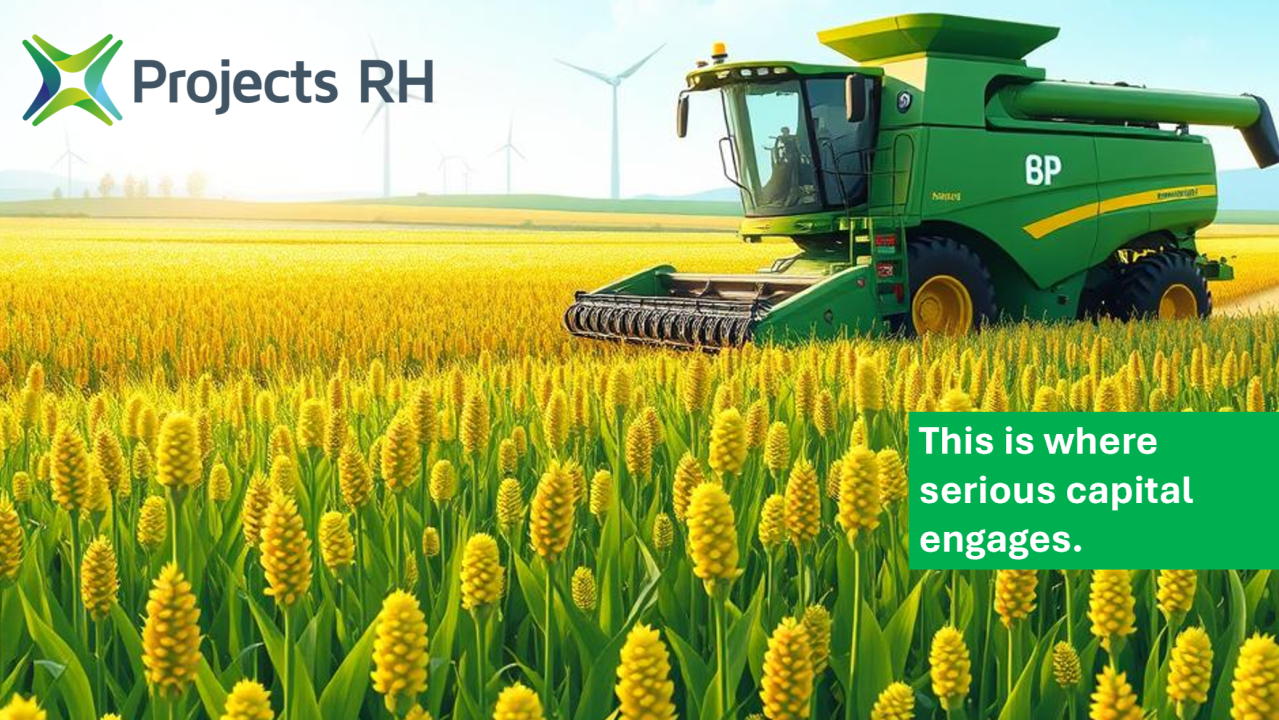
Camelina is particularly instructive in this context. It is not a speculative crop story – it is a systems-level solution. Agronomically, camelina offers low input requirements, resilience to cold and drought, compatibility with existing crop rotations, and the ability to utilize marginal or idle land without competing with food production. From a decarbonization perspective, it enables lower carbon-intensity pathways for SAF and RD, directly addressing sectors such as aviation, heavy transport, maritime, and rail – where electrification remains structurally constrained. From a capital markets lens, camelina supports bankable upstream models, predictable supply chains, and improved revenue visibility, all of which are critical for institutional underwriting.
It is no coincidence that Bayer strengthened its position through the acquisition of Smart Earth Camelina, nor that BP is anchoring camelina within its broader biofuels growth and energy transition strategy. These moves reflect a wider shift underway across the market, one also visible in why biomass is crucial to green energy and how low-carbon feedstocks are being repositioned as investable infrastructure.
Biofuels Transition from Policy to Capital Execution
Biofuels are transitioning from policy-driven narratives to capital-driven execution. Global renewable fuels demand is projected to reach approximately 151 billion liters by 2040, but what is changing now is how projects are structured and financed. The sector is moving from fragmented pilots to industrial-scale platforms; from technology risk to execution, supply chain, and governance risk; and from reliance on subsidies to long-term offtake, structured capital, M&A, and infrastructure-grade financing. Strategic buyers are entering earlier, agricultural, energy, and infrastructure capital are converging, and institutional investors are increasingly focused on projects that are capital-ready, not concept-ready. Robust financial modeling services and rigorous mergers and acquisitions advisory are becoming core tools in this execution-first environment.
The Bayer-BP alliance exemplifies this new reality: disciplined, complementary, and built explicitly for scale.
What This Means for Developers and Project Sponsors
For developers across biofuels, SAF, renewable feedstocks, agri-energy platforms, and low-carbon infrastructure, the message is clear. Projects that integrate agronomy, technology, supply chains, governance, and financial structure from day one are the ones that will attract serious, long-term capital. The opportunity is no longer defined by innovation alone, but by execution readiness and investment discipline. A well-structured project information memorandum and credible investment project management are increasingly the baseline that institutional capital expects before any serious conversation begins.
At Projects RH, we work globally with developers, sponsors, and strategic partners to prepare energy transition and bioeconomy projects for capitalization, strategic investment, or exit. If you are progressing a project in biofuels, SAF, renewable feedstocks, agri-energy platforms, or energy transition infrastructure – and it is approaching institutional capital readiness – we invite you to share it with us.
Let’s explore how it can be positioned, structured, and connected to the right capital partners at the right moment.
If you are developing projects ready for capitalization or strategic partnerships, we would be pleased to connect: https://projectsrh.com/contact-us/
Frequently asked questions
What makes the Bayer-BP camelina alliance strategically significant?
The alliance combines Bayer’s seed genetics and agricultural supply chain expertise with BP’s downstream refining capacity and global market access, creating an integrated platform – the newgold™ platform – designed for industrial-scale biofuels production rather than fragmented pilots.
Why is camelina considered a strong feedstock for SAF and renewable diesel?
Camelina requires low inputs, tolerates cold and drought, fits existing crop rotations, and can be grown on marginal land without displacing food production, while enabling lower carbon-intensity fuel pathways for aviation, heavy transport, maritime, and rail sectors where electrification is structurally constrained.
How is biofuels project financing changing in the current market?
The sector is shifting from policy-driven narratives and subsidy reliance toward infrastructure-grade financing structures, including long-term offtake agreements, structured capital, and M&A, with institutional investors prioritising projects that are capital-ready rather than concept-ready.
Why is North America the initial focus for this biofuels alliance?
North America is where SAF mandates, Low Carbon Fuel Standard frameworks, and long-term corporate offtake agreements are converging fastest, creating the most capital-ready environment for scalable biofuels infrastructure deployment.
What do developers need to demonstrate to attract institutional capital in biofuels today?
Projects must integrate agronomy, technology, supply chains, governance, and financial structure from day one; the critical differentiator has moved from innovation potential to execution readiness and investment discipline.