
Renewable Energy Project Finance: How Power Projects Raise Capital
The question that surfaces most persistently in conversations across the renewable energy sector is not about levelised cost of energy, it is about why so
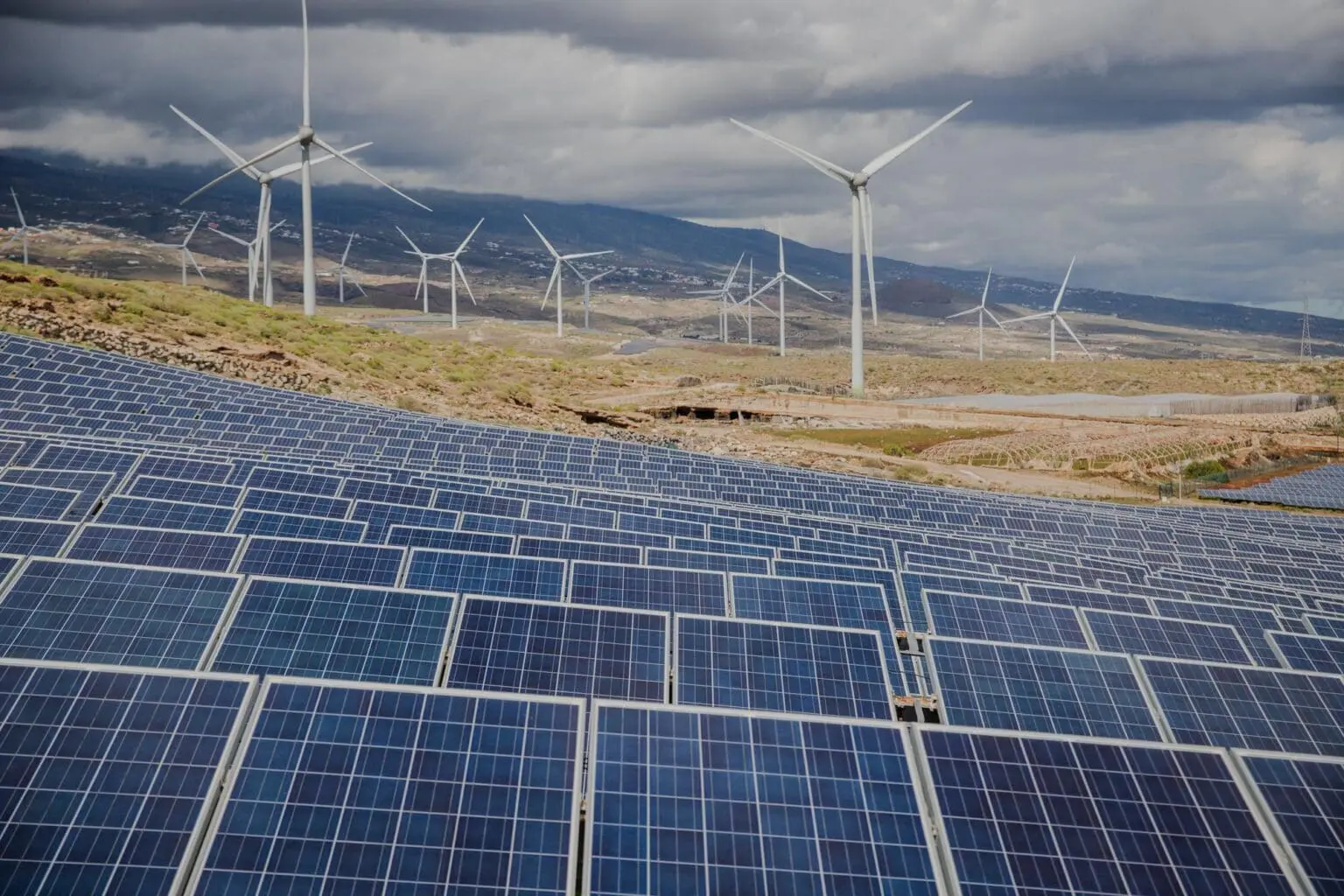
The question that surfaces most persistently in conversations across the renewable energy sector is not about levelised cost of energy, it is about why so many renewable projects with credible resources and genuine offtake interest still fail to reach financial close. The question is structural, not technical.
What separates a renewable energy project with genuinely strong fundamentals from one that actually closes financing? Why do so many sponsors with good wind resources, credible sites, and real offtake interest still find themselves sitting across the table from lenders who won’t move?
The answer, in most cases, has nothing to do with the quality of the sun or the strength of the wind. It has everything to do with how capital and structure meet, or fail to meet, at the right moment in a project’s life. Renewable energy project finance is a discipline with its own internal logic, its own sequencing requirements, and its own non-negotiable bankability thresholds. Sponsors who treat it as a variant of corporate fundraising, or who believe that ESG alignment substitutes for financial rigour, tend to find out the hard way that lenders are not moved by green credentials alone.
This article walks through how renewable energy projects actually raise capital: the structure of the transaction, the documents that matter, the metrics that drive credit decisions, and the sequencing mistakes that cause otherwise viable projects to stall at the financing stage. It is written for sponsors, developers, and asset owners who need a clear-eyed picture of what investment-ready looks like before they pick up the phone.
What Renewable Energy Project Finance Is, and How It Differs from Corporate Lending
Project finance is not simply a large loan made to a company that happens to own a solar farm. It is a structurally distinct financing method in which the debt is secured against the assets and future cash flows of a single, legally ring-fenced entity, typically a special purpose vehicle (SPV), rather than against the sponsor’s balance sheet. Lenders in a project finance transaction have limited or no recourse to the parent company if the project underperforms. Their security is the project itself: the land rights, the generation assets, the contracts, and the cash flows those contracts produce.
This distinction matters enormously in practice. A corporate loan is underwritten on the creditworthiness of the borrower. A project finance loan is underwritten on the creditworthiness of the project’s cash flow profile, its contractual arrangements, and its ability to service debt under both base and stressed conditions. The lender is, in effect, betting on a 20 to 25-year stream of contracted revenue, which is why the quality of the offtake agreement, the robustness of the resource assessment, and the integrity of the financial model are gating requirements rather than supporting documents.
Non-recourse does not mean unprotected. Lenders in renewable energy project finance still require completion guarantees from sponsors during the construction phase, debt service reserve accounts funded at close, step-in rights allowing them to replace the project operator in a default scenario, and a covenant package that governs how cash can be distributed from the project. The ring-fence limits recourse. It does not limit the lender’s structural protections.
The Capital Stack: How the Layers of Financing Interact
A renewable energy project finance transaction is typically funded through a layered capital stack, with each layer carrying a different risk profile and a different return expectation. Understanding the stack is not an academic exercise. It is the structural map that governs every document in the raise, the financial model, the information memorandum, and the term sheet conversation alike.
The most common stack for a utility-scale renewable project in a developed or emerging market looks broadly like this:
- Senior secured debt: Typical Share of Project Cost: 60-75%; Risk Position: First-ranking security over all assets; Return Expectation: Lowest; tied to project credit rating and market conditions
- Mezzanine or subordinated debt: Typical Share of Project Cost: 5-15% (where used); Risk Position: Junior to senior, senior to equity; Return Expectation: Higher yield to compensate for subordination
- Tax equity (US market): Typical Share of Project Cost: Up to 35% in qualifying projects; Risk Position: Structured around tax credit monetisation; Return Expectation: Returns driven by ITC or PTC value rather than cash yield
- Sponsor equity: Typical Share of Project Cost: 20-30%; Risk Position: Last in line; absorbs first losses; Return Expectation: Highest; typically targets double-digit IRR depending on market and risk
- Grants and concessional finance (DFIs, ECAs): Typical Share of Project Cost: Variable; Risk Position: Can sit at any layer; Return Expectation: Below-market rate; designed to improve bankability of difficult projects
Each layer’s return expectation must be matched to its risk position in the model. Senior lenders do not price like equity investors, and equity investors do not accept returns that only make sense for a development finance institution. Structuring the stack correctly before approaching any individual capital source is the first discipline of a properly run project finance raise. Sponsors working with experienced capital raising consulting practices will recognise this discipline as the foundation on which every subsequent conversation with lenders is built.
It is important to remember that tax equity in the United States is not a standard financing tranche available on request. It is a highly specialised instrument provided by a small number of large financial institutions, requires meaningful project scale to be economic, and demands documentation and model formatting conventions that most first-time sponsors have not encountered. Sponsors who include tax equity in their capital structure without understanding the eligibility requirements, the partnership flip mechanics, and the model complexity it introduces are setting themselves up for a frustrating diligence process.
Bankability: What Lenders Actually Need Before They Will Move
Bankability is the judgement a lender makes about whether a project is ready to be financed. It is not a formal certificate. It is a composite assessment of whether the technical, commercial, legal, and financial dimensions of a project meet the threshold required for debt commitment. In renewable energy project finance, that threshold is specific and well-established.
For a utility-scale solar or wind project to be considered bankable, a lender will typically expect to see:
- A completed independent resource assessment, conducted by a recognised engineering firm, confirming the P50 and P90 energy yield estimates that the financial model relies on
- A signed offtake agreement or power purchase agreement (PPA) with a creditworthy counterparty, covering a sufficient term to support the debt tenor
- Relevant permits and environmental approvals, or a clear permitting roadmap with no unresolved blockers
- A grid connection agreement or confirmed interconnection process, particularly critical in markets where grid access is constrained
- Demonstrated sponsor capability, meaning a track record of delivering comparable projects or a credible EPC partner with one
- A financial model showing debt service coverage ratios above minimum covenant levels under the base case and a documented downside scenario
The misconception that deserves direct attention here is the belief that renewable energy projects finance easily because they are politically favoured or ESG-aligned. Sustainable investment credentials open doors to certain capital sources, green bonds, DFI funding windows, ESG-mandated infrastructure funds, but they do not substitute for bankability. A solar project with a compelling ESG narrative, no signed PPA, and an indicative financial model will not attract senior debt. Put simply: lenders are not moved by the energy transition in the abstract. They are moved by contracted cash flows and structured protections.
The Financial Model: The Single Point of Truth
The financial model is not something that gets built after the pitch deck is ready and the investor conversations have started. It is the source document from which every other piece of the raise is derived. The pitch deck, the information memorandum, the term sheet conversation, and the sensitivity analysis the lender will run during credit committee, all of it traces back to the model. For a deeper account of how long-term financial architecture shapes decisions like these, the discussion of how strategic finance functions as a discipline across an organisation’s full planning horizon offers useful grounding.
At Projects RH, this is not a philosophical preference. It is the methodology we apply on every engagement, and it is the reason we describe the financial model as the single point of truth. A sponsor who builds a compelling narrative and then reverse-engineers a model to support it will be exposed the moment a sophisticated lender asks them to defend a key assumption. The model has to come first, not because of convention, but because structuring for capital requires it.
In renewable energy project finance, the financial model must do several specific things beyond basic cash flow projection:
- Demonstrate DSCR, the debt service coverage ratio, above the lender’s minimum covenant level in both the base case and a credible downside scenario
- Document every key assumption with an auditable source: the energy yield from the independent engineer’s report, the tariff from the PPA, the operating cost estimates from comparable projects or EPC quotations
- Be structured for audit, because lenders will require a third-party model review before credit committee, and a model that cannot be interrogated by an independent reviewer signals a sponsor who does not understand how project finance credit decisions are made
Sponsors who have built their model internally, without audit-ready structure and documented assumptions, face delays during lender due diligence that compound financing costs in real ways: drawn fees, extended commitment periods, and the risk of losing an offtake counterparty whose PPA has an expiry date.
DSCR: The Metric That Drives Everything
The debt service coverage ratio is the single most important bankability metric in project finance. Put simply: DSCR is the ratio of cash available for debt service in a given period to the debt service obligation, principal plus interest, due in that same period. A DSCR of 1.0x means the project earns exactly enough to meet its debt obligations. Lenders we work with consistently require minimum DSCR covenants in the range of 1.15x to 1.40x depending on project type, technology risk, and offtake quality, with solar and onshore wind in developed markets with investment-grade PPAs sitting toward the lower end of that range.
What is equally important to understand is that DSCR does not simply appear as a single number in the model. Lenders apply a technique called sculpting, shaping the repayment schedule to match the projected cash flow profile of the asset rather than imposing a flat amortisation schedule. In renewable energy, where generation varies seasonally and cash flows are tied to offtake pricing structures, sculpting ensures that debt service obligations are proportional to available cash in each period. The minimum DSCR covenant then becomes the trigger for cash traps, distribution lock-ups, and ultimately default events. Sponsors who do not understand this mechanism will mis-structure their raise and negotiate covenant terms that create operational constraints they never anticipated.
Sensitivity and scenario analysis is not a disclosure formality in this context. It is the primary tool lenders use to set debt tenor, sculpt repayment, and define the boundary conditions of their credit decision. Lenders require at minimum a base case, a downside case applying stressed assumptions to energy production, pricing, and operating costs, and a break-even analysis identifying the minimum revenue level at which the project can still service its debt. Sponsors who present only a base case are signalling either that they have not modelled downside risk or that they are not willing to share it. Both readings damage lender confidence in equal measure.
Who Provides Capital for Renewable Energy Projects
The capital landscape for renewable energy project finance is broader than many sponsors realise, and matching the right capital source to the right project stage is a material part of structuring the raise correctly.
Commercial banks remain the dominant providers of senior debt in utility-scale renewable project finance in developed markets, Australia, the US, Western Europe, and parts of East Asia. Relationship banks with energy lending desks will typically require the full suite of bankability documentation and will conduct their own due diligence on the independent engineer’s report and the project financial model.
Development finance institutions, including the IFC, Asian Development Bank, US DFC, and regional equivalents, are active in markets where commercial bank appetite is constrained by sovereign risk, or where project scale does not meet major bank thresholds. DFIs bring concessional pricing and, importantly, signal quality to other capital providers: a DFI commitment alongside a commercial tranche materially de-risks the transaction for equity investors. Similarly, export credit agencies such as UKEF, KEXIM, or JBIC can provide financing or guarantees tied to the procurement of equipment from their home countries, and sponsors sourcing turbines or solar panels from manufacturers in those jurisdictions should understand the ECA options before finalising their procurement strategy.
Long-term strategic investors and infrastructure funds have become increasingly active in operational or near-operational renewable assets, particularly in markets with stable regulatory frameworks and creditworthy offtakers. They are generally less suited to greenfield development risk; they want construction risk retired before committing equity at scale. Experienced capital raising consultants help sponsors navigate exactly this timing dynamic, identifying which capital sources are appropriate at which stage of a project’s development, and sequencing outreach accordingly.
What is equally important to understand is the cross-border dimension. For projects in Latin America, Southeast Asia, and Africa, where international capital is sought but where sovereign risk, currency exposure, and offtake counterparty credit quality create genuine structuring complexity, the raise looks materially different from a domestic transaction in a developed market. Projects in those geographies often need political risk insurance, hedging arrangements for revenue currency mismatch, and financial models formatted to DFI requirements. These are not obstacles to be explained away in an investor presentation. They are structural conditions that have to be resolved in the model before the conversation starts. The analysis of how energy security vulnerabilities exposed by a regional supply shock reshape the investment case for renewable infrastructure is a useful reference point for sponsors building the risk narrative for cross-border projects in politically sensitive corridors.
The Information Memorandum: Not a Brochure, a Diligence Document
The information memorandum (IM) is the primary document through which a sponsor presents a renewable energy project to prospective lenders and investors. It is not a pitch deck with extra pages. It is a structured technical and commercial document, typically running to substantial length for a utility-scale project, designed to withstand due diligence scrutiny rather than to generate initial interest.
Each section of a well-constructed IM, covering technology, resource, market, regulatory, financial, and risk dimensions, should be traceable to a corresponding assumption or output in the financial model. The financial summary section should derive directly from the model’s output tables, not from a separately constructed spreadsheet. The sensitivity analysis disclosed in the IM should match the scenarios modelled in the financial model. An IM that cannot be reconciled with the model signals document assembly rather than disciplined project structuring, and experienced investors identify this immediately.
For me, the clearest sign that a sponsor is genuinely investment-ready is not the quality of the graphics in their deck. It is whether the person presenting can answer a hard question about a model assumption without leaving the room. That comes from having built the documentation in the right order: model first, then IM, then investor conversation.
Why Projects Fail to Close Despite Strong Fundamentals
Projects fail to close financing when capital and structure don’t meet at the right time, not because the wind resource was inadequate or the solar irradiance was insufficient. In practice, the failure modes follow a recognisable pattern:
- The model was built after the IM, meaning key assumptions in the narrative cannot be defended under scrutiny and the DSCR analysis is retrospective rather than driving structural decisions
- The offtake agreement was not sufficiently progressed before lender outreach began, meaning lenders could not assess the credit quality of the revenue stream and declined to proceed
- Equity and debt investors were approached simultaneously without a staged strategy, creating confusion about who is leading the raise and what the capital structure actually is
- The sponsor lacked a credible permitting or grid connection pathway, leaving lenders with unresolvable uncertainty about construction start timing
- Cross-border projects were presented to international capital sources without addressing sovereign risk, currency mismatch, or DFI-compatible model formats, meaning the diligence process stalled on structural issues the sponsor had not anticipated
In each case, the conclusion was the same: the fundamentals were often sound. The sequencing and structuring were not.
How to Sequence a Renewable Energy Project Finance Raise
The correct sequence flows from the financial model outward. It is not: build the deck, approach investors, refine the model later. It is: build and stress-test the model, determine the capital structure, close the bankability gaps, then stage the outreach to debt and equity in the right order for the specific project type.
For a greenfield utility-scale renewable project, a practical sequencing runs as follows:
- Secure the independent resource assessment and translate its P50/P90 outputs into the model
- Negotiate the offtake agreement or PPA to a term sheet or heads of agreement stage before approaching senior lenders
- Complete or substantially progress the permitting and grid connection process
- Build the financial model with full scenario analysis and audit-ready assumption documentation
- Prepare the information memorandum as a model-anchored diligence document
- Approach development finance institutions or anchor equity investors first if the project is in a market with commercial bank constraints, using the DFI commitment to de-risk the subsequent debt raise
- Approach commercial lenders with the complete bankability package: the IM, the model, the independent engineer’s report, and the draft offtake terms
This is patient work. It requires discipline and clarity at every stage. The projects that close are the ones where sponsors have built the structure correctly, before asking capital to commit to it. Project finance advisors who have worked across multiple project types and geographies bring the sequencing discipline and the lender perspective that make the difference between a raise that stalls and one that closes.
Frequently Asked Questions
What is a typical debt-to-equity ratio in renewable energy project finance?
Most utility-scale renewable energy project finance transactions in developed markets are structured with 65 to 75 percent senior debt and 25 to 35 percent equity, though this varies by technology, geography, and offtake quality. Projects with investment-grade PPAs and established sponsors in low-sovereign-risk markets tend to achieve higher leverage. Projects in emerging markets, or those with merchant revenue exposure, typically require more equity to meet lender DSCR requirements under downside scenarios.
What is the minimum DSCR lenders typically require for a solar or wind project?
Minimum DSCR covenants for utility-scale solar and onshore wind projects with long-term PPAs in developed markets typically sit in the range of 1.15x to 1.30x. Projects with shorter offtake terms, merchant pricing components, or higher technology or construction risk will generally face higher minimum requirements. The DSCR threshold is not a number to negotiate at the term sheet stage; it is a function of the project’s risk profile and should be stress-tested in the financial model before lender outreach begins.
Do I need a signed PPA before approaching project finance lenders?
A fully executed PPA is the ideal position before approaching senior lenders. In practice, many lenders will engage on the basis of a substantially negotiated heads of agreement or term sheet with a creditworthy offtaker, provided the key commercial terms, price, volume, tenor, and termination provisions, are sufficiently defined. What lenders will not do is commit to a credit decision without visibility on the contracted revenue stream. Approaching lenders before the offtake structure is clear is one of the most common sequencing errors in a renewable project finance raise.
What does an independent engineer review involve in a project finance transaction?
An independent engineer (IE) review is a third-party technical assessment commissioned by lenders, not by the sponsor, to validate the project’s technical assumptions. For renewable energy, the IE will typically review the resource assessment, the energy yield model, the technology selection, the EPC contract structure, the construction programme, and the operating cost assumptions. IE findings directly influence the DSCR analysis, since lenders will often apply a haircut to the sponsor’s P50 energy yield estimate based on the IE’s confidence assessment. Sponsors whose models are not built to accommodate IE adjustments will face surprises during credit committee.
Can a renewable energy project in an emerging market access international project finance?
Yes, but the structuring requirements are more complex than for a domestic raise in a developed market. Cross-border renewable project finance typically requires political risk insurance from providers such as MIGA or US DFC, currency hedging or local-currency revenue structures, an offtake counterparty with sufficient credit quality or government support, and a financial model formatted to DFI or ECA standards. DFI participation, through concessional debt or a guarantee structure, is often the mechanism that makes international commercial debt available for projects in markets where sovereign risk would otherwise deter lenders. Sponsors navigating these markets for the first time will find that capital raising advisors with cross-border project finance experience are not a discretionary addition to the process but a structural requirement for getting the documentation to a standard that international capital will accept.
The energy transition is real, the pipeline of renewable projects is genuinely large, and the capital available to fund them, from commercial banks, infrastructure funds, DFIs, and the green bond market, has grown substantially over the past decade. What has not grown at the same pace is the supply of projects that are genuinely ready for that capital.
Investment-ready is structural work. It is a financial model built with rigour, a capital stack structured with healthy financial discipline, bankability gaps closed before lender outreach begins, and documentation that can be reconciled line by line under due diligence scrutiny. If the project has the fundamentals, the resource, the site, the offtake logic, the technology, and the documentation still does not align with what capital expects to see, that is a solvable problem. It just needs to be solved in the right order.
Strong projects don’t fail because of weak fundamentals. They fail because capital and structure don’t meet at the right time.

What to do next
Projects RH prepares the company and the project first, then takes them to investors. The fastest way to find out where you stand is a short call.
Keep reading

Why Are Some Renewable Energy Projects Funded in Months While Others Never Reach Financial Close?
Learn how tax equity financing works, why investors use it, and how it accelerates renewable energy project closings. Structures, risks, and capital stack explained.
Power Purchase Agreements: The Foundation of Energy Project Debt
Understand how PPAs drive project finance debt capacity. Learn offtaker credit, tenor, and structural terms that lenders scrutinize before funding.

Bayer and BP: A Strategic Alliance Signaling the Next Phase of Biofuels Capital Deployment
The Bayer-BP camelina alliance signals how biofuels capital is shifting from policy-driven narratives to disciplined, infrastructure-grade execution at scale.