
Belt and Road Project Finance: From Vision to Bankability
Belt and Road project finance increasingly demands bankable economics, sustainable infrastructure, disciplined risk allocation and credible project preparation.
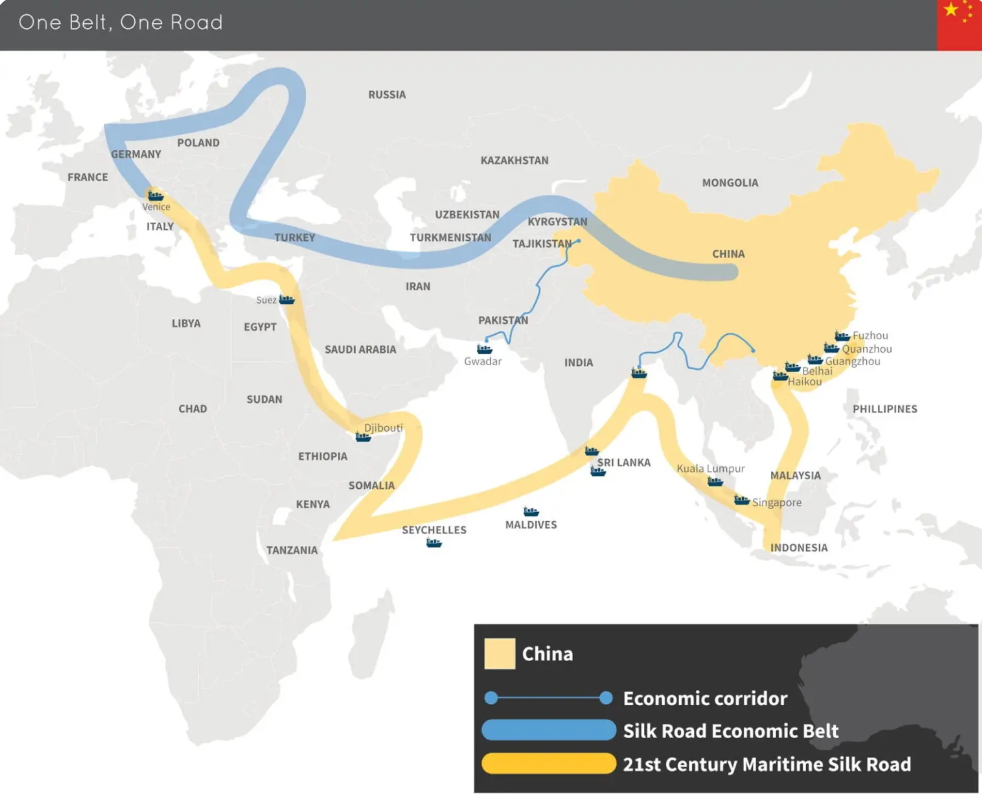
Belt and Road project finance has evolved considerably since I attended the One Belt and One Road Summit in Hong Kong in 2019. What stood out on the second day was not simply the scale of China's international ambitions, but the increasingly pragmatic discussion about which infrastructure and energy projects could actually attract capital.
The summit brought together project sponsors, financiers, advisers, technology providers and government representatives. My attention was naturally drawn to energy, natural resources and public utilities.
The central lesson remains highly relevant today: international capital does not finance ambition alone. It finances projects whose economics, risks, sustainability credentials and execution plans can withstand serious scrutiny.
Belt and Road Project Finance Is Becoming More Disciplined
The Belt and Road Initiative, commonly known as BRI and previously described as One Belt One Road or OBOR, was launched in 2013 as a framework for international connectivity, trade, infrastructure and economic cooperation.
The initiative has continued to evolve.
According to the Green Finance & Development Center, current areas of focus include sustainable infrastructure, sustainable transport, renewable energy, green innovation and green finance.
That evolution matters for project sponsors.
A project cannot rely simply on its location within a strategically important market or infrastructure corridor. Sponsors increasingly need to demonstrate why the proposed asset should exist, how it will generate economic value, how material risks will be managed and why the financing structure is appropriate.
That is ultimately a question of bankability.
From Infrastructure Ambition to Bankable Projects
Large infrastructure programmes can create significant economic opportunities, but the benefits are not automatic.
A World Bank study on the Belt and Road Initiative examined potential effects on trade, growth, poverty and the environment resulting from infrastructure improvements and lower trade costs.
Another World Bank analysis of Belt and Road transport infrastructure identified potentially significant economic benefits while also highlighting an important distinction: infrastructure investment must create sufficient economic benefits relative to its costs.
For project sponsors, this means that infrastructure should not be assessed primarily by its scale or strategic importance.
It should be assessed by whether the asset creates sufficient economic and commercial value relative to its cost and risk.
That requires rigorous preparation before capital raising begins.
What Makes Infrastructure Financeable?
A technically feasible project is not automatically a financeable project.
Potential lenders and investors need to understand how the infrastructure will generate sufficient value or cash flow to justify the required capital.
Depending on the transaction, this may require evidence of:
- credible market demand;
- contracted or defensible revenues;
- realistic capital expenditure;
- operating cost assumptions;
- technical feasibility;
- permits and regulatory approvals;
- construction and completion strategy;
- appropriate contractual arrangements;
- environmental and social risk management;
- capable management and governance;
- identified counterparties;
- appropriate risk allocation;
- realistic financial sensitivities; and
- a credible financing structure.
The precise requirements depend on the project.
A renewable energy project with a long-term power purchase agreement will be evaluated differently from a transport corridor, mining infrastructure project or industrial facility.
But the fundamental question remains consistent:
Can the project demonstrate a sufficiently credible relationship between capital invested, risks assumed and value created?
Sustainability Is Part of the Investment Case
One of the most important developments since the original article was written is the increasing integration of sustainability into infrastructure investment decisions.
The Green Investment Principle for the Belt and Road includes principles addressing sustainability governance, environmental and social risks, environmental disclosure, stakeholder communication, green financial instruments and green supply chains.
Chinese policy guidance has also evolved.
The BRI Policies Database documents policies and guidelines covering green infrastructure, green finance, environmental protection and environmental management in overseas projects.
These factors can have direct consequences for project finance.
Environmental and social considerations should not be treated simply as additional sections at the end of an investment memorandum.
They can influence:
- capital availability;
- lender requirements;
- insurance;
- permitting;
- project design;
- construction costs;
- operating costs;
- stakeholder acceptance;
- contractual obligations; and
- long-term asset value.
For investors, financial performance and sustainability increasingly intersect.
Hong Kong's Role in Infrastructure Finance
Hong Kong was repeatedly presented at the summit as an important bridge between international capital and projects connected with China and the wider Belt and Road.
That role has continued to develop.
The Hong Kong Monetary Authority Infrastructure Financing Facilitation Office was established to facilitate infrastructure investment and financing.
Hong Kong combines international capital markets, financial institutions, professional advisers and established legal and financial infrastructure. This provides an important ecosystem for sponsors considering cross-border infrastructure transactions.
For project sponsors, however, access to a major financial centre is not equivalent to access to funding.
The underlying project must still meet investor requirements.
A strong financial ecosystem can facilitate transactions, but it cannot compensate for weak economics, unresolved risks or inadequate preparation.
Energy Transition Creates Capital Opportunities
Energy was one of the strongest themes in the original summit discussions and remains highly relevant.
Renewable generation, transmission infrastructure, energy storage and supporting infrastructure can require substantial amounts of long-term capital.
The Hong Kong Monetary Authority has highlighted the role Hong Kong can play in mobilising private finance for energy transition across Belt and Road markets.
The opportunity is significant, but so is the investment challenge.
Energy projects can require sponsors to demonstrate:
- reliable demand;
- credible offtakers;
- bankable power purchase agreements;
- grid access;
- appropriate tariff structures;
- technical performance;
- construction capability;
- regulatory certainty; and
- long-term financial resilience.
An attractive renewable resource by itself does not make a project bankable.
Revenue certainty, contractual structure, risk allocation and project preparation matter.
SMEs Can Play a Role, but Preparation Matters
Another recurring theme at the 2019 summit was the potential role of small and medium-sized enterprises.
SMEs can bring significant advantages to large infrastructure ecosystems.
They may be more flexible than larger organisations, capable of adapting technologies quickly, operating close to local communities or supplying specialised expertise.
But agility does not eliminate financial discipline.
Smaller companies may be particularly exposed to:
- foreign exchange risk;
- working-capital constraints;
- counterparty risk;
- sovereign risk;
- procurement delays;
- payment risk;
- regulatory changes; and
- concentration risk.
A smaller company pursuing an international infrastructure opportunity therefore needs to understand not only the commercial upside but also the balance-sheet consequences if implementation takes longer than expected.
Good financial preparation matters at every scale.
Project Finance Requires Independent Assessment
One point from the original summit remains especially relevant: major investment decisions require independent scrutiny.
Sponsors naturally have conviction in their own projects.
Investors require evidence.
Independent technical, commercial, legal, environmental, market and financial analysis can therefore play an important role in turning a project proposition into something investors can properly evaluate.
The objective of independent assessment is not to eliminate risk.
No infrastructure project is risk-free.
The objective is to identify material risks, determine which party is best positioned to manage them and evaluate whether the remaining risks are acceptable relative to expected returns.
That discipline is fundamental to project finance.
Investor Readiness Before Capital Raising
For Projects RH, this leads directly to investor readiness.
A project should establish a credible investment case before beginning broad capital outreach.
Depending on its development stage, this may include:
- a clearly articulated investment proposition;
- an appropriate financial model;
- defensible CAPEX and OPEX assumptions;
- credible revenue assumptions;
- financial sensitivities and scenarios;
- permitting status;
- relevant technical studies;
- an appropriate project structure;
- a contractual strategy;
- risk allocation;
- management and governance;
- capital requirements;
- proposed use of funds; and
- investment documentation appropriate to the transaction.
Projects RH works with project sponsors through its project finance and investor readiness services to strengthen these elements before projects approach potential investors and financing partners.
A project does not need to be perfect before approaching the market.
It does, however, need to be sufficiently prepared for an investor to understand what is known, what remains outstanding and which risks the capital provider is being asked to accept.
Capital Structure Should Follow Project Fundamentals
A common mistake in capital raising is deciding on a preferred financing structure before sufficiently understanding the project.
Not every infrastructure project can support conventional project finance debt.
Some projects may require substantial sponsor equity during development.
Others may require concessional capital, guarantees, export credit support, blended finance or strategic investors to make the overall transaction viable.
The appropriate structure depends on factors such as:
- development stage;
- revenue certainty;
- counterparty strength;
- jurisdiction;
- construction risk;
- technology risk;
- political risk;
- currency exposure;
- debt-service capacity; and
- expected investor returns.
Capital structure should therefore follow project fundamentals.
A financing solution cannot permanently compensate for weak project economics.
Belt and Road Project Finance Is Increasingly Green
The direction toward greener development has become progressively clearer.
The Green Finance & Development Center records policies addressing green infrastructure, environmental protection, international standards and stronger environmental management in overseas investment.
Current Belt and Road research also continues to focus on areas including renewable energy, sustainable transport and green infrastructure.
This evolution matters because substantial capital will be required to finance energy transition and infrastructure across emerging and developing economies.
The opportunity is therefore not simply to build more infrastructure.
It is to prepare infrastructure capable of attracting disciplined forms of international capital while creating resilient long-term economic value.
What Project Sponsors Should Take From the BRI
For project developers, the Belt and Road experience provides several practical lessons.
1. Strategic Relevance Is Not Enough
A project may align with a major policy initiative and still fail commercially.
2. Economics Come First
Capital expenditure, revenues, operating costs and financial sensitivities must support a defensible investment proposition.
3. Sustainability Affects Bankability
Environmental and social considerations can influence financing, insurance, permitting and long-term asset performance.
4. Risk Allocation Matters
Investors need to understand who carries construction, market, currency, regulatory, political and operating risks.
5. Independent Analysis Creates Credibility
Serious capital providers require evidence capable of surviving external scrutinyshould be able to explain exactly how much capital is required, how it will be used and what investors are being asked to finance.
7. Preparation Should Precede Outreach
An introduction creates an opportunity for discussion. It does not create an investable project.
From Belt and Road Vision to Bankability
What impressed me in Hong Kong in 2019 was the increasing pragmatism surrounding international infrastructure investment.
The conversation was moving beyond scale and ambition toward execution, sustainability, financing and commercial viability.
That transition has continued.
Today's discussion surrounding Belt and Road investment increasingly encompasses green infrastructure, renewable energy, environmental standards and more sophisticated financing mechanisms.
But one principle remains unchanged.
Capital seeks projects capable of demonstrating credible economics and manageable risks.
For sponsors pursuing Belt and Road project finance, the more useful question is therefore not simply:
Where can we find investors?
It is:
Is this project sufficiently prepared, sustainable and commercially credible for serious capital providers to finance it?
That distinction can determine whether an introduction becomes a transaction.
Sources
- Green Finance & Development Center - Green Belt and Road Initiative Lab
- Green Finance & Development Center - Green Investment Principle
- Green Finance & Development Center - BRI Policies Database
- World Bank - Belt and Road Initiative: Economic, Poverty and Environmental Impacts
- World Bank - Common Transport Infrastructure and the Belt and Road Initiative
- Hong Kong Monetary Authority - Infrastructure Financing Facilitation Office
Prepare Your Project for International Capital
If you are developing an energy, infrastructure, mining or other capital-intensive project, the next step is to determine whether the opportunity is genuinely ready for investors and financing partners.
/intake.html to review your financial positioning, financial model, investment documentation, risk allocation and path toward capital readiness.
You can also /services.html to understand how we support project sponsors with investor readiness, project finance and transaction preparation.
Paul Raftery
First published on ProjectsRH.com on 26 November 2019. Updated for accuracy, structure, readability and current project-finance and sustainable-infrastructure context.

What to do next
Projects RH prepares the company and the project first, then takes them to investors. The fastest way to find out where you stand is a short call.
Keep reading
Project Validation: Testing the Investment Case First
Project validation tests facts, assumptions, economics, commercial evidence and material risks before sponsors approach investors or lenders.

Project Preparation: Why Order Comes Before Capital Raising
Project preparation starts with small disciplines: establishing the facts, testing the model and organising the evidence before a project meets investors or lenders.
Project Preparation Comes Before Capital Raising
Why the file that reaches investors must be built and tested before any approach to the market, and who on a project team needs to be involved.