
Conditions Precedent in Project Finance: Before Drawdown
What must happen before lenders release funds? Learn how Conditions Precedent in Project Finance affect financial close, drawdown and execution.
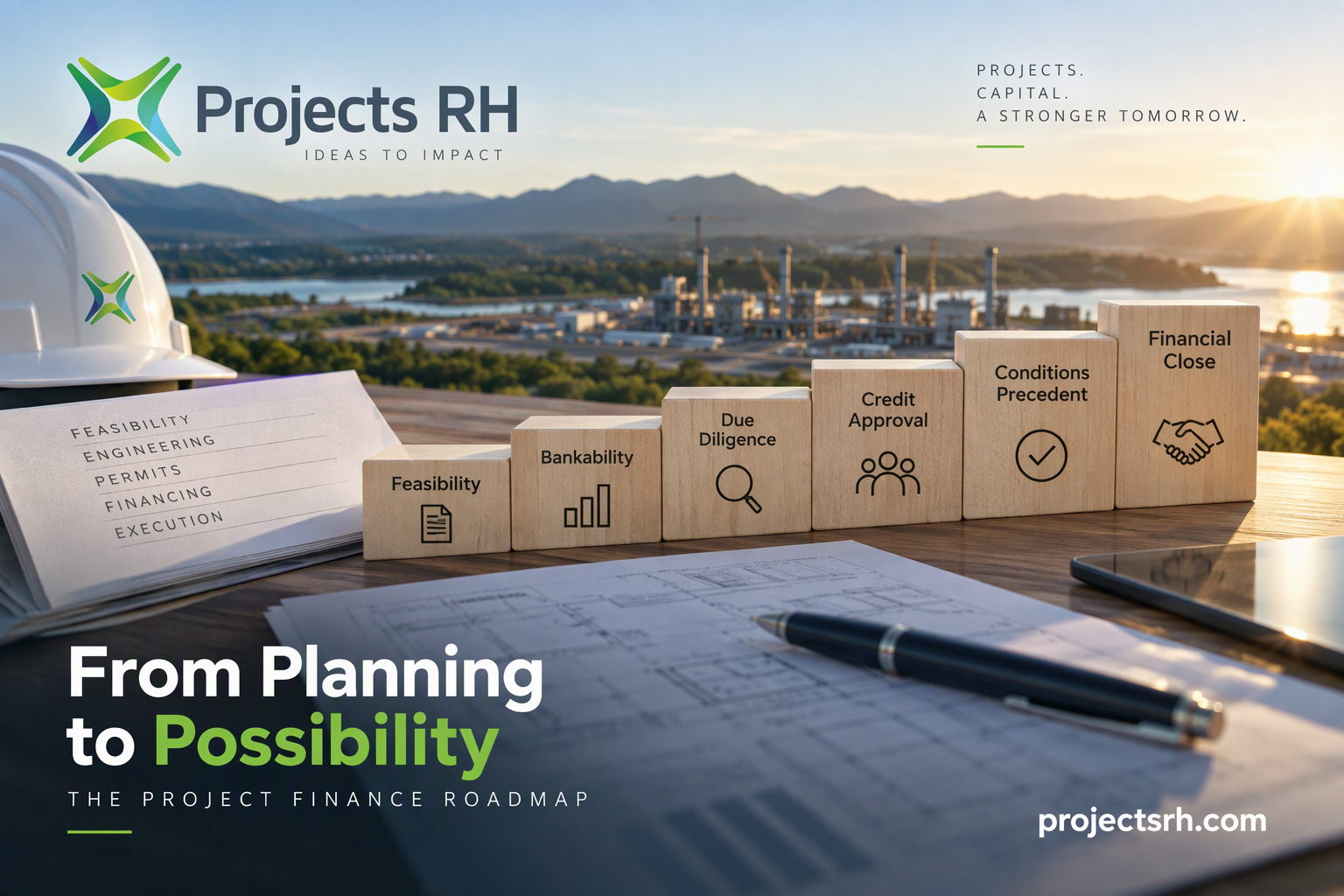
Conditions Precedent in Project Finance are one of the most important, and frequently underestimated, parts of getting from an approved financing to money actually being available for drawdown.
A project may have interested lenders.
It may have completed due diligence.
It may have received credit approval.
The financing documents may even have been signed.
And yet the project can still be unable to draw a single dollar.
Why?
Because the conditions governing effectiveness or drawdown have not yet been satisfied.
Throughout my career in finance, resources, energy and project development, I have seen how important this distinction can become. Sponsors naturally focus on securing capital. Lenders focus equally on the conditions that must exist before they are prepared, or contractually required, to release that capital.
A financing commitment is not the same as available cash. Conditions Precedent determine what must happen before the transaction can move from documentation to funding.
Understanding Conditions Precedent in Project Finance is therefore essential for project sponsors preparing for financial close and first drawdown.
What Are Conditions Precedent in Project Finance?
Conditions Precedent in Project Finance are contractual requirements that must be satisfied, or where permitted waived, before a financing agreement becomes effective, a lender becomes obliged to fund, or a borrower is entitled to make a specified drawdown.
The precise Conditions Precedent, usually shortened to CPs, differ from transaction to transaction.
They can cover matters including:
- corporate authority;
- sponsor equity;
- project agreements;
- permits;
- licences;
- land rights;
- technical reports;
- insurance;
- security;
- legal opinions;
- environmental and social requirements;
- financial model requirements;
- reserve accounts;
- hedging;
- construction arrangements;
- compliance certificates; and
- evidence that no relevant default or material adverse circumstance exists.
The World Bank's guidance on financial close explains that Conditions Precedent can form part of the requirements that must be completed before contractual effectiveness and financial close.
The IFC Project Cycle similarly identifies conditions of disbursement and covenants as matters negotiated before commitment and funding.
The fundamental principle is straightforward:
Capital becomes available when the agreed funding conditions have been satisfied, not simply when the project needs the money.
Why Conditions Precedent Matter
Conditions Precedent are not administrative housekeeping.
They are part of the lender's risk-control architecture.
Before releasing capital, lenders generally want evidence that the assumptions supporting their credit decision remain valid and that the legal, technical, commercial and financial protections on which they relied are actually in place.
For example, a lender may have approved a financing on the assumption that:
- the project company owns or controls the required site;
- material permits are valid;
- sponsor equity will be contributed before or alongside debt;
- the EPC contract has become effective;
- insurance is in force;
- security has been created or perfected;
- the project's accounts are established;
- required legal opinions have been delivered; and
- no event of default has occurred.
If one of those assumptions is no longer true, releasing funds may create a materially different risk from the transaction originally approved.
This is why CP management belongs inside project finance execution, not at the edge of it.
Conditions Precedent vs Financial Close
These concepts are related but should not be used interchangeably.
Financial close is generally the point at which the required financing and project agreements have been executed, the applicable conditions have been satisfied and committed finance becomes available for drawdown under the financing structure.
The World Bank describes financial close as occurring when the project and financing agreements have been signed, the relevant conditions have been met and financing can begin to be drawn for the project.
That means a project should distinguish clearly between:
Indicative Interest → Term Sheet → Credit Approval → Documentation → CP Satisfaction → Financial Close → Drawdown
These are not equivalent milestones.
Receiving a term sheet does not mean the transaction has reached financial close.
Credit approval does not necessarily make funds immediately available.
Signing financing documents does not automatically mean money can be drawn.
This distinction should be reflected accurately in project reporting to shareholders, contractors and other stakeholders.
Conditions Precedent to Effectiveness vs Drawdown
Not every CP controls the same contractual event.
This is one reason CP schedules should be read carefully.
A financing structure may contain:
Conditions Precedent to Effectiveness
These conditions determine whether a financing agreement becomes effective.
They may include matters such as:
- execution of required agreements;
- corporate authorisations;
- legal opinions;
- constitutional documents; or
- satisfaction of specified legal requirements.
Conditions Precedent to First Drawdown
These determine whether the borrower can make the first utilisation.
Examples may include:
- evidence of sponsor equity;
- insurance;
- completed security arrangements;
- project accounts;
- required permits;
- construction contracts;
- technical certifications; or
- evidence of specified project expenditure.
Conditions Precedent to Subsequent Drawdowns
Particular transactions may also impose conditions on later utilisations.
These can relate to:
- construction progress;
- updated certificates;
- continuing representations;
- covenant compliance;
- cost-to-complete;
- updated budgets;
- permits;
- absence of default; or
- other draw-specific requirements.
The distinction matters.
A condition that has been satisfied for financial close does not necessarily mean every future drawdown is unconditional.
The First-Draw Problem
One of the practical mistakes project sponsors can make is assuming that signing financing documentation effectively solves project liquidity.
It does not always do so.
A construction schedule may assume a lender draw on a specific date.
The procurement schedule may assume that equipment deposits can then be paid.
The EPC contractor may expect a scheduled payment.
Yet if a material CP remains unresolved, the expected lender funds may not be available.
That can create a chain reaction:
Delayed CP → Delayed Drawdown → Delayed Contractor Payment → Procurement Delay → Construction Delay → Additional Cost
This is why the financial model should not treat debt drawdown dates as purely mechanical assumptions.
Financing availability and physical project execution need to remain aligned.
Typical Corporate Conditions Precedent
Corporate CPs establish that the parties have the legal capacity and authority to enter the transaction.
Depending on the financing, lenders and their counsel may require:
- certificates of incorporation;
- constitutional documents;
- shareholder resolutions;
- board resolutions;
- authorised signatory lists;
- specimen signatures;
- beneficial ownership information;
- corporate structure charts;
- certificates of incumbency; and
- powers of attorney.
These requirements may sound routine.
They become considerably less routine when a transaction involves:
- multiple jurisdictions;
- joint ventures;
- several shareholder entities;
- offshore holding companies;
- government shareholders;
- complex SPV structures; or
- legacy corporate records.
Corporate housekeeping should therefore start well before scheduled financial close.
Sponsor Equity as a Condition Precedent
One particularly important CP can involve sponsor equity.
Lenders may require project sponsors to demonstrate that an agreed amount of equity has been invested before debt is drawn, or to fund equity according to an agreed contribution schedule.
The purpose is understandable.
A lender does not want to finance a project on the assumption that sponsors will contribute capital later if that commitment has not been contractually or economically secured.
Evidence may need to show:
- amount of equity committed;
- amount already injected;
- source of funds;
- shareholder approvals;
- contribution schedule;
- shareholder loans where applicable; and
- compliance with agreed debt-to-equity arrangements.
The sequencing between equity and debt matters directly to the project's liquidity model.
This should therefore be modelled, not merely described.
Project Agreements and Commercial CPs
A lender may have approved a project partly because particular contracts reduce revenue, construction or operating risk.
Those contracts may need to be executed, effective and in agreed form before funding.
Relevant agreements can include:
- EPC contracts;
- O&M agreements;
- power purchase agreements;
- concession agreements;
- offtake contracts;
- feedstock or supply agreements;
- equipment supply agreements;
- land leases;
- grid connection agreements;
- customer contracts; and
- direct agreements.
The lender may also examine termination rights, payment obligations, assignment restrictions, liability caps, force majeure and lender step-in rights.
A signed contract is not automatically a bankable contract.
The relevant question is:
Does the contractual package allocate risk in a manner consistent with the financing assumptions?
Permits, Licences and Land Rights
A technically strong project can still fail to draw financing if essential approvals or property rights remain unresolved.
Relevant requirements may include:
- environmental permits;
- construction permits;
- mining licences;
- generation licences;
- grid approvals;
- water rights;
- concession rights;
- land title;
- leases;
- easements;
- rights of way; and
- operating licences.
The importance of each item depends on the project and jurisdiction.
A permit should not simply appear on a checklist as “in progress.”
Sponsors should understand:
- who issues it;
- what conditions attach to it;
- whether appeals remain possible;
- whether it expires;
- whether it can be transferred;
- whether construction can lawfully begin without it; and
- whether the lender requires it before effectiveness, first draw or a later milestone.
The timing of regulatory approvals should therefore be built into the financing timetable.
Technical Conditions Precedent
Technical CPs are particularly important in capital-intensive projects.
Lenders may require outputs or confirmations from:
- independent engineers;
- technical advisers;
- quantity surveyors;
- reserve consultants;
- resource specialists;
- environmental consultants; or
- other independent experts.
Depending on sector, conditions may relate to:
- engineering maturity;
- construction budget;
- project schedule;
- contingency;
- cost-to-complete;
- equipment specifications;
- resource estimates;
- energy yield;
- completion testing;
- design documents;
- contractor capability; or
- technical adviser reports.
The underlying principle is consistent across sectors:
The technical evidence supporting the credit decision should remain consistent with the project the lender is ultimately funding.
Insurance Conditions Precedent
Insurance is another common financing workstream.
The lender may need confirmation that specified insurance coverage is in force before funding becomes available.
Depending on the asset and construction stage, coverage can include:
- construction all risks;
- property damage;
- machinery breakdown;
- business interruption;
- delay in start-up;
- liability;
- marine cargo;
- environmental liability;
- political risk; or
- other project-specific coverage.
Lenders may also require:
- evidence of premium payment;
- insurer ratings;
- lender endorsements;
- loss-payee provisions;
- notices of cancellation;
- broker confirmations; or
- insurance adviser reports.
Insurance therefore needs to be integrated into the closing timetable rather than left until the final days before drawdown.
Security and Legal Conditions Precedent
Project finance lenders commonly rely on a defined security package.
The exact structure depends on jurisdiction and transaction.
It may involve security over:
- shares in the project company;
- project bank accounts;
- receivables;
- material contracts;
- physical assets;
- land;
- insurance proceeds; or
- other project rights.
Legal counsel may need to confirm that agreed security has been validly created, registered or perfected.
Legal opinions may also cover matters including:
- legal capacity;
- authority;
- due execution;
- validity;
- enforceability;
- governing law;
- security perfection; and
- other transaction-specific matters.
Cross-border project finance can make this particularly complex because assets, sponsors, lenders and project companies may be located in different jurisdictions.
Environmental and Social Conditions
Environmental and social requirements have become an important part of international project financing.
The Equator Principles provide a global risk-management framework used by participating financial institutions to identify, assess and manage environmental and social risks in qualifying project financings. The framework applies globally and, for Project Finance, covers projects with total capital costs of at least US$10 million.
Environmental and social requirements may involve:
- environmental impact assessments;
- environmental and social management plans;
- biodiversity measures;
- stakeholder engagement;
- Indigenous Peoples requirements;
- land acquisition;
- resettlement;
- labour matters;
- community health and safety;
- climate assessments; and
- corrective action plans.
These matters can affect both financial close and subsequent funding.
Projects RH works across sectors where these requirements can be material, including mining, energy and infrastructure.
A project should therefore identify potential E&S requirements during preparation, rather than discovering them at the end of the financing process.
Know Your Customer and Integrity Due Diligence
Institutional capital also comes with compliance requirements.
The IFC's due diligence framework includes integrity due diligence on clients and partners, comparable in purpose to Know Your Customer processes used across financial institutions. IFC also assesses tax risks, fraud, corruption and conflicts of interest.
Depending on the lender and jurisdiction, project parties may therefore need to provide information covering:
- beneficial ownership;
- ultimate controlling parties;
- source of funds;
- sanctions screening;
- politically exposed persons;
- anti-money laundering;
- anti-bribery and corruption;
- litigation;
- tax structures; and
- reputational matters.
Compliance questions should not be left until closing week.
Complex ownership structures can take time to verify.
Financial Model Conditions
Conditions related to the financial model can be equally important.
The model may need to demonstrate:
- agreed sources and uses;
- debt sizing;
- sponsor equity contributions;
- interest during construction;
- DSCR;
- reserve requirements;
- debt amortisation;
- hedging;
- cost-to-complete;
- construction contingency; and
- compliance with agreed financial covenants.
If the financing documents require a particular financial test before drawdown, the model must be capable of calculating it accurately and consistently.
This is especially important where a lender requires confirmation that sufficient committed resources remain available to complete the project.
A project finance model should not assume money arrives simply because the project needs it. It should reflect the conditions under which that money is actually available.
Reserve Accounts and Cash Management
Project financings may require specified project accounts to be established before drawdown.
These can potentially include:
- revenue accounts;
- operating accounts;
- debt service accounts;
- Debt Service Reserve Accounts;
- maintenance reserves;
- construction accounts;
- distribution accounts; and
- other controlled accounts.
Account agreements and control arrangements may themselves form part of the closing requirements.
The cash waterfall then determines how project revenues move through these accounts and which payments receive priority.
For sponsors, this has an important implication:
Project cash in the bank is not necessarily freely distributable cash.
Hedging Conditions
Where a project is exposed to material interest-rate or currency risk, lenders may require hedging arrangements.
Depending on the transaction, relevant requirements can include:
- execution of interest-rate swaps;
- currency hedges;
- confirmation of hedge counterparties;
- hedge ratios;
- intercreditor arrangements;
- security over hedge payments; and
- compliance with lender-approved hedging policies.
The purpose is to reduce volatility that could compromise debt servicing.
Hedging should therefore be considered alongside the financing structure rather than as a separate treasury exercise after close.
No Default and Repeating Representations
Many drawdowns also depend on continuing conditions.
For example, the borrower may be required to confirm that:
- no event of default is continuing;
- relevant representations remain true;
- no prohibited use of funds exists;
- agreed covenants remain satisfied; and
- requested funds will be applied to eligible project costs.
This means CP management does not necessarily disappear after the first utilisation.
The EBRD's guidance for non-sovereign loan disbursements, for example, identifies covenant compliance as a standard condition of disbursement while emphasising that the particular financing agreements govern each transaction.
The distinction between first-draw CPs and ongoing draw conditions therefore matters operationally.
The Conditions Precedent Tracker
One practical discipline I strongly recommend is maintaining a live Conditions Precedent Tracker.
It should not simply be a list of documents.
For each CP, the tracker should record:
- CP number;
- financing-document reference;
- requirement;
- responsible party;
- evidence required;
- reviewer;
- dependencies;
- current status;
- target completion date;
- date submitted;
- reviewer comments;
- final acceptance status; and
- document location.
The status categories should be precise.
For example:
Not Started → In Preparation → Submitted → Under Review → Comments Received → Resubmitted → Accepted
Do not mark something “complete” merely because a document has been uploaded.
Prepared is not submitted. Submitted is not reviewed. Reviewed is not necessarily accepted.
That distinction becomes extremely valuable in the weeks approaching financial close.
Who Should Own the CP Process?
The CP process usually involves several workstreams simultaneously.
Participants can include:
- project sponsor;
- project CFO or finance team;
- financial adviser;
- lender;
- lender's counsel;
- sponsor's counsel;
- technical adviser;
- insurance adviser;
- environmental and social adviser;
- model auditor;
- contractors;
- regulators;
- insurers;
- banks;
- hedge counterparties; and
- other transaction parties.
If everybody assumes somebody else owns the master checklist, closing can become unnecessarily difficult.
A project should therefore have:
one master CP tracker, one agreed owner and clear responsibility for every individual requirement.
The person coordinating the process needs enough visibility across legal, financial, technical and commercial workstreams to identify dependencies early.
The Critical Path to First Drawdown
Not every CP deserves equal management attention.
Some requirements are administrative and can be completed relatively quickly.
Others can determine the entire closing timetable.
Potential critical-path items may include:
- permits;
- land acquisition;
- sponsor equity;
- financing documents;
- government approvals;
- security registration;
- executed EPC agreements;
- insurance;
- technical reports;
- environmental approvals; or
- third-party consents.
A useful CP process therefore distinguishes between:
High Impact + Long Lead Time
and
Low Complexity + Short Lead Time
The first category should receive attention early.
Waiting until documents are ready for signing before beginning long-lead CP items can shift financial close by weeks or months.
Conditions Precedent in Mining Project Finance
In mining, CPs can become particularly complex because the financing depends on technical, regulatory and commercial factors simultaneously.
Requirements may involve:
- mining licence;
- environmental approvals;
- land access;
- resource and reserve reports;
- independent technical reports;
- metallurgy;
- processing arrangements;
- mine plan;
- permits;
- infrastructure agreements;
- power supply;
- water;
- offtake;
- EPC or construction arrangements;
- cost-to-complete; and
- sponsor equity.
A strong mineral resource does not remove these execution requirements.
The project still has to demonstrate that the asset can be developed within the financing framework.
Conditions Precedent in Energy Project Finance
Energy projects may need to coordinate CPs around:
- PPA effectiveness;
- grid connection;
- generation licences;
- land;
- EPC contract;
- equipment supply;
- environmental permits;
- insurance;
- completion schedule;
- resource studies;
- sponsor equity; and
- government approvals.
For storage projects, battery warranties, augmentation assumptions, interconnection rights and revenue contracts may also become important.
A financing schedule that does not reflect the regulatory and grid timetable can create unrealistic expectations around financial close.
Conditions Precedent in AI Data Centre Finance
AI infrastructure creates a different combination of requirements.
Potential issues can include:
- site control;
- grid connection;
- power availability;
- PPAs;
- behind-the-meter generation;
- construction permits;
- equipment supply;
- network connectivity;
- customer contracts;
- GPU procurement;
- cooling systems;
- water rights;
- insurance;
- cybersecurity requirements; and
- sponsor equity.
The rapid growth of AI makes one point particularly important:
Power certainty can become a financing condition, not simply an engineering question.
The Equator Principles have also developed guidance relevant to data centre projects, reflecting the growing environmental and social importance of this infrastructure class.
Common Conditions Precedent Mistakes
Several mistakes repeatedly make the closing process harder than necessary.
Starting the CP Process Too Late
CP planning should begin before the final financing documents are signed.
Many requirements are predictable well before the definitive documents are complete.
Treating the Checklist as a Legal-Only Exercise
Legal counsel plays a central role, but CPs can involve technical, financial, regulatory, insurance, environmental and operational workstreams.
Project management matters.
Assuming a Submitted Document Is an Accepted Document
Lender counsel or advisers may return comments.
A document may need amendment, re-execution or additional evidence.
Plan for review cycles.
Ignoring Dependencies
One CP may depend on another.
For example, a legal opinion may depend on completed security documents.
Insurance endorsements may depend on final financing terms.
An equity certificate may depend on funds actually reaching the relevant project account.
The sequencing matters.
Failing to Align CPs With the Financial Model
If the financial model assumes debt is drawn on 1 March but the permitting timetable suggests an essential CP cannot be satisfied until May, the model contains a liquidity problem.
Leaving Long-Lead Items Until Signing
Regulatory approvals, security registration, government consents and insurance can take considerably longer than a simple document execution.
Manage the critical path.
The Projects RH Conditions Precedent Test
Before targeting financial close or first drawdown, I would ask these twelve questions:
- Do we have a complete CP list extracted from the actual financing documents?
- Does every CP have a clearly identified owner?
- Do we know exactly what evidence will satisfy each requirement?
- Has the lender or relevant reviewer confirmed the expected form of evidence?
- Which CPs sit on the critical path?
- Which requirements depend on third parties or regulators?
- Is sponsor equity available according to the agreed sequencing?
- Are technical, legal, insurance and environmental workstreams aligned?
- Does the financial model reflect realistic drawdown dates?
- Are security and project-account arrangements on schedule?
- Do we distinguish first-draw CPs from subsequent utilisation conditions?
- Can the project survive financially if a critical CP is delayed?
If the answer to several of these questions is unclear, the project is not yet ready to treat first drawdown as a fixed date.
Frequently Asked Questions About Conditions Precedent in Project Finance
What are Conditions Precedent in Project Finance?
Conditions Precedent in Project Finance are requirements that must be satisfied, or where permitted waived, before a financing agreement becomes effective or funding becomes available for a specified drawdown.
Are Conditions Precedent the same for every project?
No.
CPs depend on the financing documents, sector, jurisdiction, lender, project structure, risk allocation and development stage.
The financing agreements governing the specific transaction determine the actual requirements.
What is the difference between CPs and covenants?
A Condition Precedent normally governs whether a contractual step, such as effectiveness or drawdown, may occur. A covenant generally creates an ongoing obligation that applies during the life of the financing.
Some covenant compliance may also become a condition to later drawdowns.
Can a project reach financial close with outstanding Conditions Precedent?
The answer depends on how financial close is defined in the transaction documentation.
Certain conditions may need to be satisfied for financial close, while others may specifically govern first or subsequent drawdowns.
The terminology should therefore be checked against the financing agreements rather than assumed.
Can a lender waive a Condition Precedent?
Potentially, if the financing documents allow it and the lender agrees.
Sponsors should never assume a waiver will be granted.
A waiver may also be conditional, temporary or require additional documentation or approval.
What happens if a Condition Precedent is not satisfied?
Consequences depend on the relevant contracts.
Funding may be delayed or unavailable. Contract effectiveness may also be affected, and long-stop dates or other contractual remedies can become relevant.
The World Bank's guidance on financial close notes that project agreements may establish deadlines for satisfying Conditions Precedent and consequences where those requirements are not met.
What are common first-draw Conditions Precedent?
Common categories can include corporate authorisations, legal opinions, sponsor equity, permits, insurance, security, project accounts, material project agreements, technical reports and other evidence specified by the financing documents.
Who confirms that Conditions Precedent are satisfied?
The applicable financing documents determine the process.
Evidence may be reviewed by the lender, facility agent, legal counsel, technical adviser or other designated parties depending on the particular CP.
What is the difference between financial close and first drawdown?
Financial close establishes that the transaction has reached the agreed financing milestone. First drawdown is the actual utilisation of committed funds after the relevant funding conditions have been satisfied.
They may occur close together, but they should not automatically be treated as the same event.
Why do Conditions Precedent delay project finance transactions?
Delays can arise from incomplete documents, permits, security, third-party consents, insurance, regulatory approvals, equity contributions or unresolved adviser comments.
The most effective response is disciplined CP management well before the target closing date.
Conditions Precedent in Project Finance in One Sentence
Conditions Precedent in Project Finance are the contractual gateway between an agreed financing and the lender's obligation to make capital available for effectiveness, financial close or drawdown.
From Credit Approval to Cash
The final stages of project finance can create a dangerous illusion.
The lender is interested.
The credit committee has approved the transaction.
The documentation is advanced.
Everybody starts talking about the project as “funded.”
But funding is ultimately operational.
Can the borrower draw?
Have the required conditions been satisfied?
Is the project legally, technically and commercially ready for the capital to be deployed?
Those questions matter.
A project finance transaction is not complete simply because capital has been approved.
The capital must become available under conditions the project can actually satisfy.
At Projects RH, we help sponsors prepare capital-intensive projects for institutional scrutiny, including financial modelling, project preparation, investment documentation and project finance readiness.
Explore our Project Finance and Investor Readiness Services and learn How Projects RH Works.
Sources
- World Bank: Achieving Contract Effectiveness and Financial Close
- World Bank: Financial Close
- World Bank: Disbursement Guidelines for Investment Project Financing
- International Finance Corporation: Project Cycle
- International Finance Corporation: Due Diligence Process
- European Investment Bank: Project Cycle
- EBRD: Guidelines to Loan Disbursements for Non-Sovereign Operations
- Equator Principles: The Equator Principles

What to do next
Projects RH prepares the company and the project first, then takes them to investors. The fastest way to find out where you stand is a short call.
Keep reading
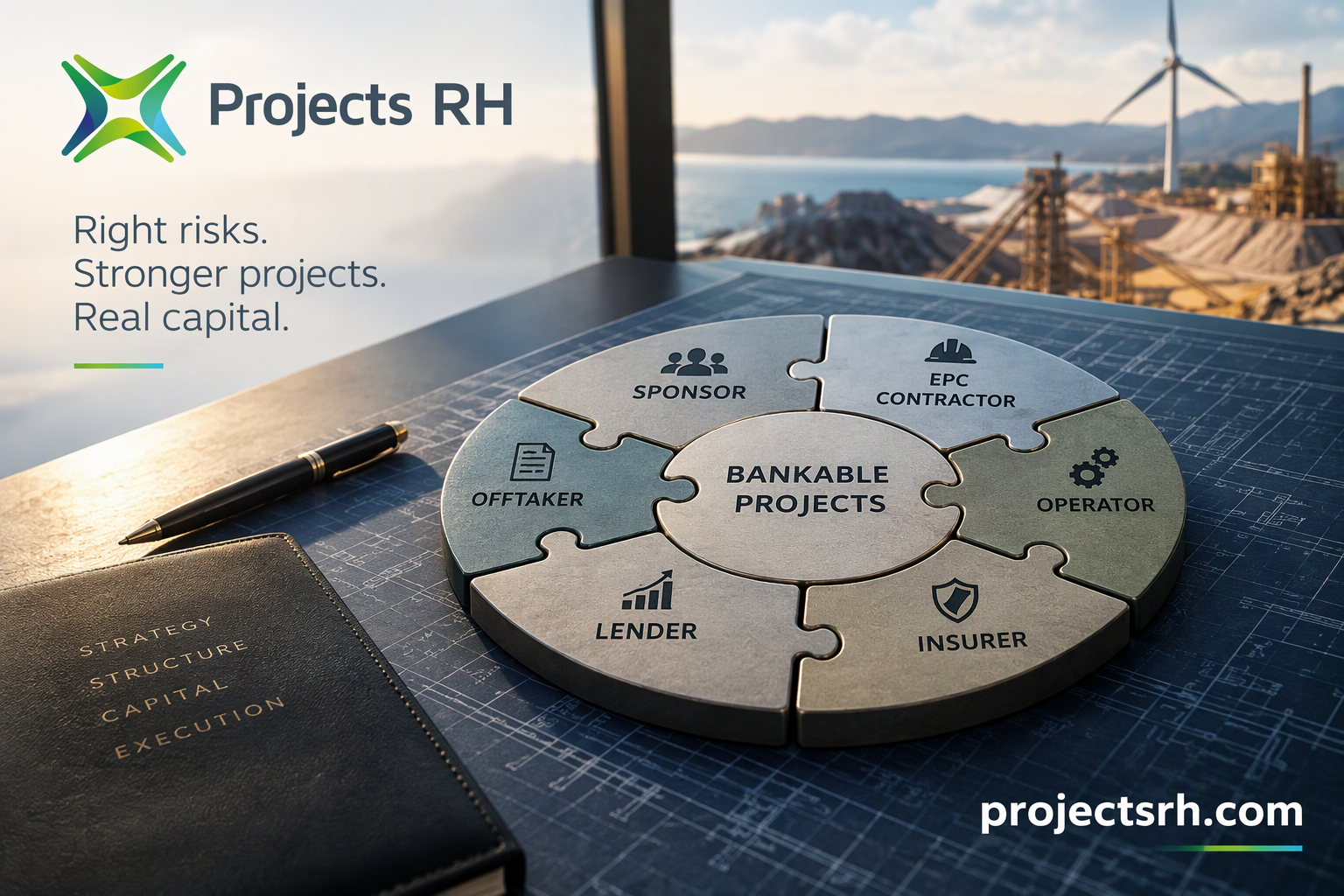
Project Finance Risk Allocation: Who Carries the Risk?
Who carries construction, market and operating risk? Learn how Project Finance Risk Allocation shapes contracts, bankability and lender confidence.
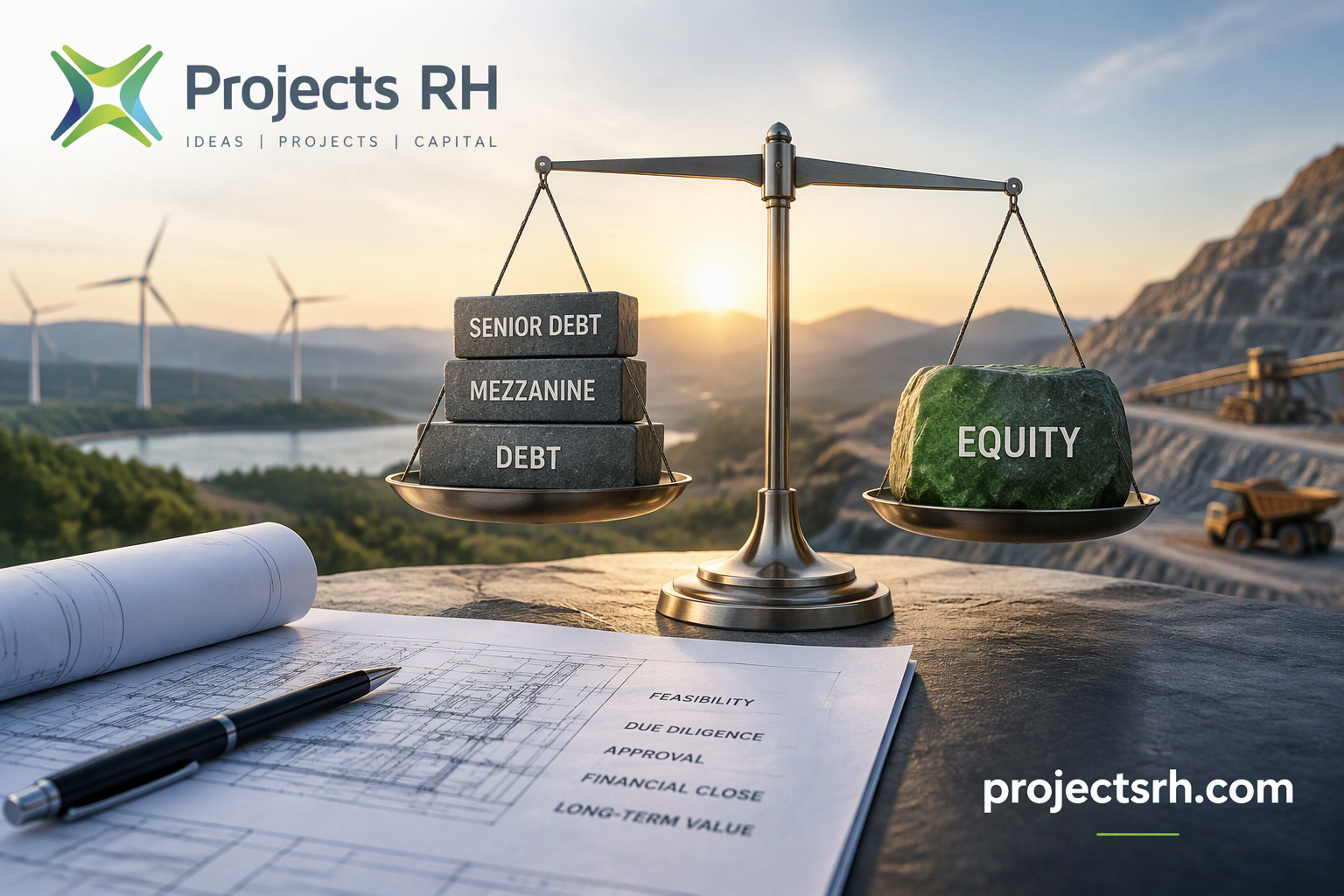
Project Finance Roadmap: Feasibility to Financial Close
Follow the Project Finance Roadmap from feasibility and bankability through due diligence, credit approval, conditions precedent and financial close.

Debt vs Equity in Project Finance: Building the Right Mix
Debt vs Equity in Project Finance explained: how sponsors balance leverage, dilution, DSCR, risk and investor returns to build a bankable capital structure.