
Early Stage Investment: Lessons From CRIISP Demo Day
Early stage investment starts with a concise proposition, credible evidence and investor readiness. CRIISP Demo Day showed why preparation matters.
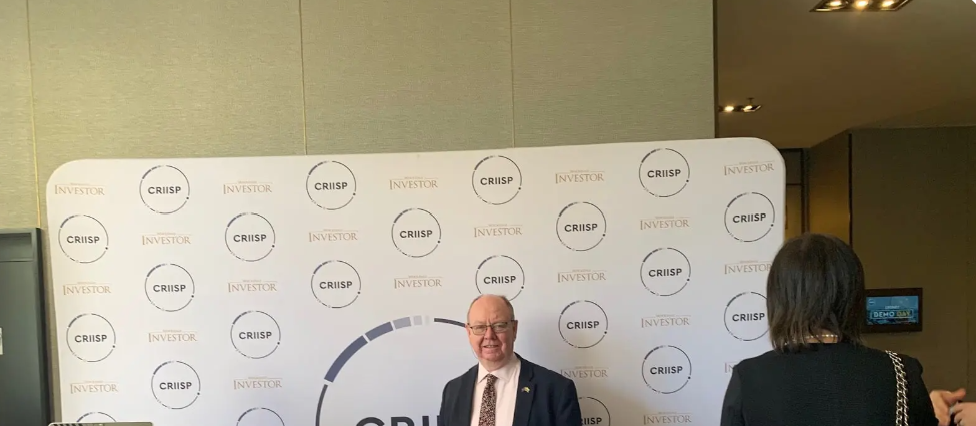
Early stage investment is often won or lost in the first few minutes of an investor's attention. A founder may have years of work behind a company, but an investor initially sees only a concise proposition, the commercial opportunity, the evidence supporting it and the quality of the team presenting it.
That was one of the strongest lessons Mauricio and I took from the CRIISP Demo Day organised by Wholesale Investor in 2019.
More than 30 early-stage investment opportunities were presented to an investor audience, with companies given only a few minutes to communicate why their businesses deserved closer examination.
The format was fast, but the underlying lesson was serious: an introduction can create investor attention, but preparation determines whether that attention develops into a credible investment discussion.
Early Stage Investment Starts With Investor Attention
The original CRIISP Demo Day limited companies to short presentations.
For project sponsors and founders, that constraint is useful.
Investors rarely begin by reading every page of a detailed business plan, financial model or information memorandum.
They first need to understand the opportunity.
A strong initial investment proposition should make several points clear:
- what the business or project does;
- what problem it solves;
- who needs the solution;
- the size and characteristics of the market;
- evidence of commercial demand;
- the business or revenue model;
- how much capital is being raised;
- how the capital will be used;
- the principal risks; and
- why the team can execute the strategy.
A five-minute presentation cannot answer every due-diligence question.
It should create enough clarity for the right investor to want the next conversation.
What CRIISP Was Designed to Solve
CRIISP emerged during a period when Australia's startup and private-capital ecosystem was expanding rapidly.
SmartCompany reported in 2019 that CRIISP was created as a SaaS platform intended to help startups engage with investors while managing and tracking investor interest.
The platform was designed to address fragmentation in the capital-raising process.
Startup Daily also described CRIISP as a digital capital-raising platform through which founders could access investors, manage investor interest and operate an investment deal room.
This matters because successful fundraising is not a single event.
It is a process.
A company may need to move an investor through several stages:
- initial awareness;
- interest;
- preliminary evaluation;
- management discussion;
- information review;
- due diligence;
- negotiation; and
- investment decision.
Technology can make that process more efficient.
It cannot eliminate the requirement for a credible investment case.
Demo Days Create Access, Not Investment
A demo day provides something extremely valuable: access.
Founders can present to investors they may otherwise find difficult to reach.
Investors can review multiple opportunities efficiently.
Advisers, founders and capital providers can also meet one another within a relevant ecosystem.
But access should not be confused with investment.
An investor still needs to decide:
Is this opportunity sufficiently credible to justify further time and due diligence?
That is why preparation before the event matters.
The pitch may last five minutes.
The work required to make those five minutes effective can take months.
Five Minutes Requires Discipline
A short presentation forces management to decide what matters most.
That is valuable because many investment presentations contain too much information rather than too little.
A founder may want to explain the history of the company, every product feature, every possible market and every future opportunity.
Investors need prioritisation.
A concise presentation should normally establish a logical sequence:
1. The Opportunity
What does the company or project actually do?
2. The Problem
What identifiable commercial problem is being addressed?
3. The Market
Who pays for the solution and how large or accessible is the market?
4. Evidence
What traction, contracts, customers, technology validation or other evidence supports the proposition?
5. Economics
How does the company generate revenue and eventually produce an acceptable return?
6. The Capital Requirement
How much capital is required and what will it fund?
7. The Team
Why is management capable of executing the plan?
These questions sound simple.
Answering them convincingly is considerably harder.
The Pitch Is Only the Front Door
A strong pitch can earn access to a second conversation.
It cannot replace the materials required after that conversation.
Serious investors may subsequently request:
- financial statements;
- financial forecasts;
- customer information;
- contracts;
- ownership details;
- cap tables;
- intellectual property information;
- technical evidence;
- market research;
- management profiles;
- legal documentation;
- details of previous capital raises;
- use of funds;
- risk information; and
- supporting due-diligence material.
This is where many companies discover the difference between being presentation ready and being investor ready.
The first creates interest.
The second allows an investor to evaluate whether capital should actually be committed.
Investor Readiness Comes Before Broad Outreach
For Projects RH, investor readiness is central to effective capital raising.
A company looking for capital should understand the strength of the underlying investment case before approaching a large investor audience.
That includes reviewing:
- the commercial proposition;
- financial performance;
- forecast assumptions;
- capital requirements;
- valuation expectations;
- use of funds;
- market evidence;
- management capability;
- governance;
- material risks;
- ownership structure; and
- investment documentation.
Projects RH works with project sponsors through its Services to strengthen these elements before serious capital outreach begins.
This preparation does not guarantee investment.
It improves the quality and credibility of the opportunity presented to investors.
Early Stage Investment Is About Risk and Evidence
Early-stage companies inevitably contain uncertainty.
The objective is not to pretend that the uncertainty does not exist.
The objective is to demonstrate that management understands it.
An early-stage investor may consider risks including:
- market adoption;
- customer concentration;
- technology development;
- competition;
- intellectual property;
- regulatory requirements;
- cash runway;
- management capability;
- future funding requirements;
- valuation;
- dilution; and
- exit possibilities.
Different investors will place different weight on those issues.
What matters is that the company can explain both the opportunity and the risks in a credible way.
Investor confidence rarely comes from a presentation claiming there are no problems.
It comes from evidence that management understands the problems and has a reasonable plan for addressing them.
Technology Companies Need Commercial Evidence
One observation from the 2019 event was the diversity of companies being presented.
Many opportunities did not fit neatly into labels such as fintech or biotech.
Technology was increasingly becoming embedded in ordinary commercial activity.
Software-as-a-service models were especially relevant because digital delivery can potentially allow businesses to scale without the same physical infrastructure required by traditional models.
But SaaS alone is not an investment thesis.
Investors may still ask:
- What is customer acquisition cost?
- How long do customers remain?
- What is recurring revenue?
- What is the gross margin?
- How quickly is revenue growing?
- How much capital is consumed to achieve that growth?
- What competitive advantage protects the business?
- What happens if growth is slower than forecast?
Technology changes the business model.
It does not remove the need for economics.
Investor Platforms Can Reduce Fundraising Friction
CRIISP represented an early attempt to make private capital raising more structured and digitally manageable.
The concept remains relevant.
Today's fundraising process increasingly combines:
- investor databases;
- digital deal rooms;
- online presentations;
- investor engagement tracking;
- document management;
- structured follow-up; and
- data about investor interaction.
Wholesale Investor has continued developing this model.
According to Wholesale Investor, its private-capital marketplace now connects private companies, fund managers and alternative investment opportunities with a network of more than 45,000 participants.
The tools have evolved substantially since 2019.
The central challenge has not.
Companies still need to give investors a reason to engage.
Capital Raising Is a Process, Not an Event
A common mistake is treating a pitch event as the capital-raising strategy itself.
The event is only one component.
A disciplined capital-raising process should consider:
Preparation
Is the company genuinely ready to approach investors?
Positioning
Can management explain the investment proposition clearly?
Investor Targeting
Which investors have mandates compatible with the opportunity?
Engagement
How will management create and maintain investor attention?
Due Diligence
Are the required materials organised and internally consistent?
Negotiation
Does management understand valuation, structure and investor expectations?
Execution
Can the transaction progress efficiently once serious investor interest develops?
This is why investor readiness should precede large-scale outreach.
Not Every Investor Is the Right Investor
A large investor network can create visibility.
That does not mean every investor in the network should receive every opportunity.
Investor targeting matters.
For an early-stage technology company, relevant considerations may include:
- preferred investment stage;
- typical ticket size;
- sector focus;
- geographic mandate;
- risk appetite;
- strategic expertise;
- follow-on capital;
- expected holding period; and
- portfolio fit.
The strongest capital-raising strategy does not simply generate the largest list of investor names.
It identifies the investors most likely to understand and seriously evaluate the opportunity.
Early Stage Investment Requires Credible Financial Thinking
Early-stage businesses often have limited operating history.
That does not mean investors ignore financial analysis.
The model simply needs to recognise greater uncertainty.
A credible early-stage financial model should explain:
- revenue assumptions;
- pricing;
- customer acquisition;
- gross margins;
- operating costs;
- staffing;
- capital expenditure where relevant;
- working capital;
- cash runway;
- financing requirements; and
- future funding needs.
Sensitivity analysis becomes particularly important.
If revenue is delayed by six months, what happens to cash?
If acquisition costs are higher than expected, how does that affect the capital requirement?
If the next funding round takes longer to complete, does the company have sufficient runway?
A forecast is not a promise.
It is a structured explanation of management's assumptions.
Regulation Also Matters
Capital raising in Australia operates within a regulatory framework.
The Australian Securities and Investments Commission administers relevant provisions of the Corporations Act governing fundraising through the issue or sale of securities.
The applicable requirements depend on the company, the type of offer, the investors being approached and the fundraising structure.
This distinction matters because not every capital-raising pathway operates under the same rules.
For example, ASIC separately regulates Australia's crowd-sourced funding regime, including licensing requirements for CSF intermediaries.
Project sponsors and founders should therefore obtain appropriate legal advice on the specific fundraising structure being contemplated.
Investor readiness includes regulatory readiness.
The CRIISP Demo Day Lesson Still Applies
The technology surrounding capital raising has advanced substantially since 2019.
Investor platforms can now provide more sophisticated engagement data, digital communication and structured transaction workflows.
Wholesale Investor's current capital-raising programmes also place significant emphasis on investor targeting, investment positioning, deal-room preparation and systematic investor engagement.
But the core lesson from CRIISP Demo Day remains valid.
A founder still needs to capture attention.
An investor still needs evidence.
A credible opportunity still needs preparation.
And serious capital raising still requires more than a good presentation.
From Investor Pitch to Investor Readiness
For Projects RH, the most useful distinction is between access to capital and readiness for capital.
Access matters.
Events, platforms, networks and introductions can all create valuable connections.
But capital providers ultimately evaluate the opportunity itself.
Before significant investor outreach, management should be able to answer:
Why should an investor allocate capital to this opportunity rather than another one?
The answer needs more than enthusiasm.
It needs credible economics, a clear use of funds, evidence supporting the commercial proposition and management capable of executing the strategy.
That is the foundation of effective early stage investment preparation.
Sources
- Projects RH - Original CRIISP Demo Day Commentary
- Wholesale Investor - Private Capital Marketplace
- SmartCompany - CRIISP Investor Matchmaking Platform
- Startup Daily - CRIISP Capital Raising Platform
- ASIC - Raising Funds in Australia
- ASIC - Crowd-Sourced Funding
Prepare Before You Approach Investors
If your company or project is preparing for an early-stage investment round, assess the investment proposition, financial model, documentation and capital strategy before broad investor outreach.
Start your investor readiness review to identify the key gaps before approaching potential capital providers.
Explore Projects RH services for investor readiness, financial modelling, investment documentation and capital-raising preparation.
Paul Raftery
First published on ProjectsRH.com on 26 November 2019. Updated for accuracy, structure, readability and current private-capital and investor-readiness context.

What to do next
Projects RH prepares the company and the project first, then takes them to investors. The fastest way to find out where you stand is a short call.
Keep reading
Clients Can Be Teachers: Lessons in Leadership
Clients can be teachers. Paul Raftery reflects on what project work can teach us about leadership, openness, investor readiness and long-term value.

We are global, Projects RH is not alone
Projects RH expands globally with presence in Hong Kong, Americas, and financial hubs like Sydney, Panama, Colombia, Miami, and Vancouver, facilitating investments in industries like copper, medical research, AI, and renewable energy. We connect good projects with smart money.
2023, A review to forecast 2024
Grateful 2023. Projects RH celebrates our team, clients & diverse sectors. Strong bonds & selective growth fuel our 2024 vision.