
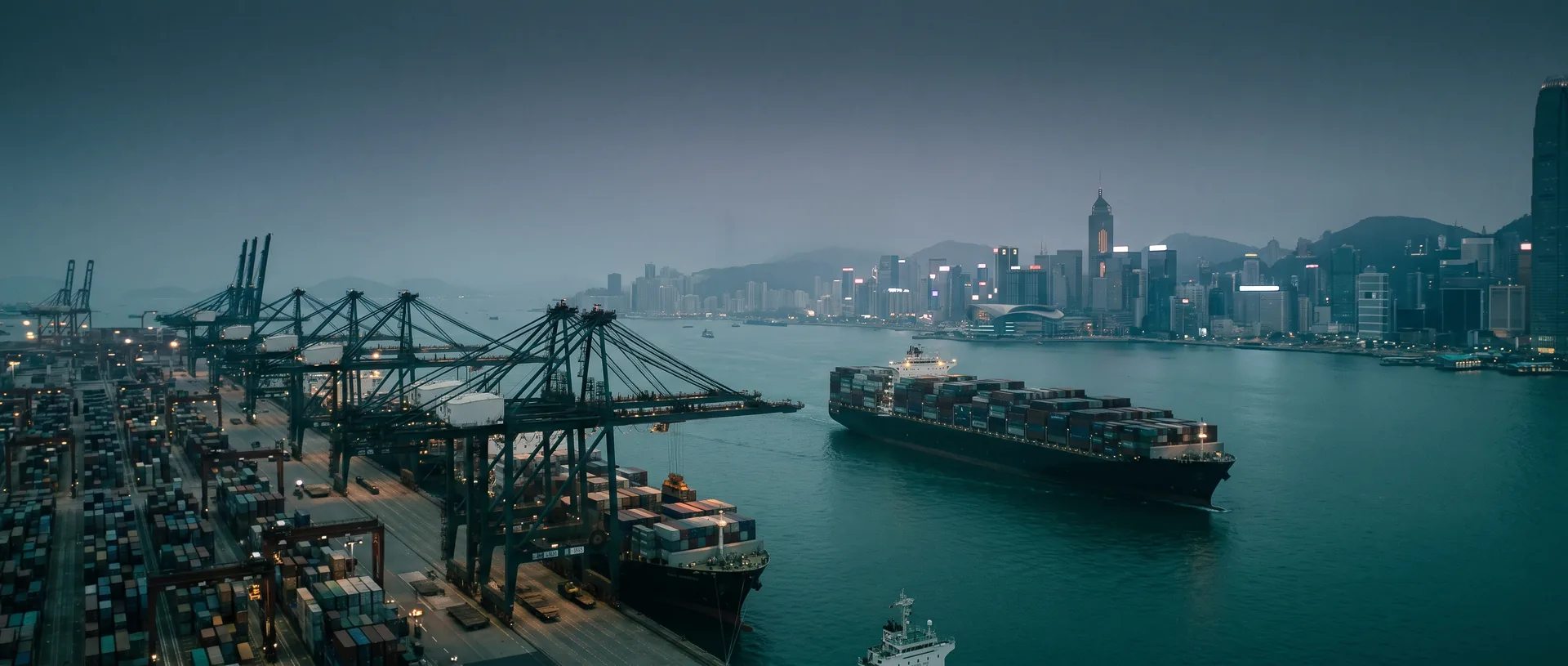
Hong Kong Business Environment: Stability and Capital
Hong Kong business environment combines global finance, Mainland connectivity and deep capital markets, while stability remains critical to investment.

Hong Kong business environment has long demonstrated how institutional stability, international connectivity, financial infrastructure and access to capital can combine to create a powerful commercial ecosystem.
When I first wrote about Hong Kong in 2019, the city was experiencing a period of significant social and political disruption. I had known Hong Kong for many years, had been there around the time of the 1997 handover and continued travelling there regularly for business.
My concern then was primarily commercial: sustained uncertainty can influence investment decisions, business travel, consumer activity and confidence.
Years later, the more useful business question is not to revisit the political arguments of that period. It is to understand what Hong Kong's experience teaches international businesses and project sponsors about stability, capital, regulatory frameworks and cross-border investment.
Hong Kong Business Environment and Institutional Stability
International capital places substantial value on predictability.
Investors need to understand:
- who owns the asset;
- which laws apply;
- how contracts are enforced;
- whether capital can move efficiently;
- how taxation operates;
- how disputes are resolved;
- which currency risks exist;
- how financial markets function; and
- what regulatory requirements apply.
Hong Kong's institutional framework provides distinctive answers to many of these questions.
The Basic Law of the Hong Kong Special Administrative Region establishes important economic arrangements for Hong Kong.
These include separate public finances, an independent taxation system and monetary and financial arrangements administered within Hong Kong.
For investors and businesses, these are not merely constitutional details.
They form part of the infrastructure within which commercial decisions are made.
Hong Kong Retains a Distinct Financial Architecture
Hong Kong's economic structure contains features that distinguish it from many other cities in the region.
Under the Basic Law, Hong Kong maintains its own currency.
The Hong Kong dollar remains legal tender, while Hong Kong also operates its own monetary and financial systems.
The Basic Law further provides for the free flow of capital and establishes Hong Kong as a separate customs territory.
These characteristics have historically contributed to Hong Kong's role as an intermediary between international capital and opportunities connected with Mainland China and the wider Asian economy.
For investors, such infrastructure can reduce certain forms of transaction friction.
But infrastructure alone does not remove investment risk.
Each transaction must still be assessed on its own fundamentals.
Why Hong Kong Became an International Financial Centre
Hong Kong combines several characteristics valued by international businesses.
According to the Hong Kong Monetary Authority, Hong Kong provides an international financial platform spanning banking, capital markets and asset management.
Its financial ecosystem can provide access to:
- international banks;
- equity markets;
- debt markets;
- asset managers;
- institutional investors;
- professional advisers;
- treasury operations; and
- cross-border financial infrastructure.
For project sponsors, access to such an ecosystem can be valuable.
A capital-intensive project may require several forms of funding during its development.
These can include sponsor equity, strategic investment, project finance debt, private credit, export credit support or institutional capital.
A sophisticated financial centre creates access points.
It does not automatically create an investable transaction.
Stability Matters to International Capital
The events of 2019 provided an important reminder that even highly developed financial centres can be affected by uncertainty.
The International Monetary Fund reported that Hong Kong's economy weakened significantly in 2019.
The IMF identified both external and domestic pressures, including US-China trade tensions and social unrest.
Exports and investment were affected, while private consumption and visitor arrivals also declined.
This illustrates a broader investment principle.
Political and social developments can become economic variables.
For investors, the relevant issue is not simply the political event itself.
The relevant question is how that event may affect:
- revenues;
- operating costs;
- capital flows;
- consumer activity;
- supply chains;
- business continuity;
- investor confidence;
- financing availability; and
- asset values.
Those effects belong in financial analysis.
Political Risk Should Be Converted Into Financial Scenarios
Project sponsors sometimes describe political risk only in narrative terms.
Investors generally need more.
If political or social uncertainty could materially affect a project, the impact should be translated into financial scenarios.
For example:
- What happens if project approvals are delayed?
- What happens if construction is interrupted?
- What happens if financing costs increase?
- What happens if demand falls?
- What happens if a major counterparty withdraws?
- What happens if capital takes longer to secure?
- What happens if foreign-exchange assumptions change?
The financial model should be able to test these consequences.
This is one reason why investor readiness requires more than an attractive presentation.
Risk needs to be understood quantitatively wherever possible.
Hong Kong Connects Mainland China and International Markets
One of Hong Kong's enduring commercial strengths is its position between Mainland China and international markets.
The Hong Kong Monetary Authority describes Hong Kong as an international financial platform serving investors, financial institutions and asset managers while providing access to opportunities associated with Mainland financial markets.
That bridging role has evolved rather than disappeared.
For international businesses, Hong Kong can provide an ecosystem through which relationships with Mainland institutions, capital markets and commercial counterparties can be developed.
For Mainland companies, Hong Kong can also provide connections to international capital and financial expertise.
That two-way function is economically significant.
Capital Markets Are Part of the Investment Infrastructure
A strong project requires more than an attractive asset.
It needs a realistic pathway to capital.
Hong Kong's capital-market infrastructure is relevant because companies may use different financing instruments at different stages.
These can include:
- private equity;
- public equity;
- bank lending;
- bonds;
- private credit;
- structured finance; and
- strategic investment.
The appropriate instrument depends on the project.
An early-stage development opportunity usually cannot support the same leverage as a mature operating asset with contracted revenues.
Likewise, a company with predictable recurring cash flows may have financing alternatives unavailable to a pre-revenue business.
Capital structure should therefore follow project fundamentals.
Access to a Financial Centre Does Not Equal Access to Funding
Being located in Hong Kong, Singapore, London, New York or another financial centre does not make a project bankable.
Nor does knowing investors.
Capital providers still need credible evidence.
Depending on the transaction, they may examine:
- market demand;
- revenue visibility;
- financial forecasts;
- CAPEX;
- OPEX;
- management capability;
- ownership structure;
- permitting;
- technical feasibility;
- counterparties;
- contracts;
- jurisdictional risk;
- governance;
- use of funds; and
- expected returns.
The location of the meeting may create access.
The quality of the underlying opportunity determines whether discussions progress.
Investor Readiness Matters Before International Outreach
For Projects RH, this leads directly to investor readiness.
Before approaching international investors, a project sponsor should understand what the investor is being asked to evaluate.
That normally requires a coherent relationship between:
- the project economics;
- the financial model;
- the capital requirement;
- the proposed capital structure;
- the use of funds;
- contractual arrangements;
- key risks;
- management capability; and
- investment documentation.
Projects RH works with project sponsors through its Services to strengthen these elements before serious capital outreach begins.
The objective is not to make a project appear risk-free.
Serious investors know that risk exists.
The objective is to demonstrate that the risks have been identified, evaluated and allocated appropriately.
Hong Kong Investment Requires Jurisdictional Awareness
Cross-border investment always requires an understanding of jurisdiction.
Hong Kong's legal and economic framework contains characteristics specific to the Hong Kong Special Administrative Region.
Businesses therefore need professional advice relevant to the transaction being contemplated.
Important areas can include:
- company structures;
- taxation;
- securities regulation;
- banking;
- foreign investment;
- employment;
- licensing;
- intellectual property;
- dispute resolution; and
- cross-border payments.
These considerations should be investigated before the transaction structure becomes difficult to change.
Good project preparation incorporates jurisdictional requirements early.
Regulation Evolves
Investors should also recognise that regulatory frameworks change over time.
Hong Kong's current legal and regulatory environment is not identical to the environment that existed when the original article was written in 2019.
Businesses operating internationally should therefore avoid relying on old assumptions.
Current legal, regulatory, tax and compliance advice should form part of transaction preparation.
This principle applies to every jurisdiction.
A financial model based on outdated tax treatment or an investment memorandum based on superseded regulation can quickly undermine investor confidence.
Financial Centres Compete
Hong Kong does not operate without competition.
International capital can consider alternatives including Singapore, Tokyo, Sydney, London, New York and other major financial centres.
Businesses can also increasingly conduct sophisticated financial activity without concentrating every function in one physical location.
That means financial centres compete on factors such as:
- regulatory predictability;
- market depth;
- access to investors;
- professional services;
- taxation;
- financial infrastructure;
- international connectivity;
- talent;
- technology; and
- transaction efficiency.
Hong Kong's continued competitiveness therefore depends on maintaining characteristics valued by international capital.
Business Continuity Is an Investment Issue
One lesson from periods of disruption is the importance of business continuity.
When assessing a project or company, investors may want to understand whether management has prepared for operational disruption.
Questions can include:
- Can employees work remotely?
- Are critical systems backed up?
- Are alternative suppliers available?
- Are key documents accessible securely?
- Can management communicate quickly with investors?
- Is sufficient liquidity available?
- Are insurance arrangements appropriate?
- Are decision-making responsibilities clear?
Business continuity is not merely an operational concern.
It can influence financial performance and investment risk.
Diversification Can Protect a Business
Companies operating internationally should also consider concentration risk.
Dependence on one jurisdiction, supplier, customer, lender or investor can increase vulnerability.
Diversification can occur across:
- markets;
- customers;
- currencies;
- suppliers;
- financing sources;
- logistics routes; and
- strategic partners.
Diversification does not mean abandoning important relationships.
It means avoiding unnecessary dependence on a single point of failure.
For capital-intensive projects, this principle can materially influence bankability.
Investor Readiness Requires Downside Analysis
An investment case should not depend on the base-case forecast.
Investors need to understand what happens when assumptions fail.
A robust financial model should test credible downside scenarios.
Depending on the project, these could include:
- lower revenues;
- delayed commencement;
- higher construction costs;
- higher interest rates;
- foreign-exchange changes;
- reduced utilisation;
- permitting delays;
- counterparty failure; and
- slower capital raising.
The purpose of sensitivity analysis is not to predict every future event.
It is to understand where the project becomes vulnerable.
That information allows management and investors to make better decisions.
Hong Kong Business Environment Remains Financially Significant
Hong Kong's role as an international financial centre continues to be supported by substantial financial infrastructure.
The Hong Kong Monetary Authority describes strengths across banking, capital markets and asset management and continues to position Hong Kong as a platform connecting international and Mainland financial opportunities.
This is important for international project sponsors.
Capital increasingly moves across jurisdictions.
Investors compare projects globally.
A project seeking international capital must therefore compete not merely with other projects in its own country but with opportunities across multiple markets and asset classes.
What Project Sponsors Can Learn From Hong Kong
Hong Kong's experience provides several broader lessons for businesses and project developers.
1. Stability Has Commercial Value
Predictability can affect investor confidence, operating decisions and financing.
2. Financial Infrastructure Matters
Deep banking and capital markets can facilitate transactions, but they cannot compensate for weak project fundamentals.
3. Jurisdictional Risk Must Be Understood
Legal, regulatory, political and financial conditions should form part of investment analysis.
4. Capital Is International
Investors compare jurisdictions and opportunities globally.
5. Downside Scenarios Matter
A credible model should show what happens when important assumptions change.
6. Relationships Create Access
Financial centres create networks, but investment still depends on the quality of the opportunity.
7. Investor Readiness Comes First
A project should be prepared before broad investor outreach begins.
From Uncertainty to Investment Readiness
The original 2019 article reflected a deeply uncertain moment for Hong Kong.
The more durable business lesson is not about choosing one political argument over another.
It is about understanding that capital responds to risk, stability, economics and opportunity.
For companies and project sponsors operating across borders, geopolitical and jurisdictional developments should therefore be treated as part of commercial analysis.
A serious investor needs to understand not only the upside.
The investor needs to understand what could go wrong, how management would respond and whether the expected return adequately compensates for the risks.
That is the discipline behind investor readiness.
And it is why the Hong Kong business environment remains a useful case study in the relationship between financial infrastructure, international capital, jurisdictional risk and commercial resilience.
Sources
- Hong Kong Basic Law - Chapter V: Economy
- Hong Kong Monetary Authority - Competitive International Financial Platform
- International Monetary Fund - Hong Kong SAR 2019 Article IV Consultation
Prepare Your Project for International Capital
If your project operates across jurisdictions or is preparing to approach international capital, test the economics, risk allocation, documentation and financial structure before investor outreach.
/intake.html to review your project's financial model, investment proposition, documentation and readiness before approaching capital providers.
/services.html for investor readiness, financial modelling, project finance and transaction preparation.
Paul Raftery
First published on ProjectsRH.com on 26 November 2019. Updated for accuracy, neutrality, structure and current international investment context.
What to do next
Projects RH prepares the company and the project first, then takes them to investors. The fastest way to find out where you stand is a short call.
Keep reading
Project Validation: Testing the Investment Case First
Project validation tests facts, assumptions, economics, commercial evidence and material risks before sponsors approach investors or lenders.

Project Preparation: Why Order Comes Before Capital Raising
Project preparation starts with small disciplines: establishing the facts, testing the model and organising the evidence before a project meets investors or lenders.
Project Preparation Comes Before Capital Raising
Why the file that reaches investors must be built and tested before any approach to the market, and who on a project team needs to be involved.