
Investor Readiness for Technology and FinTech Companies
Investor readiness helps technology and FinTech founders turn innovation, prototypes and market ambition into credible investment opportunities.
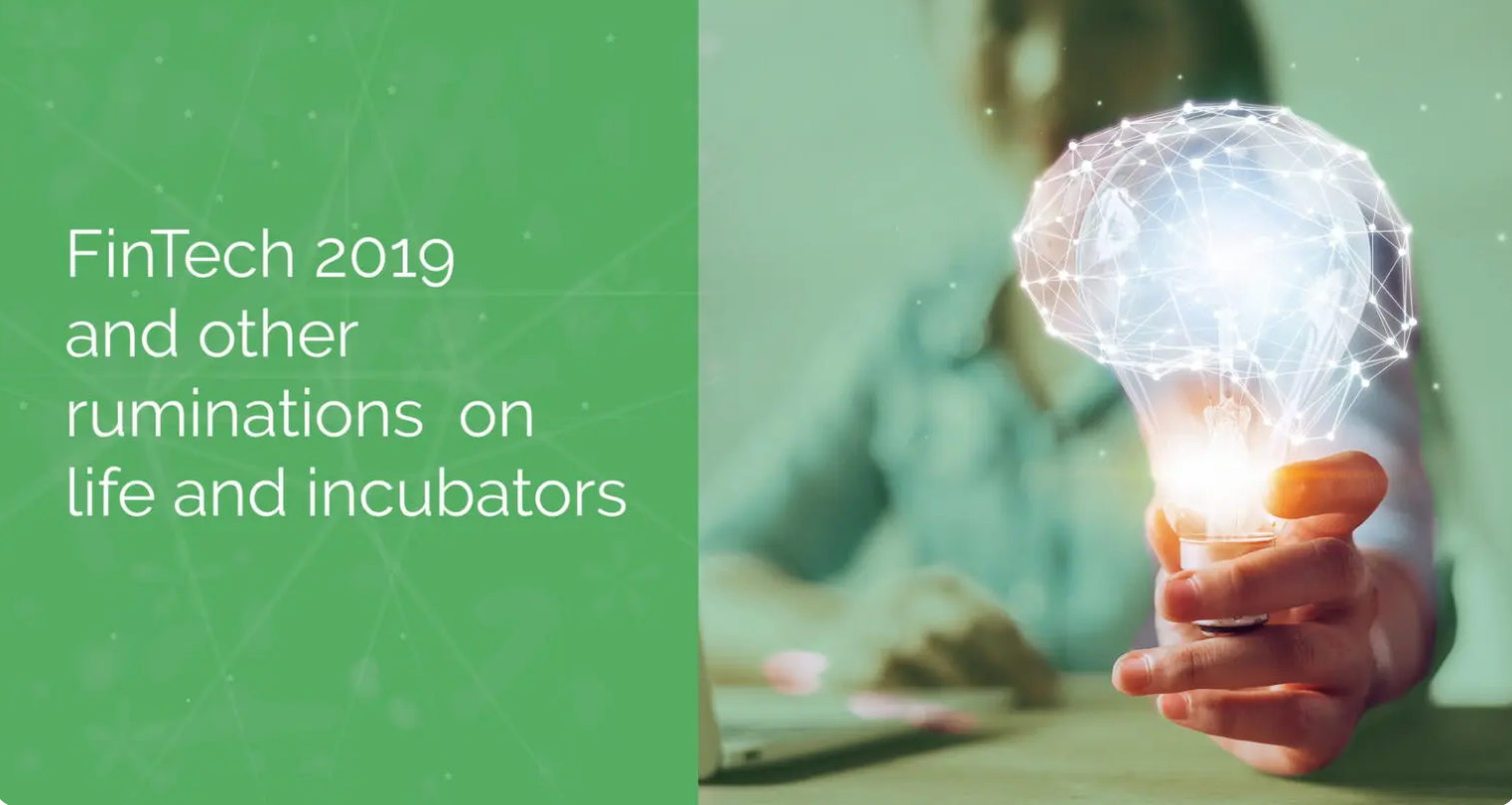
Investor readiness is where imagination, courage and initiative meet commercial discipline. Technology and FinTech entrepreneurs may begin with an idea, develop a prototype and identify a substantial market opportunity, but investors ultimately need evidence that innovation can become a viable business.
I was reminded of this at the 2019 Singapore FinTech Festival, where entrepreneurs, investors, financial institutions, regulators and technology companies came together around innovation, sustainability and the future of finance.
The scale was remarkable, but the more enduring lesson was simple.
Innovation creates possibilities.
Commercialisation requires preparation.
Capital requires an investment case.
That distinction remains highly relevant to Projects RH and to the technology, infrastructure and capital-intensive businesses we work with today.
Investor Readiness Turns Innovation Into an Investment Case
Entrepreneurs are often naturally focused on the product.
That is understandable.
The technology may have required years of development.
The founder may have invested substantial personal capital, time and professional reputation.
The prototype may solve a genuine problem.
But an investor evaluates something broader than the technology.
The investor may need to understand:
- the commercial problem;
- the market opportunity;
- the customer;
- the business model;
- pricing;
- intellectual property;
- competition;
- management capability;
- financial forecasts;
- capital requirements;
- use of funds;
- risks; and
- potential returns.
This is why investor readiness matters.
A compelling idea needs to become a coherent investment proposition.
Singapore FinTech Festival Demonstrated the Scale of Innovation
The 2019 Singapore FinTech Festival was an extraordinary illustration of the global innovation ecosystem.
The Monetary Authority of Singapore announced that SFF x SWITCH would bring together approximately 60,000 participants from 130 countries, with more than 400 speakers, over 900 exhibitors and 41 international pavilions.
The programme extended well beyond traditional financial technology.
It covered areas including:
- sustainability;
- finance and technology;
- future of finance;
- investment;
- global markets;
- artificial intelligence;
- advanced manufacturing;
- digital services; and
- commercialisation of new technologies.
For me, the importance of the event was not simply its size.
It demonstrated how closely innovation, capital and commercial execution are connected.
Technology Needs a Commercial Purpose
Technology should solve an identifiable problem.
A sophisticated product without a clear customer or economic purpose can struggle to attract serious commercial interest.
This seems obvious.
In practice, technology founders can become so close to the product that the investment proposition becomes secondary.
Investors may ask very different questions from developers.
For example:
Who will pay for this?
Why will the customer change from an existing solution?
How much does customer acquisition cost?
Can the product scale?
What protects the business from competitors?
How much capital is required before positive cash flow?
These questions connect technology to economics.
A Prototype Is a Milestone, Not the Destination
Reaching a working prototype can represent significant progress.
It demonstrates that an entrepreneur has moved beyond an idea.
But a prototype does not necessarily establish commercial viability.
The next stage may require evidence of:
- customer demand;
- product-market fit;
- pricing;
- operating reliability;
- scalability;
- intellectual-property protection;
- regulatory compliance;
- distribution;
- customer acquisition; and
- sustainable unit economics.
This transition can be difficult.
Technical risk may decline while commercial and financial risks become increasingly important.
That is one reason why founders need different skills and advisers at different stages of development.
Imagination Starts the Process
Innovation begins with imagination.
Entrepreneurs see possibilities that other people may initially overlook.
They ask whether an existing process can be faster, cheaper, safer or more convenient.
They imagine a product that does not yet exist.
Or they recognise that technologies already available in one industry can solve problems in another.
The World Bank describes innovation as a deliberate process connecting ideas, evidence, financing and expertise to achieve greater impact.
That combination is important.
Ideas matter.
Evidence determines whether the idea works.
Finance determines whether it can be developed and scaled.
Execution determines whether it ultimately creates value.
Courage Is Required to Move Beyond the Idea
Entrepreneurship also requires courage.
Founders may leave established careers.
They may invest their own capital.
They may work for long periods without certainty that the product will reach commercial scale.
They may hear repeatedly that the idea will not work.
But courage alone is not an investment thesis.
Investors generally need evidence that management has converted conviction into disciplined execution.
The founder's commitment is valuable.
The investor also needs to understand whether the company has:
- an addressable market;
- a credible product;
- customer validation;
- realistic economics;
- appropriate governance;
- capable management; and
- a defined capital strategy.
Passion can open a conversation.
Evidence advances it.
Initiative Converts an Idea Into Action
Initiative is the third part of the equation.
A project does not progress because management believes strongly in it.
Progress requires action.
That can include:
- developing the prototype;
- testing the product;
- speaking with potential customers;
- gathering market evidence;
- protecting intellectual property;
- building management capability;
- preparing financial forecasts;
- securing commercial partners;
- obtaining regulatory advice; and
- defining the investment requirement.
Each action reduces one area of uncertainty.
That makes the opportunity easier for an external investor to assess.
FinTech Demonstrates the Importance of Real Problems
One important aspect of FinTech innovation is its connection with practical financial problems.
Technology can potentially improve:
- payments;
- banking;
- lending;
- investment;
- financial inclusion;
- regulatory compliance;
- insurance;
- fraud detection;
- customer experience; and
- financial analysis.
The current Singapore FinTech Festival remains a major international platform for finance, technology, public policy, investors and innovators.
That continuing relevance demonstrates that the central opportunity was never technology for its own sake.
The real opportunity is using technology to improve financial services and create new forms of economic value.
The Innovation Ecosystem Matters
The 2019 SFF x SWITCH programme intentionally created relationships between entrepreneurs, investors, corporations, regulators and technology specialists.
The Monetary Authority of Singapore described the combined event as an opportunity to facilitate technological collaboration across FinTech, sustainability, health, advanced manufacturing and digital services.
It also included deal-making initiatives intended to connect startups and investors.
Innovation ecosystems can accelerate development because no entrepreneur has every required capability internally.
Companies may need access to:
- technical expertise;
- customers;
- capital;
- industry partners;
- advisers;
- regulators;
- research institutions;
- incubators; and
- experienced management.
Networks create access.
The business still needs to demonstrate why that access should result in investment.
Incubators Can Help Close Capability Gaps
Incubators and accelerators can play important roles in innovation ecosystems.
They can provide entrepreneurs with:
- mentoring;
- commercial networks;
- technical expertise;
- customer introductions;
- investor exposure;
- workspace;
- structured programmes; and
- market feedback.
Regulatory innovation environments can also be valuable.
The World Bank describes approaches including innovation hubs, regulatory accelerators and regulatory sandboxes designed to support learning and controlled experimentation in financial technology.
These structures can reduce some forms of uncertainty.
They do not eliminate the need for a commercial business case.
Investor Readiness for Technology Companies
For Projects RH, investor readiness means understanding whether the business is genuinely prepared for external capital.
For a technology or FinTech company, that assessment may cover:
- product maturity;
- intellectual property;
- customer validation;
- market opportunity;
- competitive positioning;
- recurring revenue;
- pricing;
- customer acquisition;
- management;
- governance;
- historical financial information;
- financial forecasts;
- capital requirement;
- use of funds;
- valuation expectations; and
- investment documentation.
The strongest opportunities are not necessarily those with the most complicated technology.
They are those where technology, market requirements and economics align.
The Projects RH services support companies and project sponsors in developing this financial and investment foundation before serious capital outreach.
Financial Modelling Is Essential
Technology companies sometimes postpone detailed financial modelling because the business is still developing.
That can be a mistake.
An early-stage financial model is not expected to predict the future perfectly.
It should explain management's assumptions.
Depending on the business, the model may include:
- customer numbers;
- pricing;
- recurring revenue;
- churn;
- customer acquisition cost;
- staff;
- product development costs;
- cloud infrastructure;
- marketing expenditure;
- working capital;
- capital expenditure;
- cash burn;
- runway;
- financing; and
- future capital requirements.
This helps both management and investors understand the economic consequences of the strategy.
Cash Runway Matters
For early-stage businesses, cash can become more important than accounting profit.
A company may be growing quickly and still run out of money.
Management should understand:
- opening cash;
- monthly cash burn;
- committed expenditure;
- expected revenue;
- timing of receipts;
- minimum operating cash;
- funding requirements; and
- how long the current resources will last.
If the company needs another financing round in 12 months, that should not be discovered in month 11.
Capital planning needs to begin early enough for the company to retain strategic options.
Capital Requirements Need a Clear Use of Funds
Investors do not simply want to know how much money a company wants.
They want to know why.
A capital requirement might fund:
- product development;
- technical staff;
- regulatory approvals;
- market expansion;
- customer acquisition;
- intellectual-property protection;
- working capital;
- equipment;
- international expansion; or
- transaction costs.
The use of funds should connect directly with measurable company milestones.
For example:
S$3 million to hire a technical team and launch internationally
is less informative than a detailed plan showing the hiring programme, product milestones, target markets, expected revenue progression and financing runway.
Specificity increases credibility.
Investor Documentation Needs Consistency
Once the business is ready for external engagement, investor-facing documents should tell one consistent story.
These can include:
- executive teaser;
- investor presentation;
- Information Memorandum;
- financial model;
- business plan;
- management biographies;
- intellectual-property information;
- market research;
- customer evidence; and
- due-diligence material.
Investors will compare documents.
If revenue forecasts differ between the financial model and the presentation, the inconsistency becomes a credibility issue.
Documentation should therefore be built around a common set of facts and assumptions.
Innovation Does Not Eliminate Risk
Technology can create enormous opportunities.
It can also create distinctive risks.
Investors may analyse:
- product risk;
- technology obsolescence;
- cybersecurity;
- data protection;
- regulation;
- competition;
- customer adoption;
- intellectual property;
- platform dependency;
- key-person risk;
- funding risk; and
- execution capability.
Investor readiness requires these risks to be identified.
A founder does not need to claim that risk has disappeared.
A credible founder explains the risk and how management intends to manage it.
Sustainability and Innovation Are Increasingly Connected
Sustainability was an overarching theme of SFF x SWITCH 2019.
The Monetary Authority of Singapore explicitly positioned technology and finance as potential enablers for sustainability and climate action. 【1-47139d】
This connection has only become more relevant.
Technology businesses are increasingly expected to consider:
- energy consumption;
- emissions;
- responsible AI;
- data usage;
- social impacts;
- financial inclusion; and
- governance.
Responsible innovation can therefore become part of commercial and investment analysis.
Experience Can Be an Entrepreneurial Advantage
One misconception about technology entrepreneurship is that successful founders must be extremely young.
Innovation does not belong to one age group.
Experienced professionals can bring:
- industry knowledge;
- customer relationships;
- management experience;
- technical expertise;
- commercial judgement;
- understanding of regulation; and
- knowledge of where inefficiencies actually exist.
The entrepreneurs Projects RH encountered around the original 2019 article demonstrated precisely this point.
Years of practical experience can help identify problems that outsiders might never see.
The opportunity then lies in combining that experience with new technology.
Human Imagination Still Matters
Artificial intelligence, automation, cloud computing and digital platforms continue to change the nature of work.
Some repetitive activities will become automated.
Other occupations will change.
New categories of work will emerge.
But innovation still requires humans to recognise problems worth solving.
Technology can process information.
Human beings determine commercial purpose.
Technology can generate alternatives.
Management remains responsible for decisions.
Technology can accelerate execution.
Entrepreneurs still need imagination, courage and initiative.
From Imagination to Commercial Opportunity
The path from an idea to investment can be viewed as a progression.
Imagination
Identify a meaningful problem and a better way of solving it.
Courage
Commit resources and accept the uncertainty involved in developing the solution.
Initiative
Build, test and validate the product.
Commercial Evidence
Demonstrate customer need and willingness to pay.
Financial Discipline
Translate the strategy into credible financial assumptions.
Investor Readiness
Organise the evidence, economics, risks and documentation.
Capital Engagement
Approach investors whose mandates fit the opportunity.
Each stage builds on the one before it.
Skipping stages can create difficulties later.
Investor Readiness Comes Before Capital Raising
The availability of investors does not mean a company is ready for investors.
Founders should resist the temptation to begin broad capital outreach simply because additional money would accelerate development.
First establish:
- what has been validated;
- what remains an assumption;
- how much capital is required;
- how the capital will be used;
- what milestones the funding should achieve;
- what risks investors will evaluate; and
- what evidence supports the company's valuation and strategy.
Only then can capital outreach become disciplined rather than opportunistic.
Imagination, Courage and Initiative Still Matter
The title of the original Projects RH article was "Imagination, Courage, Initiative."
Those qualities remain fundamental.
But for companies seeking external capital, I would add another:
discipline.
Imagination identifies opportunity.
Courage allows founders to pursue it.
Initiative turns the idea into action.
Discipline turns the resulting business into an opportunity that investors can evaluate.
That is where investor readiness connects entrepreneurship with capital.
Sources
- Monetary Authority of Singapore - SFF x SWITCH 2019 Sustainability and Innovation
- Monetary Authority of Singapore - Singapore FinTech Festival and SWITCH
- Monetary Authority of Singapore - Global FinTech Hackcelerator 2019
- Monetary Authority of Singapore - Singapore FinTech Festival
- World Bank - Innovation Facilitators
- World Bank - Innovation
Turn Innovation Into an Investment-Ready Opportunity
If your technology, FinTech or innovation-led company is preparing for investors, establish the financial and commercial foundation before broad capital outreach.
Start the Projects RH Capital Readiness Questionnaire to identify financial, commercial and documentation gaps that may need attention.
Explore Projects RH services for investor readiness, financial modelling, investment documentation, capital raising and transaction preparation.
Paul Raftery
First published on ProjectsRH.com on 26 November 2019. Updated to reflect the current Projects RH investor-readiness and technology-investment approach.

What to do next
Projects RH prepares the company and the project first, then takes them to investors. The fastest way to find out where you stand is a short call.
Keep reading
Clients Can Be Teachers: Lessons in Leadership
Clients can be teachers. Paul Raftery reflects on what project work can teach us about leadership, openness, investor readiness and long-term value.

We are global, Projects RH is not alone
Projects RH expands globally with presence in Hong Kong, Americas, and financial hubs like Sydney, Panama, Colombia, Miami, and Vancouver, facilitating investments in industries like copper, medical research, AI, and renewable energy. We connect good projects with smart money.

2023, A review to forecast 2024
Grateful 2023. Projects RH celebrates our team, clients & diverse sectors. Strong bonds & selective growth fuel our 2024 vision.