
Limited-Recourse Project Finance: Sponsors and Lenders
What is Limited-Recourse Project Finance? Learn how project cash flows, SPVs, security and sponsor support define risk for sponsors and lenders.
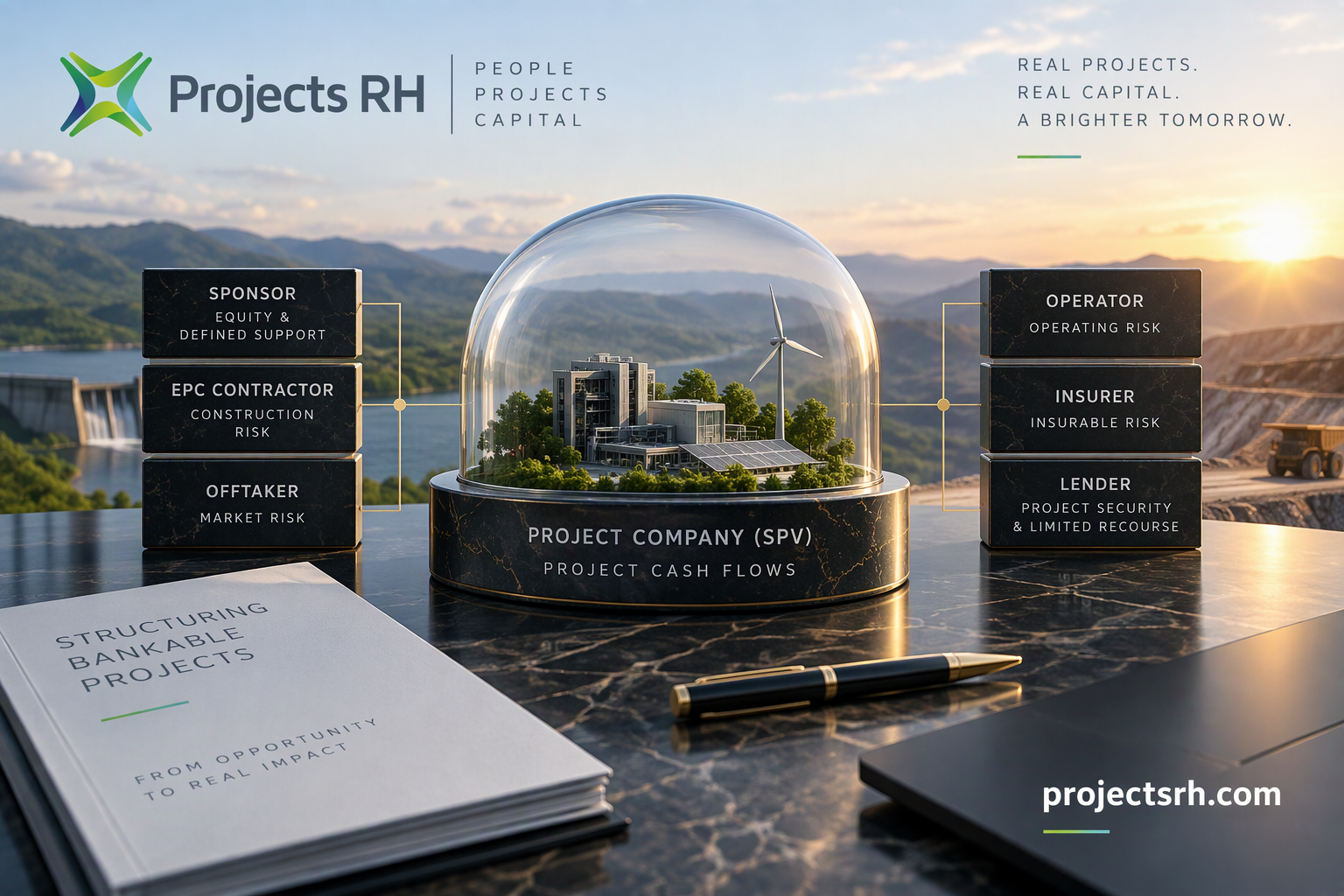
Limited-Recourse Project Finance is a financing structure in which lenders rely primarily on the cash flows, assets and contracts of a dedicated project company for repayment, while retaining specifically defined and limited rights of recourse to sponsors or other parties for agreed risks, periods or obligations.
It is also frequently misunderstood.
Some sponsors hear “limited recourse” and assume the parent company has no meaningful exposure beyond its initial equity.
Some lenders hear “project finance” and assume every material project risk has been transferred away from the debt.
Neither assumption is necessarily correct.
The defining feature is more precise: lenders look primarily to the project's own cash flows, assets and contractual framework for repayment, while any additional recourse to sponsors is specifically defined and limited by the financing structure.
Throughout my career in finance, resources, energy and project development, I have found that this distinction matters enormously.
Limited recourse does not mean limited discipline. The less a lender can rely on the sponsor's wider balance sheet, the more confidence the lender needs in the project itself.
That makes Limited-Recourse Project Finance fundamentally a question of project economics, contractual risk allocation, bankability and execution.
Limited-Recourse Project Finance is a financing structure in which lenders rely primarily on the cash flows, assets and contracts of a dedicated project company for repayment, while retaining specifically defined and limited rights of recourse to sponsors or other parties for agreed risks, periods or obligations.
This differs from conventional corporate lending.
In a corporate loan, lenders may rely substantially on the overall creditworthiness and balance sheet of the borrowing company.
In project finance, a dedicated Special Purpose Vehicle, or SPV, normally owns and develops the project.
The World Bank's Project Finance Key Concepts describes a typical structure in which:
- a dedicated SPV undertakes the project;
- construction and operations are largely contracted to third parties;
- new projects initially have no operating revenue during construction;
- repayment ultimately depends heavily on project cash flow;
- revenue may be supported by an offtake agreement or PPA; and
- lenders have limited or no recourse to project sponsors.
That creates an important distinction:
The borrower may be the SPV, but the credit story is the project.
What Does “Recourse” Mean in Project Finance?
Recourse refers to the assets, entities or contractual support that a lender can legally pursue if the borrower fails to meet its obligations.
Consider three broad financing structures.
Full-Recourse Corporate Finance
The lender relies on the creditworthiness of the corporate borrower and potentially its wider assets.
The company's overall balance sheet supports repayment.
Non-Recourse Project Finance
The lender relies on the project itself, without general sponsor guarantees supporting repayment.
Project cash flows, assets, contracts and security form the principal credit basis.
Limited-Recourse Project Finance
The lender still relies principally on the project but has specifically negotiated rights against sponsors or other parties for defined risks.
The difference is fundamental.
Limited recourse sits between general corporate recourse and pure non-recourse financing.
The recourse is limited by:
- amount;
- duration;
- event;
- obligation;
- construction milestone;
- completion test; or
- other negotiated conditions.
Why Limited-Recourse Project Finance Exists
Major projects can require hundreds of millions or billions of dollars of investment.
Sponsors generally do not want every new project debt obligation sitting unrestricted against the entire corporate balance sheet.
At the same time, lenders are rarely prepared to provide substantial long-term capital to an undeveloped project purely because management believes it will succeed.
Limited-recourse structures create a balance.
Sponsors can ring-fence a project within an SPV.
Lenders can focus on:
- project cash flows;
- project contracts;
- assets;
- security;
- completion arrangements;
- sponsor equity;
- reserves;
- insurance;
- covenants; and
- specified sponsor support.
The project therefore has to become capable of standing economically on its own.
The Role of the Special Purpose Vehicle
The SPV sits at the centre of limited-recourse project finance.
It generally exists specifically to:
- develop;
- finance;
- own;
- construct;
- operate; and
- receive revenues from the project.
This separation has several purposes.
It helps isolate project cash flows.
It creates a defined contractual framework.
It allows security to be granted over relevant project rights and assets.
It provides lenders with visibility over the economics of one project rather than the sponsor's entire corporate group.
The SPV may enter into agreements covering:
- construction;
- operations and maintenance;
- offtake;
- feedstock;
- power;
- equipment;
- land;
- insurance;
- financing;
- hedging; and
- government arrangements.
The quality of these agreements becomes particularly important because the SPV may have little or no financial history of its own.
What Do Lenders Rely On Instead of the Sponsor Balance Sheet?
If lenders have limited access to the sponsor's wider balance sheet, they need other sources of credit confidence.
These normally come from a combination of:
Cash Flow + Contracts + Assets + Security + Reserves + Insurance + Sponsor Support
Each element addresses different aspects of the lending risk.
Cash Flow
The project must demonstrate sufficient expected cash flow to meet:
- operating expenses;
- taxes;
- maintenance;
- senior debt service;
- reserve requirements; and
- other priority obligations.
Contracts
Contracts allocate construction, operating, supply and revenue risks.
Assets
The physical project and associated rights form part of the lender's collateral framework.
Security
Lenders may take security over shares, accounts, receivables, material contracts, insurance proceeds and project assets, subject to jurisdiction and transaction structure.
Reserves
Reserve accounts can provide liquidity protection.
Insurance
Insurance transfers specified insurable risks.
Sponsor Support
Sponsors may accept defined obligations where lenders are unwilling to rely entirely on the project during particular phases.
These protections work together.
Why Construction Is the Most Difficult Phase
The construction phase highlights why project finance is often limited-recourse rather than completely non-recourse.
Before commissioning, a new project may have:
- substantial expenditure;
- no operating history;
- little or no revenue;
- construction risk;
- completion risk;
- contractor risk; and
- cost-overrun risk.
The World Bank notes that new-build projects generally have no revenue stream during construction and that debt service becomes possible only after the project is operational.
That makes construction very different from operations.
Once the project has:
- completed construction;
- passed performance tests;
- started generating revenue; and
- demonstrated compliance with financing requirements,
the risk profile may change substantially.
Completion Support: Where Limited Recourse Becomes Visible
One of the clearest examples of limited recourse is sponsor support during construction.
The EBRD's project-financing loan guidance states that general recourse to the sponsor is not necessarily required, but the Bank may seek specific performance and completion guarantees and other forms of support that are normal in limited-recourse financing.
Sponsor support may therefore include:
- completion guarantees;
- cost-overrun undertakings;
- contingent equity;
- standby equity;
- subordinated shareholder funding;
- minimum equity commitments;
- debt-service support during construction;
- sponsor undertakings; or
- other defined commitments.
These obligations should not be confused with a general corporate guarantee of all project debt.
They are typically negotiated for defined circumstances.
What Happens After Completion?
A critical concept in limited-recourse finance is that sponsor support may reduce after completion conditions are satisfied.
For example, a financing may require the project to demonstrate:
- physical completion;
- specified performance;
- operational reliability;
- permits;
- required reserves;
- agreed financial ratios; or
- other completion requirements.
When those conditions have been met, construction-related sponsor support may fall away or reduce.
The lender then relies more heavily on:
- operating cash flow;
- project contracts;
- security;
- reserve accounts; and
- the ongoing economics of the project.
This transition is one of the reasons completion testing is such an important financing milestone.
Limited Recourse Does Not Mean No Sponsor Risk
This distinction is critical.
A sponsor using limited-recourse project finance still faces substantial exposure.
Sponsor risk can include:
- equity invested in the SPV;
- development expenditure;
- cost-overrun commitments;
- completion support;
- contingent funding;
- shareholder loans;
- guarantees for specified obligations;
- reputational exposure;
- management time; and
- loss of future project value.
A project can therefore fail without the lender having general recourse to the sponsor's entire balance sheet and still create a substantial economic loss for the sponsor.
Limited recourse limits specified lender claims. It does not make project failure inexpensive.
Sponsor Equity: The First-Loss Position
Equity normally sits behind senior debt in the capital structure.
This means sponsors generally absorb project losses before senior lenders.
Sponsor equity provides lenders with:
- evidence of commitment;
- loss-absorbing capital;
- alignment of interests; and
- additional financial resilience.
The size of the equity contribution depends on many factors, including:
- sector;
- construction risk;
- revenue certainty;
- sponsor strength;
- jurisdiction;
- lender appetite;
- asset life; and
- project economics.
There is no universal debt-to-equity ratio for limited-recourse project finance.
How Lenders Size Limited-Recourse Debt
Lenders cannot simply ask:
How much debt does the sponsor want?
They need to ask:
How much debt can the project's cash flows support under credible base-case and downside assumptions?
Debt sizing can therefore depend on:
- projected cash flow;
- DSCR;
- revenue predictability;
- project life;
- debt tenor;
- construction period;
- cost sensitivity;
- operating assumptions;
- offtaker credit;
- reserve requirements;
- stress cases; and
- risk allocation.
This is why an attractive enterprise valuation does not automatically create equivalent debt capacity.
Project finance debt is ultimately constrained by repayment capacity.
DSCR and Limited Recourse
Debt Service Coverage Ratio, or DSCR, is one of the key measures in project finance.
In simplified form:
DSCR = Cash Flow Available for Debt Service ÷ Debt Service
If cash flow available for debt service is $18 million and annual debt service is $12 million:
DSCR = 1.50x
That provides a 50% margin over required debt service for that period.
But an acceptable DSCR depends on the specific project.
A contracted infrastructure asset may support different requirements from:
- merchant power;
- mining;
- AI infrastructure;
- commodity processing; or
- an emerging-market development.
The lender examines both the ratio and the risks underlying the cash flow.
Security in Limited-Recourse Project Finance
Because the lender does not have unrestricted recourse to the wider sponsor group, the project security package becomes particularly important.
Depending on jurisdiction and transaction, security can include:
- shares in the SPV;
- project bank accounts;
- receivables;
- project assets;
- land rights;
- material contracts;
- insurance proceeds; and
- other project rights.
Lenders may also use:
- direct agreements;
- assignment rights;
- step-in rights;
- account controls; and
- restrictions on distributions.
Security does not guarantee full recovery.
Its purpose is partly to give lenders control and options when project performance deteriorates.
Why Direct Agreements Matter
Project finance lenders can be highly dependent on contracts between the SPV and other counterparties.
If an EPC contract, PPA, concession or O&M agreement terminates unexpectedly, the effect on debt repayment can be substantial.
Direct agreements can create rights between lenders and key project counterparties.
These may include:
- notice before termination;
- cure periods;
- lender step-in rights;
- replacement rights; or
- recognition of security interests.
The objective is not simply to seize the project after a problem.
It is often to preserve the project's ability to continue operating and generating cash.
The Importance of Offtake
Contracted revenue can be fundamental to limited-recourse financing.
Examples include:
- PPAs;
- take-or-pay agreements;
- capacity agreements;
- concession revenues;
- mining offtake;
- long-term customer contracts; and
- availability payments.
Lenders examine more than the existence of a contract.
They look at:
- counterparty creditworthiness;
- tenor;
- pricing;
- volumes;
- termination rights;
- indexation;
- force majeure;
- payment security;
- currency;
- assignment; and
- lender protections.
Revenue is not truly de-risked merely because a contract exists. The contract and the counterparty both need to withstand scrutiny.
EPC and Construction Contracts
The construction contract can be another foundation of limited-recourse finance.
Lenders may look for:
- defined scope;
- price certainty;
- schedule certainty;
- performance guarantees;
- delay liquidated damages;
- performance liquidated damages;
- parent guarantees;
- performance bonds;
- warranties; and
- appropriate termination rights.
But risk transfer is rarely absolute.
Liability caps, exclusions and force majeure can leave residual exposure with the SPV.
The financial model should reflect that residual risk.
Operating Agreements
Once construction is complete, operating performance becomes central to debt repayment.
The O&M framework may cover:
- asset availability;
- performance standards;
- staffing;
- preventive maintenance;
- major maintenance;
- operating cost;
- reporting;
- warranties; and
- penalties.
The relevant question for lenders is whether the project can continue generating sufficient cash over the debt tenor.
Limited recourse becomes meaningful only if the operating project is capable of supporting itself.
Reserve Accounts
Reserve accounts provide another layer of lender protection.
Depending on the transaction, these may include:
- Debt Service Reserve Account;
- maintenance reserves;
- operating reserves;
- construction contingency accounts; or
- other dedicated reserves.
A Debt Service Reserve Account may hold funds equivalent to an agreed period of future debt service.
The precise requirement is transaction-specific.
Reserves can provide temporary liquidity protection.
They do not repair weak project economics.
Covenants and Cash Control
Limited-recourse financing often gives lenders significant contractual control over project cash.
Financing documents may regulate:
- additional indebtedness;
- distributions;
- asset sales;
- changes to project contracts;
- acquisitions;
- capital expenditure;
- reserve funding;
- hedging;
- insurance;
- financial ratios; and
- reporting.
This can create a common misunderstanding.
Sponsors may own the project company.
But sponsor ownership does not necessarily mean unrestricted access to project cash.
Debt service and required reserves will typically rank ahead of shareholder distributions.
What Happens if the Project Underperforms?
Suppose a project has:
- $600 million of senior debt;
- no general sponsor guarantee;
- defined completion support;
- security over project assets and accounts; and
- contractual offtake.
After completion, revenue falls substantially.
What can lenders do?
Depending on the financing documents, options may include:
- blocking distributions;
- requiring additional reserves;
- exercising account control;
- enforcing security;
- replacing contract counterparties;
- exercising step-in rights;
- restructuring the debt;
- accelerating the loan; or
- ultimately enforcing against project collateral.
What lenders generally cannot do under a genuinely limited-recourse structure is simply pursue every unrelated asset of the sponsor as though the debt were an unrestricted corporate obligation.
The actual answer always depends on the financing documents.
Limited Recourse vs Non-Recourse Project Finance
The terms are sometimes used loosely.
It is better to distinguish them.
Non-Recourse
The lender looks solely to the project assets and cash flows, without additional contractual recourse to the sponsor.
Limited Recourse
The lender primarily relies on the project but has specified recourse to sponsors or other parties under defined circumstances.
In practice, large construction-stage projects frequently contain some form of limited sponsor support.
This reflects economic reality.
Before completion, project cash flow may not yet exist.
Limited Recourse vs Corporate Finance
The difference with corporate finance is even clearer.
In corporate finance, lenders assess:
- corporate earnings;
- group balance sheet;
- existing debt;
- business diversification;
- corporate assets; and
- consolidated creditworthiness.
In limited-recourse project finance, attention shifts towards:
- project cash flow;
- project contracts;
- project risk;
- asset security;
- completion;
- sponsor support;
- reserves; and
- project-specific downside scenarios.
The project therefore has to be capable of supporting the financing on its own terms.
Why Limited-Recourse Finance Can Cost More
Limited-recourse project finance can be expensive to structure.
It can require:
- financial advisers;
- lender technical advisers;
- model auditors;
- legal advisers;
- insurance advisers;
- environmental consultants;
- independent engineers;
- extensive due diligence; and
- complex documentation.
The financing process can also take considerable time.
The reason is simple.
When a lender cannot rely broadly on the sponsor's balance sheet, the lender needs to understand the project in greater depth.
The World Bank has observed that project lenders assume part of the project risk and may charge higher margins than in normal corporate lending.
The project needs to be large enough for the benefits to justify that complexity.
Why Sponsors Still Use Limited-Recourse Project Finance
Despite its complexity, the structure can offer compelling advantages.
Sponsors may be able to:
- finance large assets without funding the entire investment from corporate resources;
- isolate specific project risks;
- protect wider corporate debt capacity;
- introduce strategic co-investors;
- align financing tenor with asset life;
- create project-specific governance;
- separate cash flows;
- mobilise institutional lenders; and
- potentially recycle capital into additional projects.
The strategic value can therefore extend well beyond the cost of debt.
What Limited Recourse Means for Lenders
For lenders, limited recourse changes the credit analysis.
The lender needs confidence that:
- construction can be completed;
- project costs can be funded;
- operating assumptions are credible;
- revenue is sufficiently predictable;
- contracts allocate risks appropriately;
- insurance covers relevant insurable risks;
- security is enforceable;
- downside cases remain manageable; and
- sponsor support covers defined risks where necessary.
The lender is effectively asking:
If we cannot rely broadly on the sponsor balance sheet, can this project survive on its own?
That is the central credit question.
Limited-Recourse Project Finance in Mining
Mining can be particularly challenging for limited-recourse structures because projects may face:
- geological risk;
- resource uncertainty;
- metallurgy;
- construction;
- commodity prices;
- infrastructure;
- power and water;
- environmental approvals;
- logistics;
- operating performance;
- jurisdictional risk; and
- closure obligations.
A project with strong technical studies, credible reserves, realistic cost assumptions and appropriate offtake may have a stronger financing case.
But early-stage mining projects can remain too exposed to development uncertainty for conventional senior project debt.
The financing structure needs to follow the project's actual maturity.
Limited-Recourse Project Finance in Energy
Energy provides many traditional examples of limited-recourse financing.
Revenue may be supported by:
- long-term PPAs;
- availability arrangements;
- regulated tariffs;
- capacity payments; or
- other contracted structures.
Construction risk can be partly allocated through EPC contracts.
Operating risk can be partly allocated through O&M arrangements.
Insurance can cover defined accidental risks.
Interest-rate and currency exposure can potentially be hedged.
The combination of these contracts can create the cash-flow predictability lenders need.
Limited-Recourse Finance for AI Infrastructure and Data Centres
AI infrastructure introduces newer applications of traditional project-finance principles.
Data centres can require substantial investment in:
- land;
- grid connection;
- substations;
- power generation;
- buildings;
- cooling;
- networking;
- energy storage; and
- computing hardware.
The financing challenge is that these components can have very different economic lives.
A substation may remain useful for decades.
GPUs may require substantially faster replacement.
Limited-recourse financing therefore requires careful consideration of:
- customer contracts;
- power availability;
- utilisation;
- construction;
- technology refresh;
- asset life;
- replacement CapEx;
- residual value;
- customer concentration; and
- financing tenor.
The project cannot be treated as a single homogeneous asset simply because everything sits within one SPV.
Limited Recourse in Emerging Markets
Limited-recourse financing can become more complex in emerging markets.
Additional issues may include:
- political risk;
- currency convertibility;
- foreign-exchange exposure;
- local-law security;
- government approvals;
- sovereign-linked counterparties;
- change in law;
- repatriation of funds;
- regulatory stability; and
- enforceability.
The World Bank has historically noted that limited-recourse project finance in developing markets frequently incorporates sponsor or government support to provide lenders with additional comfort.
That does not necessarily undermine the project-finance structure.
It demonstrates that recourse exists on a spectrum.
When Is Limited-Recourse Project Finance Appropriate?
Limited-recourse structures tend to make most sense where a project has:
- material capital requirements;
- identifiable assets;
- credible cash flows;
- sufficiently mature technology;
- defined project contracts;
- acceptable risk allocation;
- predictable operating economics;
- sponsors capable of supporting development;
- appropriate security; and
- enough scale to justify transaction costs.
They may be less appropriate where:
- project costs are small;
- revenue is highly speculative;
- technology is unproven;
- contracts are immature;
- development risk remains high;
- ownership is unclear;
- permits are unresolved; or
- expected financing costs outweigh the structural advantages.
Not every project should use project finance simply because the sponsors want limited recourse.
The Projects RH Limited-Recourse Test
Before assuming a project is suitable for limited-recourse financing, I would ask:
- Is the SPV structure clear and appropriate?
- Are project cash flows sufficiently predictable?
- Can the project service debt without relying on unrelated sponsor cash flows?
- Is construction risk adequately allocated?
- What completion support will lenders require?
- Can cost overruns be absorbed?
- Are revenue contracts bankable?
- Is the offtaker or customer creditworthy?
- Are operating assumptions supported by evidence?
- What security can lenders obtain?
- What risks remain with sponsors after completion?
- Does the downside case remain financeable?
If these questions cannot be answered clearly, the project may need further preparation before pursuing a limited-recourse structure.
Frequently Asked Questions About Limited-Recourse Project Finance
What is Limited-Recourse Project Finance?
Limited-Recourse Project Finance is financing in which lenders rely primarily on a project's cash flows, assets and contracts for repayment while retaining specifically defined rights of recourse to sponsors or other parties for agreed risks or periods.
What is the difference between limited recourse and non-recourse?
Non-recourse financing relies exclusively on project assets and cash flows without additional sponsor recourse. Limited-recourse financing allows defined sponsor or third-party support for specified risks, obligations or periods.
Does limited recourse protect the sponsor?
It limits the lender's claims to the framework agreed in the financing documents.
However, sponsors can still lose their equity, development expenditure and any amounts committed under completion guarantees, cost-overrun support or other negotiated obligations.
Why do lenders accept limited recourse?
Lenders may accept limited recourse when they have sufficient confidence in project cash flows, contracts, assets, security, risk allocation, reserves, insurance and any agreed sponsor support.
Is an SPV required?
A dedicated project company is a typical feature of limited-recourse project finance because it creates legal and economic separation between the project and the sponsor's wider activities.
The precise structure depends on the transaction and jurisdiction.
What happens during construction?
During construction, the project may not yet produce operating cash flow.
Lenders may therefore require stronger completion protections, sponsor equity, contingency and specified sponsor support.
What happens to sponsor support after completion?
Some construction-related sponsor support may reduce or terminate after agreed completion conditions and tests have been satisfied.
The actual release mechanics depend on the financing documents.
Can lenders take control of a limited-recourse project?
Depending on the security and financing documents, lenders may have enforcement and step-in rights over project shares, assets, accounts or material contractual rights following specified defaults.
Is limited-recourse project finance off-balance-sheet?
It may potentially receive off-balance-sheet treatment in certain structures, but this is not automatic.
Accounting treatment depends on applicable accounting standards, control, ownership, guarantees and the specific transaction structure.
Sponsors should obtain appropriate accounting advice rather than assuming project finance automatically creates off-balance-sheet treatment.
Does limited recourse mean the sponsor has no completion guarantee?
No.
Completion guarantees and other time-limited sponsor-support arrangements can be normal features of limited-recourse financing, particularly during the construction phase.
Is limited-recourse financing cheaper than corporate debt?
Not necessarily.
Project finance can involve higher structuring, advisory and due-diligence costs, and pricing reflects project and country risk.
The strategic advantage is not simply a lower interest rate.
Which sectors use Limited-Recourse Project Finance?
The structure is commonly associated with capital-intensive projects including:
Energy | Infrastructure | Mining & Critical Minerals | Industrial Projects | Transport | Utilities | Digital Infrastructure | Data Centres
Limited-Recourse Project Finance in One Sentence
Limited-Recourse Project Finance allows lenders to rely primarily on project cash flows, assets and contracts while restricting additional sponsor exposure to clearly defined obligations, risks or periods.
Limited Recourse Is Really About Project Quality
The term “limited recourse” naturally attracts attention because it describes what lenders cannot access.
I think the more important question is the opposite:
What must the project demonstrate so that lenders are comfortable relying primarily on the project itself?
That is where the real work sits.
A credible financial model.
Defensible cash flows.
A bankable construction strategy.
Strong project contracts.
Clear risk allocation.
Appropriate insurance.
Adequate equity.
Defined completion support.
A workable security package.
Downside resilience.
Limited recourse is therefore not a shortcut around sponsor strength.
It is a financing structure that requires the underlying project to be strong enough for lenders to rely primarily on its own economics and contractual framework.
At /, we help sponsors prepare capital-intensive projects for institutional scrutiny through project preparation, financial modelling, capital structuring and project finance readiness.
Explore our /services.html and learn /how-we-work.html.
Is Your Project Suitable for Limited-Recourse Financing?
If you are developing a project in energy, mining, critical minerals, infrastructure, industrial projects or AI data centres, the first question should not simply be whether limited-recourse debt is available.
It should be whether the project itself is sufficiently prepared to support it.
Book a confidential introductory conversation to discuss your project finance requirements, or submit your project information so Projects RH can understand your project's current stage, capital requirements and financing structure.
You can also explore our Project Preparation and Investor Readiness Services and learn How Projects RH Works.
Projects RH | We Make Projects Investor-Ready and Connect Them with the Right Capital
Sources

What to do next
Projects RH prepares the company and the project first, then takes them to investors. The fastest way to find out where you stand is a short call.
Keep reading
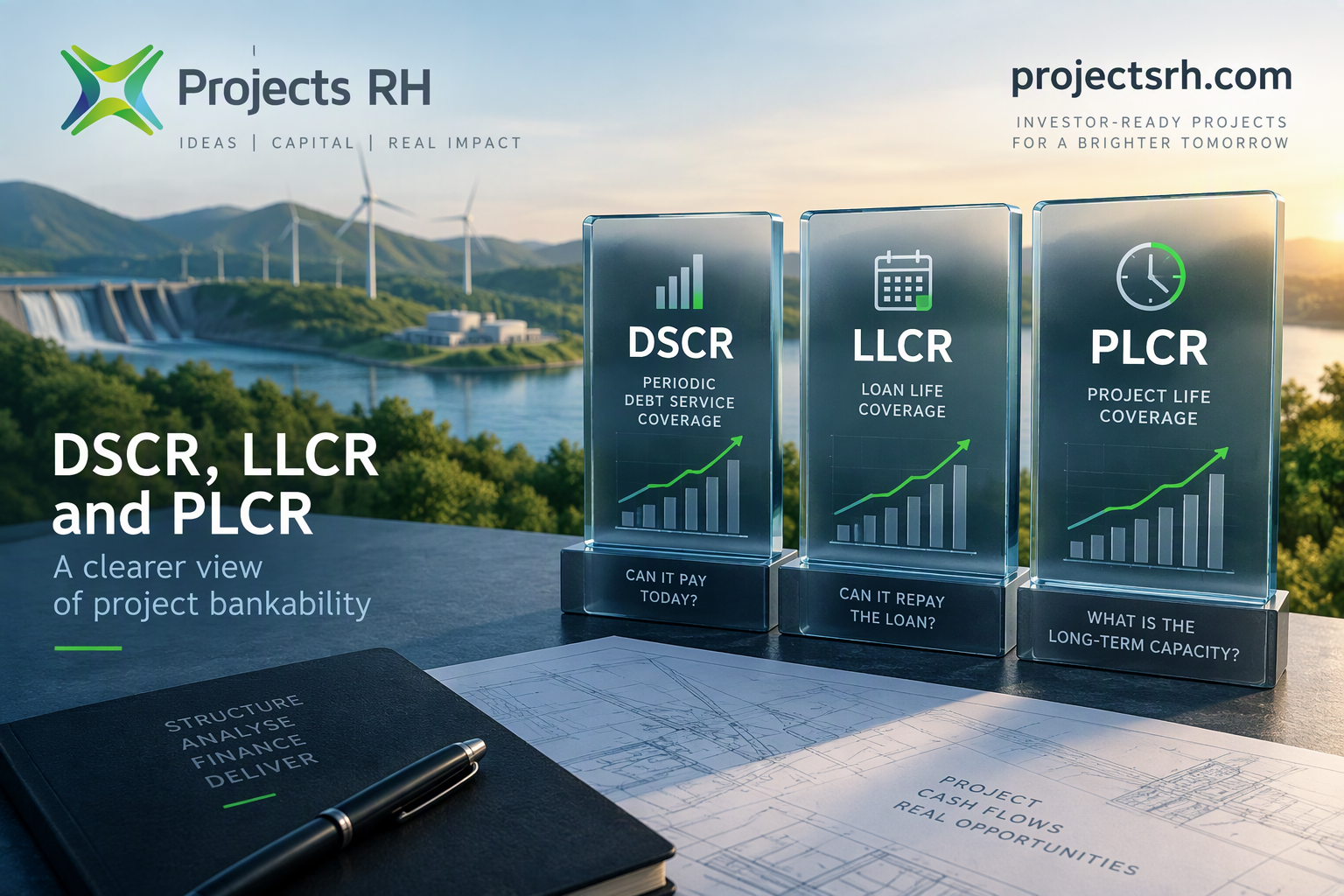
DSCR in Project Finance: How Lenders Use LLCR and PLCR
How do lenders use DSCR, LLCR and PLCR? Learn how these project finance ratios influence debt sizing, repayment, covenants and lender decisions.
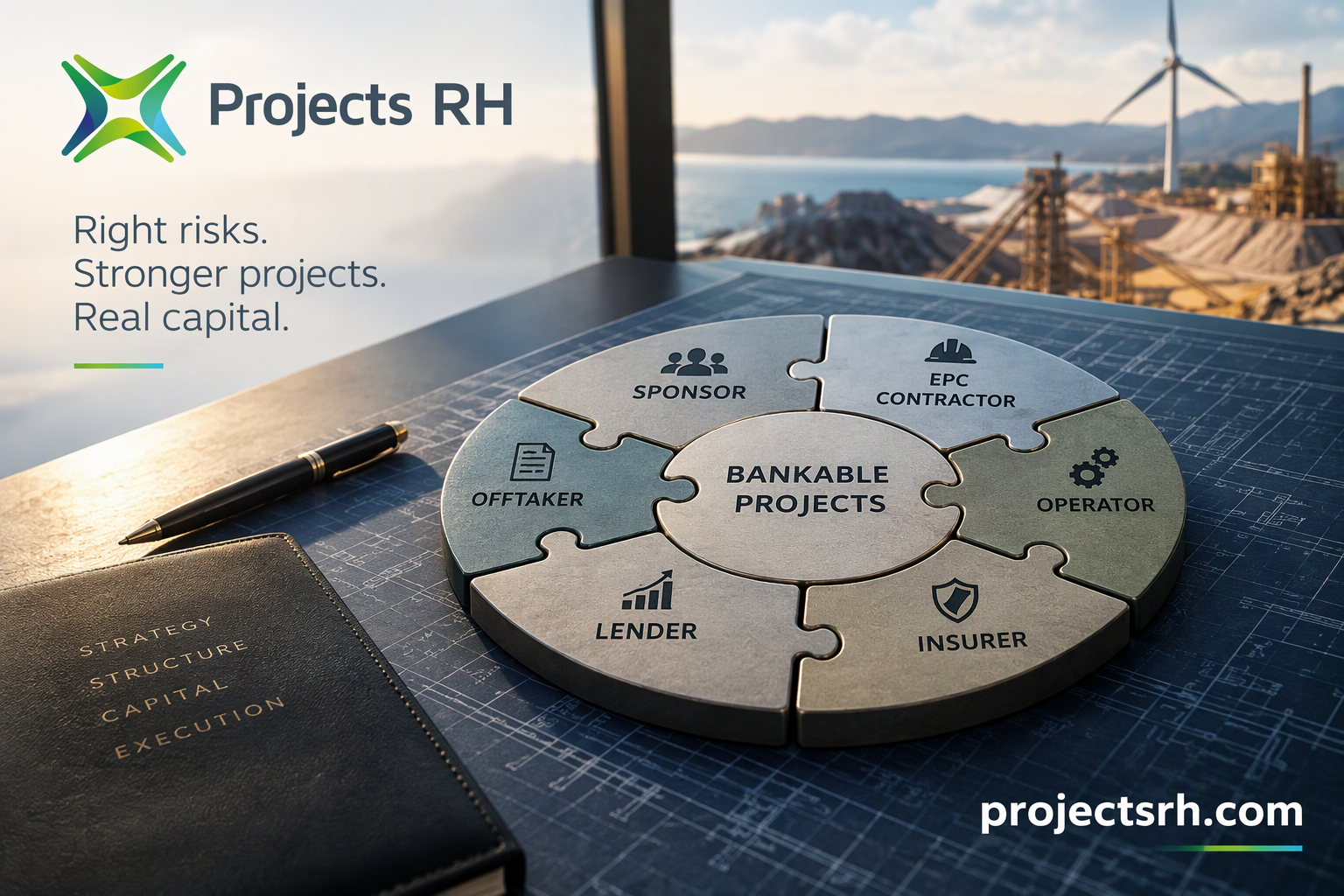
Project Finance Risk Allocation: Who Carries the Risk?
Who carries construction, market and operating risk? Learn how Project Finance Risk Allocation shapes contracts, bankability and lender confidence.
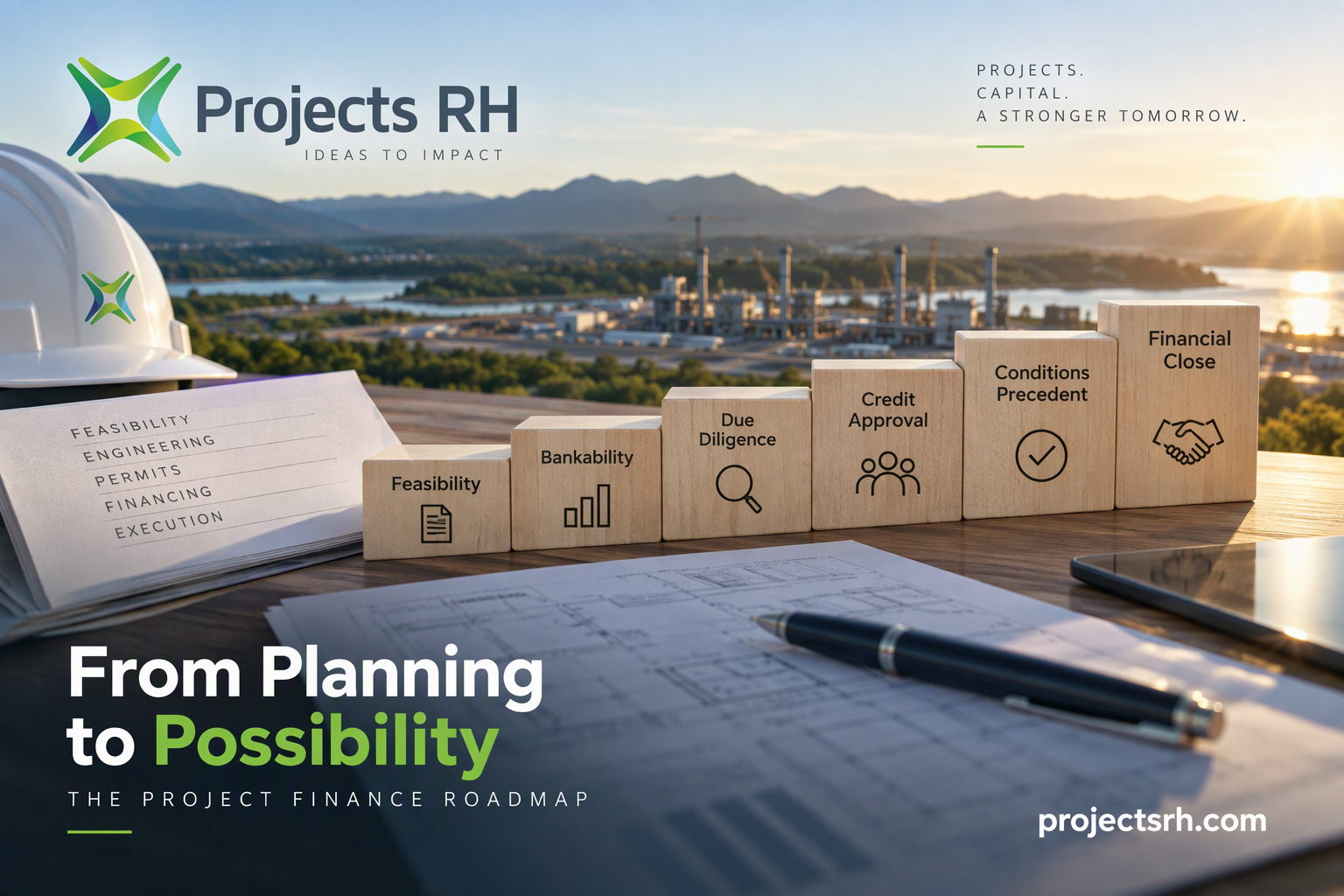
Conditions Precedent in Project Finance: Before Drawdown
What must happen before lenders release funds? Learn how Conditions Precedent in Project Finance affect financial close, drawdown and execution.