
Project Finance in Hong Kong: The Winds of Change
Project finance in Hong Kong shows how Belt and Road investment, sustainable infrastructure and international capital increasingly intersect.
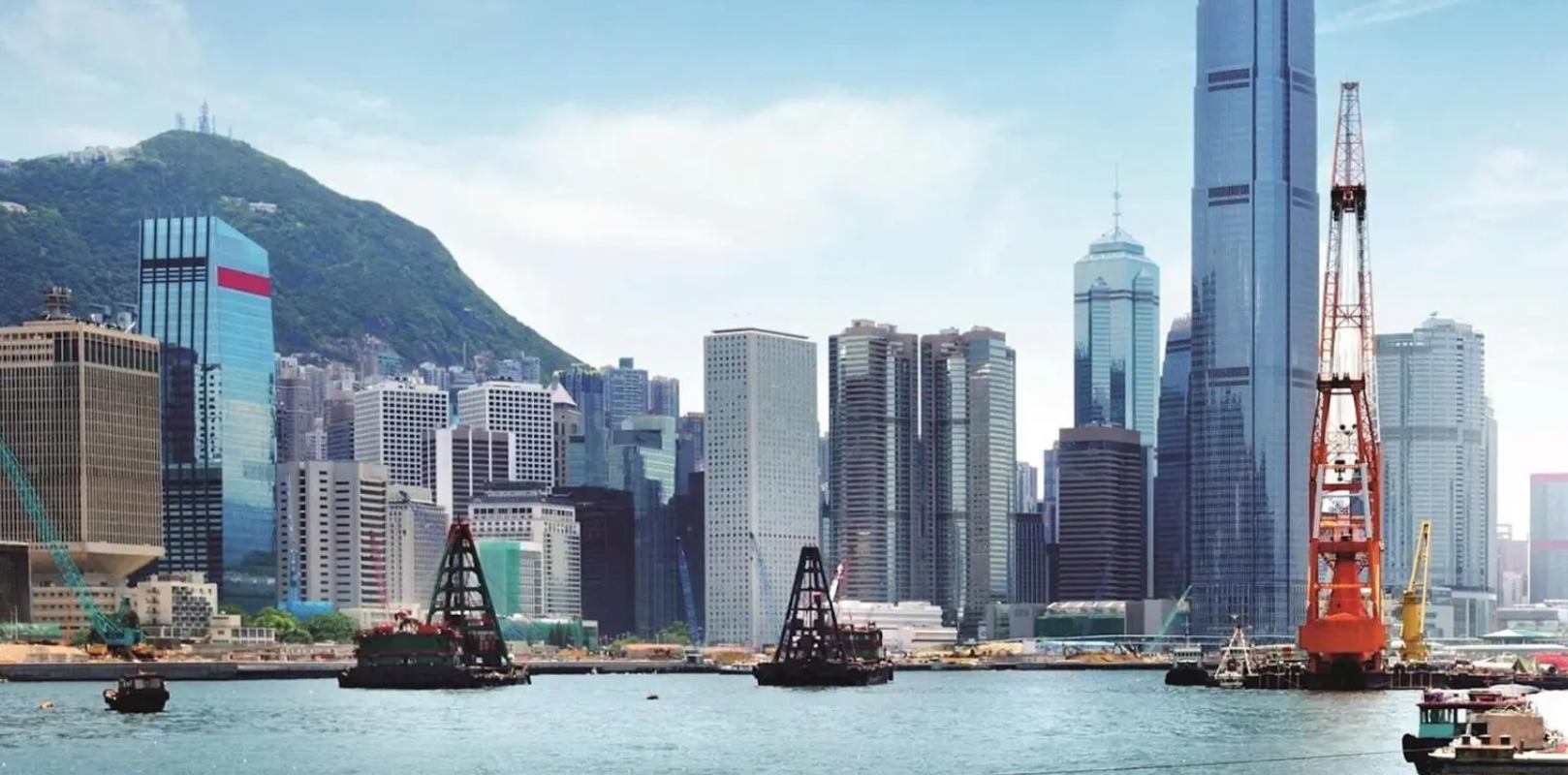
Project finance in Hong Kong has long benefited from the city's position as a gateway between China and international capital markets. The fourth annual One Belt and One Road summit offered a valuable opportunity to observe how investment priorities were evolving and how China viewed its expanding role in international infrastructure, trade and development.
Nearly 5,000 delegates attended the summit in Hong Kong. The scale of the event reinforced Hong Kong's importance as a commercial, legal, technical and financial centre supporting investment connected with what was then widely described as One Belt and One Road (OBOR), now more commonly known internationally as the Belt and Road Initiative (BRI).
For project sponsors and investors, the discussions offered an important reminder: access to capital is only one part of successful project development. Projects also need credible economics, appropriate financial structures, manageable risks and a clear path toward implementation.
Project Finance in Hong Kong and the Belt and Road Initiative
An impressive group of speakers from Beijing repeatedly reinforced Hong Kong's position as a gateway between China and the wider world.
This has particular significance for project finance in Hong Kong. Large infrastructure and development projects rarely depend on capital alone. They require reliable legal frameworks, commercial discipline, experienced professional advisers and projects capable of demonstrating sustainable economics.
A recurring theme at the summit was that Chinese investment was increasingly expected to demonstrate what speakers described as "Chinese characteristics". The discussion extended well beyond the availability of capital.
Social and environmental responsibility were becoming increasingly important, but projects also needed to make commercial sense.
The message was clear: debt should be deployed responsibly and toward investments capable of supporting sustainable economic activity.
That principle remains fundamental to project finance. Capital providers need confidence that a project has a credible business model, can generate sufficient cash flow, understands its principal risks and has an appropriate financing structure.
Sustainable Investment and Responsible Capital
Another important message from the summit was the increasing focus on sustainability.
Investment could no longer be considered solely in terms of construction cost or projected financial return. Environmental impact, social responsibility and the long-term economic sustainability of projects were becoming increasingly significant considerations.
The direction was already clear in 2019 and has become even more relevant for project sponsors seeking international capital.
Investors and lenders increasingly examine not only the potential return of an opportunity but also its governance, environmental and social frameworks, risk allocation, financial assumptions and implementation strategy.
A project can therefore be commercially attractive and still not be ready for capital.
This distinction is central to investor readiness. Before approaching investors or financing partners, project sponsors should be able to explain the opportunity clearly, support their assumptions with credible evidence and demonstrate how the proposed capital structure corresponds with the project's actual stage of development.
Projects RH works with sponsors on these questions through its project finance and investor readiness services, helping projects strengthen their positioning before entering serious capital discussions.
Infrastructure Connecting China and Europe
The first day of the summit focused heavily on the development of rail connections between China and Western Europe and the economic activity emerging along these corridors.
These infrastructure networks illustrated an important characteristic of international project finance: major projects are rarely isolated assets.
Transport corridors can influence logistics, industrial development, exports, regional investment and trade across several jurisdictions. Their economic value therefore depends not only on the infrastructure itself but also on the commercial activity that infrastructure enables.
The same principle can apply to energy, mining, renewable energy, data infrastructure and other capital-intensive sectors.
For project developers, demonstrating that broader commercial rationale can be important when presenting an opportunity to potential investors or financing partners.
An investor needs to understand not simply what will be built, but why the asset is needed, who will use it, where revenues will originate and whether the commercial assumptions remain credible under different scenarios.
Green Bonds and Infrastructure Finance
The size and mechanics of the green bond market, together with China's involvement in it, also received considerable attention at the summit.
This was particularly relevant because it demonstrated the increasing connection between international capital markets, sustainability and infrastructure development.
For projects in markets such as Colombia, Australia and Vietnam, the broader lesson was important: access to international capital requires considerably more than an attractive project concept.
Project sponsors need to explain clearly how capital will be used, how revenues will be generated, which risks investors or lenders will assume and how those risks will be managed.
The World Bank highlights the importance of sustainable and resilient infrastructure in supporting economic development and connectivity.
For sponsors seeking international financing, this reinforces the importance of presenting infrastructure opportunities within a rigorous economic and financial framework.
What International Investors Need From Projects
One of the most interesting aspects of the summit was hearing the world described from China's perspective.
International investors inevitably approach opportunities through different economic, political, commercial and strategic lenses. Successful project sponsors therefore need to understand how their opportunity will be viewed by parties outside their own market.
This is where investor readiness becomes critical.
Before approaching capital providers, a project should normally be capable of communicating:
- a clear investment proposition;
- the project's revenue model and commercial assumptions;
- total capital requirements and proposed use of funds;
- financial forecasts and key sensitivities;
- the proposed financing or capital structure;
- principal technical, regulatory and execution risks;
- environmental and social considerations;
- management and governance capability;
- the project's current development stage; and
- a credible route from financing to implementation.
A compelling project story is useful, but investors ultimately need evidence.
Good documentation will not turn a fundamentally weak project into a strong investment. Equally, a potentially attractive opportunity can struggle to secure serious investor engagement when the economics, assumptions or documentation are incomplete.
From Investment Opportunity to Bankable Project
The summit also acknowledged Japan's early contribution to China's modernisation and the role international investment played in the country's development.
China was examining how investment in other markets could contribute to new economic activity while supporting international trade.
This was not presented as purely altruistic. China itself faced overcapacity in several mature industries and saw opportunities for international development to create additional markets and trade flows.
The idea that "one plus one can be greater than two" captured an important investment principle: well-structured infrastructure can create economic value beyond the asset itself.
Achieving that outcome, however, depends on project quality.
A project seeking international investment must move from being an interesting opportunity to becoming a financeable proposition.
That normally requires credible financial assumptions, an appropriate financial model, clear commercial agreements, realistic capital requirements, a coherent risk allocation framework and investment documentation capable of surviving serious due diligence.
Project sponsors should therefore consider investor readiness before beginning broad capital outreach. Early preparation can identify weaknesses before they become obstacles during discussions with potential investors or lenders.
Hong Kong as a Gateway for International Capital
Hong Kong's combination of financial markets, legal expertise and international connectivity has historically made it an important location for cross-border investment.
At the summit, this role was repeatedly emphasised in relation to China and the Belt and Road Initiative.
The contribution of President Xi Jinping to the creation and continuing support of the initiative was also widely acknowledged.
For project developers, however, the ultimate test of any large investment initiative is not the scale of its announcements. It is whether individual projects can convert strategic interest into viable transactions.
That was whyings were particularly important.
Carmenza and I had seen first-hand that these sessions could create useful connections between projects, investors and advisers. But an introduction or meeting does not make a project financeable.
Preparation matters.
Investors need enough reliable information to determine whether an opportunity warrants additional time, analysis and due diligence.
Project Finance Is More Than Finding Capital
There is a tendency among some project sponsors to view capital raising as principally a search for investors.
In practice, the process should begin much earlier.
The project first needs to establish whether its commercial proposition, financial model, documentation, risk allocation and management capability are sufficiently developed for an investor to undertake meaningful evaluation.
This becomes particularly important for cross-border transactions because investors may have limited familiarity with the project's jurisdiction, regulatory framework, counterparties or market.
The investment case therefore needs to be both compelling and understandable.
That requires discipline.
Financial projections should connect directly with operational assumptions. Capital expenditure should be substantiated. Revenue assumptions should be supported by credible market or contractual evidence. Material risks should be identified rather than hidden.
The objective is not to pretend that a project is risk-free. No serious investment is.
The objective is to demonstrate that the risks are understood, appropriately allocated and capable of being evaluated against the potential returns.
The Project Finance Lesson From Hong Kong
Looking back at the Hong Kong summit, one of its strongest lessons remains relevant.
There is substantial international capital seeking credible opportunities, but capital does not automatically flow to projects simply because they operate in attractive sectors or growing markets.
Projects need to demonstrate commercial logic, financial discipline, sustainability and execution capability.
For sponsors considering project finance in Hong Kong, or approaching international capital providers from other financial centres, the first question should therefore not simply be:
Where can we find investors?
A better question is:
Is the project genuinely ready for an investor to evaluate it?
That distinction can determine whether an introduction develops into meaningful due diligence or becomes simply another conversation.
The Belt and Road summit demonstrated the scale of capital, ambition and international connectivity available to infrastructure projects. It also reinforced something equally important: project sponsors must be prepared to meet the standards expected by international capital.
For Projects RH, that principle remains central to the way we approach investor readiness, project finance and capital raising.
Prepare Your Project for International Capital
If you are preparing a project for investors or financing partners, the next step is to determine whether the opportunity is genuinely ready for external capital.
/intake.html to evaluate your project's financial positioning, investment documentation and next steps before approaching the market.
You can also /services.html to understand how we support project sponsors preparing for project finance and capital raising.
Paul Raftery
First published on ProjectsRH.com on 26 November 2019. Updated for structure, readability and current investor-readiness context.

What to do next
Projects RH prepares the company and the project first, then takes them to investors. The fastest way to find out where you stand is a short call.
Keep reading

Active vs passive investing: Which strategy is right for you?
Curious about which investment strategy suits you best? Dive into our latest article on Active vs Passive Investing. Learn the pros, cons, and key differences

What is Investment Management? Understanding it’s role in wealth growth
Discover the key differences between investment management and asset management and find out which service is right for you.

Cyber is the new CBD: project finance advisory across hubs
Cyber is the new C in CBD. Remote work has made location matter less for high-quality work; flexible workflow, performance-based reward and courage now shape how project teams operate.