
Strategic Partner Search in China: What Projects Need
Strategic partner search in China requires trust, regulatory clarity and investor readiness before projects approach serious commercial or capital partners.
A strategic partner search in China is rarely just a search for a company willing to sign a term sheet. For international project sponsors, the more important challenge is establishing credibility, understanding the market, confirming regulatory feasibility and developing relationships capable of supporting a transaction over time.
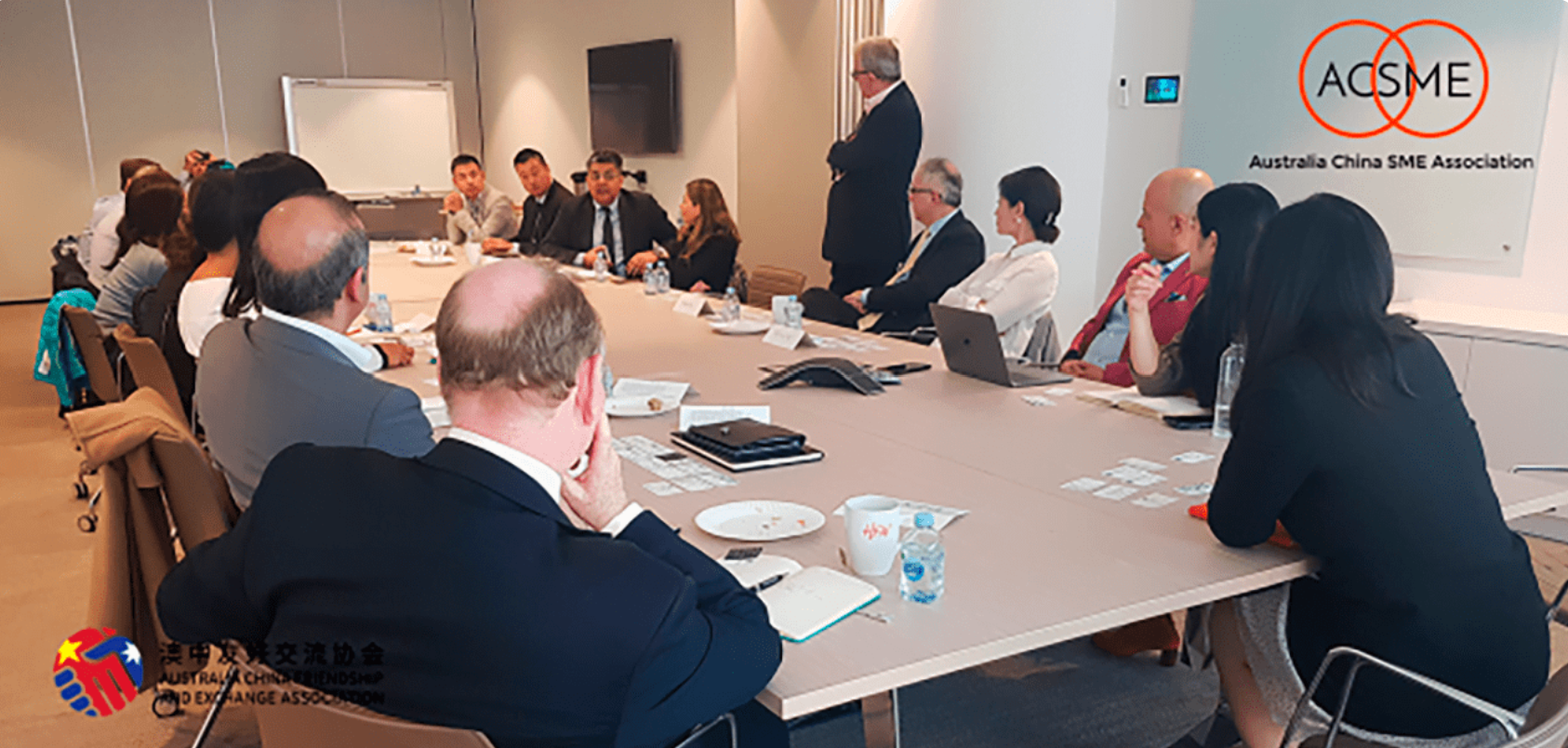
That was one of the strongest lessons Mauricio Otoya and I took from a meeting of the Australia China SME Association (ACSME) in Sydney in 2019. The discussion focused on differences in business practices between Australia and China, particularly the role that relationships, trust and preparation can play when pursuing cross-border opportunities.
My experience working with contacts in Beijing and Shanghai had already taught me a similar lesson: relationships may open doors, but preparation determines whether there is a viable transaction behind them.
Strategic Partner Search in China Starts With Preparation
A strategic partner search should not begin by simply compiling a list of potential investors, state-owned enterprises, trading companies or financial institutions.
Before approaching prospective partners, a project sponsor needs to understand exactly what the proposed partner would be expected to contribute.
That contribution could include:
- equity capital;
- debt financing;
- technical capability;
- market access;
- construction expertise;
- equipment;
- an offtake agreement;
- distribution capability;
- local knowledge; or
- a combination of these elements.
The distinction matters.
A company that could be an excellent commercial customer may not be the right equity investor. A financial institution may understand the sector but have no mandate for the project's jurisdiction or development stage. A strategic investor may have capital but require commercial rights that are incompatible with the sponsor's objectives.
A credible strategic partner search therefore begins with the project itself.
Relationships Matter, but Avoid Cultural Shortcuts
At the ACSME meeting, the discussion highlighted differences in the way business relationships can develop across markets.
It is tempting to reduce those differences to simple formulas about how Australians or Chinese businesspeople behave. In practice, that is too simplistic. Companies, investors and individuals differ considerably, and international business requires more nuanced judgement.
However, international sponsors should recognise that relationship building, credibility and continuity can be particularly important when entering an unfamiliar market.
Austrade advises Australian businesses considering China to understand local market conditions and to take factors such as culture, politics and business etiquette into account.
The practical lesson is straightforward: do not assume that a technically attractive project or a professionally presented term sheet will, by itself, establish sufficient confidence for a significant cross-border transaction.
Trust is built through performance, consistency and credible preparation.
Why Trust Matters in Cross-Border Transactions
Trust does not replace contracts, due diligence or legal protection.
It complements them.
For project sponsors, credibility develops when potential partners see consistency between what the sponsor says, what the documentation demonstrates and what the project can realistically deliver.
That normally means being transparent about:
- development status;
- required approvals;
- capital requirements;
- project economics;
- material risks;
- ownership;
- counterparties;
- the proposed transaction structure; and
- what remains outstanding.
Repeated engagement can be valuable, but meetings alone do not create investor readiness.
Even a strong commercial relationship can encounter difficulties if the underlying project cannot withstand technical, commercial, legal and financial due diligence.
A Practical Lesson From an Offtake Opportunity
One experience illustrated this particularly well.
Projects RH was evaluating an opportunity involving a food commodity project in the Pacific. One possible financing route appeared to involve securing a Chinese offtake partner.
The initial logic seemed attractive.
If a credible Chinese buyer could enter into a sufficiently robust offtake arrangement, that commercial agreement might become part of the project's financing proposition.
I approached a banking contact in Beijing to test the idea.
The response quickly exposed a weakness in our assumption: the relevant commodity was subject to market-access constraints, and the proposed country of origin did not have the necessary access for the transaction we were considering.
Without a viable route to market, there could be no qualifying offtake arrangement.
Without the expected offtake, the financing thesis based on that agreement weakened immediately.
That conversation saved considerable time.
The lesson was not that China was inaccessible. The lesson was that commercial assumptions must be tested before they are incorporated into a financing strategy.
Market Access Comes Before the Financing Story
International project sponsors can become focused on finding capital before validating the conditions that make the transaction possible.
That sequence can be costly.
A project whose economics depend on selling a commodity into a particular market needs evidence that the product can actually enter that market and reach the intended customer.
Depending on the sector and jurisdiction, this may require analysis of:
- tariffs;
- quotas;
- product standards;
- biosecurity requirements;
- licences;
- customs requirements;
- foreign investment rules;
- local regulatory approvals;
- foreign exchange considerations; and
- contractual enforceability.
Formal frameworks matter as well.
The China-Australia Free Trade Agreement entered into force in December 2015 and provides a formal framework for market access across goods, services and investment.
For project sponsors, however, an international trade agreement should never be treated as a substitute for transaction-specific due diligence.
Approvals Before Capital Outreach
A second experience reinforced the same principle.
An earlier transaction we pursued with a banking contact did not proceed because the relevant host government did not issue the production licence required by the project.
Significant time and resources had already been invested in trying to progress the transaction.
Once it became clear that the project could not proceed as planned, we returned to Beijing and thanked the people who had invested their time working with us.
That experience produced an important rule for subsequent transactions:
Do not ask a potential partner to invest substantial time evaluating a project when a fundamental approval required for execution remains unresolved or has not been clearly disclosed.
Not every approval needs to be completed before an investor sees a project.
Early-stage projects inevitably have outstanding development work.
The important issue is transparency.
Investors should understand which approvals have been obtained, which remain outstanding, the expected timetable and what happens to the project if a critical approval is delayed or refused.
Strategic Partner Search Is Not the Same as Investor Search
A common mistake is treating every prospective counterparty as an investor.
A strategic partner may play a very different role.
For example, a prospective participant might potentially become:
- an equipment supplier;
- an EPC contractor;
- an offtaker;
- a distributor;
- a technology provider;
- a strategic equity investor;
- a lender;
- a joint-venture participant; or
- an operating partner.
Those roles involve different economics, risks and incentives.
A project sponsor should define the requirement before starting outreach.
If the project needs an offtaker, the search should prioritise parties with genuine purchasing requirements, appropriate market access and sufficient credit quality.
If the project needs equity, the sponsor needs to understand the prospective investor's mandate, preferred investment size, geographic restrictions, return requirements and strategic objectives.
If debt financing is required, lenders will focus on bankability, project cash flows, security arrangements, contractual structures and debt-service capacity.
The search becomes substantially more productive once these distinctions are clear.
Investor Readiness Before Partner Outreach
For Projects RH, this is where investor readiness becomes central to an effective strategic partner or capital search.
Before approaching serious counterparties, a sponsor should understand whether the project's investment case is sufficiently developed.
Depending on the transaction and development stage, that may mean having:
- a clearly defined investment proposition;
- an appropriate financial model;
- realistic capital expenditure assumptions;
- evidence supporting the revenue model;
- a clearly defined use of funds;
- identified permits and approvals;
- an appropriate project and transaction structure;
- technical studies appropriate to the development stage;
- a credible risk assessment;
- management and governance arrangements; and
- suitable investment documentation.
Projects RH supports sponsors through its project finance and investor readiness services before broader capital outreach.
The purpose is not to make a project appear perfect.
The purpose is to ensure that potential partners can understand what is being proposed, what has already been achieved, what remains uncertain and what the sponsor expects from them.
Contracts Matter, but So Does Contract Management
My years working on international transactions reinforced another lesson: negotiating a contract and implementing that contract are different disciplines.
International transactions require appropriate legal documentation.
However, even a detailed agreement cannot anticipate every commercial event that may arise over a long project life.
The objective should therefore not be to replace relationships with contracts or contracts with relationships.
Both matter.
A robust agreement should clearly establish matters such as:
- responsibilities;
- payment mechanisms;
- performance obligations;
- reporting requirements;
- governance;
- representations and warranties;
- default provisions;
- dispute-resolution mechanisms;
- termination rights; and
- procedures for managing change.
After signature, the commercial relationship still requires active management.
This is particularly important in long-duration infrastructure, energy, mining and industrial projects, where counterparties may need to work together for many years.
Australia-China Business Remains Economically Significant
The commercial context has evolved considerably since this article was first published in 2019.
According to Australia's Department of Foreign Affairs and Trade, two-way goods and services trade between Australia and China reached approximately A$326 billion in 2025.
China remained Australia's largest export market, demonstrating why the commercial relationship continues to matter for Australian businesses and international project sponsors.
But scale does not eliminate complexity.
China and Australia operate within different legal, regulatory, commercial and institutional environments. Opportunities therefore need to be assessed on their own merits rather than through assumptions about the broader bilateral relationship.
This is particularly important for project sponsors seeking strategic capital, offtake arrangements, market access or long-term commercial partners.
Project Finance Requires More Than an Introduction
A successful introduction can create access to a potential counterparty.
It cannot make an unprepared project bankable.
For capital-intensive projects, prospective investors and lenders will ultimately examine the underlying economics and transaction structure.
They may consider:
- how revenues will be generated;
- the quality and creditworthiness of counterparties;
- capital expenditure requirements;
- operating costs;
- construction and completion risk;
- market and price exposure;
- security arrangements;
- contractual protections;
- regulatory and political risks;
- financial sensitivities; and
- expected investor returns.
This is why project finance and strategic partner search should not be treated as independent activities.
The more clearly the project is structured, the easier it becomes to identify the type of strategic or financial counterparty that could genuinely add value.
What Makes a Strategic Partner Relevant?
The largest or best-known organisation is not necessarily the most appropriate partner.
The relevant question is whether the prospective counterparty fits the project's actual requirements.
Sponsors should consider factors such as:
- sector experience;
- geographic mandate;
- investment criteria;
- balance-sheet strength;
- technical capability;
- strategic motivation;
- access to customers or markets;
- transaction experience;
- decision-making process; and
- ability to remain engaged throughout the project's development.
Alignment matters.
A strategic partnership is most useful when both parties understand why they are working together and what each party expects to achieve.
Misalignment at the beginning of a transaction frequently becomes much more expensive later.
Seven Lessons for Project Sponsors
Our experience across these transactions can be reduced to seven practical lessons.
1. Define the partner you actually need
Do not begin with a database of names. Begin with the project's commercialcess early
If the transaction depends on exports, imports, quotas, licences or regulatory approvals, validate those assumptions before building the financing strategy around them.
3. Prepare the project before broad outreach
Capital providers and strategic partners need information appropriate to the project's development stage.
4. Be transparent about outstanding approvals
An unresolved permit does not necessarily make a project uninvestable. Failing to disclose or properly understand it can undermine credibility.
5. Invest in relationships
Cross-border transactions require communication, continuity and trust. Relationships should support formal due diligence, not replace it.
6. Understand the counterparty's objectives
Price may not be the only consideration. Market access, supply security, technical capability, strategic positioning and long-term commercial objectives can also influence decisions.
7. Manage the relationship after signing
A contract provides a framework for a transaction. It is not the end of the business relationship.
Strategic Partner Search Requires More Than Introductions
A successful strategic partner search is not simply about accessing the right people.
An introduction may start a conversation, but it does not create a viable transaction.
Project sponsors need to combine relationship development with regulatory understanding, commercial preparation, credible financial analysis and appropriate investment documentation.
This is particularly important in cross-border markets, where assumptions that appear obvious from one jurisdiction may not survive scrutiny in another.
The most useful question is therefore not:
Who can introduce us to an investor or strategic partner in China?
A better question is:
Are we sufficiently prepared for the right strategic partner to take this project seriously?
That is a higher standard, but it is also a far more productive starting point.
The strongest strategic relationships emerge when both sides understand the commercial objective, the risks, the responsibilities and the value each participant is expected to contribute.
Sources
- Australian Department of Foreign Affairs and Trade - China Country Brief
- Australian Department of Foreign Affairs and Trade - China-Australia Free Trade Agreement
- Austrade - China-Australia Free Trade Agreement
Prepare Before Starting a Strategic Partner Search
If your project is preparing to approach strategic partners, investors or financing institutions, the next step is to determine whether the opportunity is genuinely ready for serious market engagement.
/intake.html to review your project's financial positioning, documentation, risks and capital strategy before beginning broad outreach.
You can also /services.html to understand how we support project sponsors with investor readiness, project finance and transaction preparation.
Paul Raftery
First published on ProjectsRH.com on 26 October 2019. Updated for accuracy, structure, readability and current cross-border project-finance context.

What to do next
Projects RH prepares the company and the project first, then takes them to investors. The fastest way to find out where you stand is a short call.
Keep reading

Active vs passive investing: Which strategy is right for you?
Curious about which investment strategy suits you best? Dive into our latest article on Active vs Passive Investing. Learn the pros, cons, and key differences

What is Investment Management? Understanding it’s role in wealth growth
Discover the key differences between investment management and asset management and find out which service is right for you.

Cyber is the new CBD: project finance advisory across hubs
Cyber is the new C in CBD. Remote work has made location matter less for high-quality work; flexible workflow, performance-based reward and courage now shape how project teams operate.