
Information Memorandum Development: Built to Be Tested
An information memorandum is evidence of how well an opportunity has been prepared. What it should contain, why it must agree with the model, and who should prepare it.
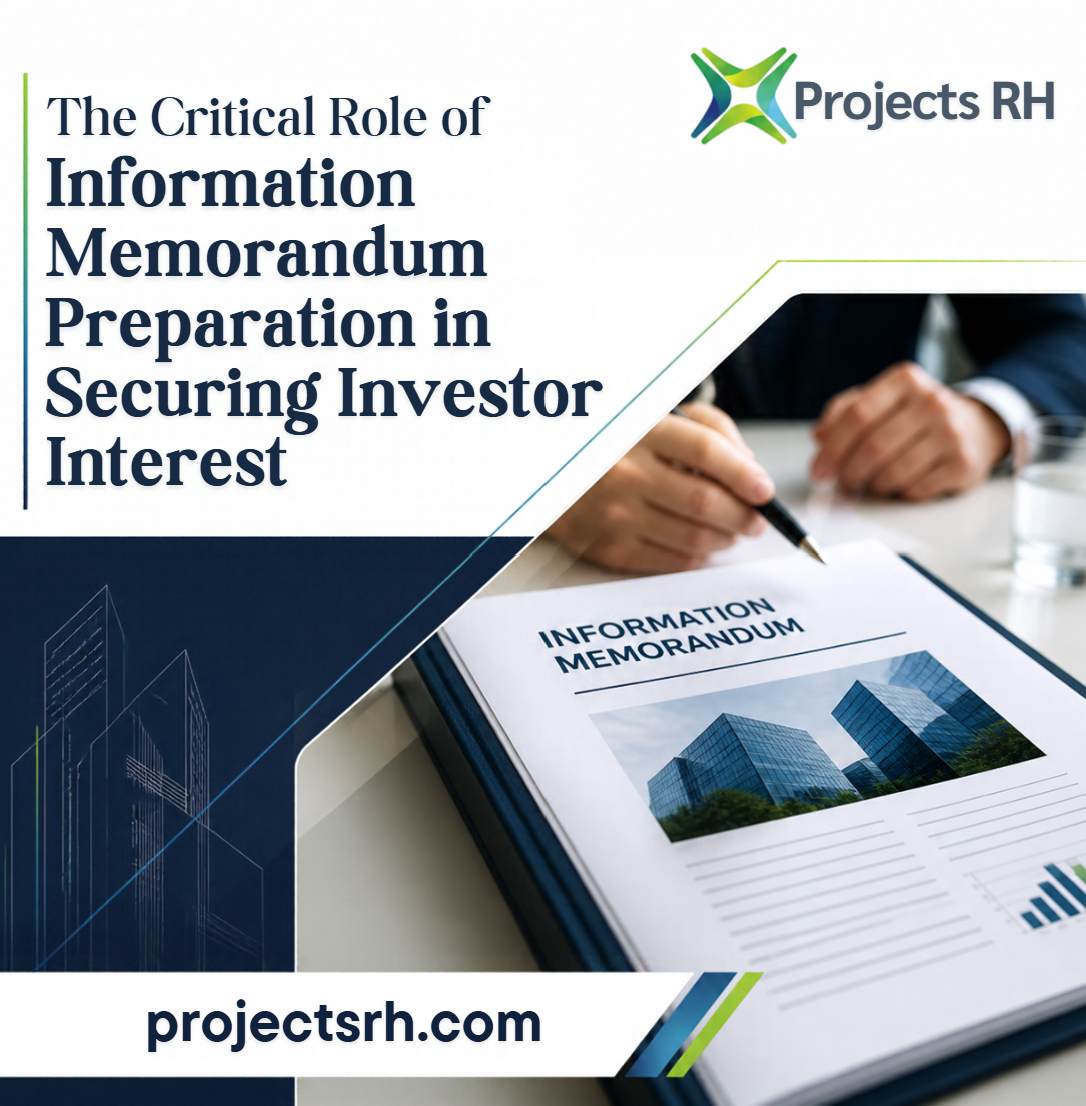
Project owners, founders, developers and sponsors who start thinking about capital raising often ask who can write their information memorandum. It is a fair question, but it can hide a bigger one. Information Memorandum Development is not mainly a writing task. An experienced investor reads the memorandum as evidence of how well an opportunity has been prepared, and of whether its case can stand up to scrutiny before the first meeting has taken place.
What an information memorandum is for
An information memorandum, sometimes called an investment memorandum, is the written investment case for a company or project. In Projects RH's own words, it sets out the business, the plan, the structure and the risks. It is written for the people who will evaluate the opportunity: investors, lenders, family offices, private equity firms, strategic partners and financial institutions.
Its purpose is not simply to present information. Its purpose is to let a reader evaluate the opportunity properly. A project may have a capable team, a valuable asset and a real market. If that cannot be communicated clearly, consistently and credibly, serious attention becomes much harder to earn.
A good memorandum answers the questions every investor asks:
- What is the opportunity, and who owns and manages it?
- What problem does it solve, and how does it create value?
- How much capital is required, and how will it be used?
- What are the risks, and how are they being managed?
- Why should an investor spend time on it at all?
Put simply, the memorandum bridges the gap between the owner's vision and the investor's decision-making.
Investors want to evaluate, not to be sold to
One of the most common mistakes is treating the memorandum as a marketing brochure. It is not one.
Investors see many opportunities. They do not have time to piece together a case from presentations, spreadsheets, websites, emails and conversations. They need information that is structured, consistent and transparent, and that is supported by evidence.
The memorandum is often the first detailed look an investor has at a project, so the first impression matters. A carefully prepared memorandum signals credibility. A poorly prepared one raises questions before discussions have even begun.
Promotional language works against you. Readers want clarity on the opportunity, the economics, the management team, the capital structure, the execution plan and the risks. The strongest memoranda do not try to sell. They help the reader evaluate. The difference can seem small, but it often decides whether an investor engages or simply stops replying.
The same applies to risk. Every opportunity carries risk, and professional investors expect it to be disclosed. Showing that management understands its risks and has thought about how to mitigate them is not a weakness. It is a sign of professionalism.
What a professional memorandum contains
Every transaction is different, but most professional memoranda cover the same core ground:
- Executive summary: a concise view of the opportunity, the capital required, the proposed structure and the main points of the investment case. Many readers decide in the first few pages whether to carry on.
- Company or project overview: what the business or project is, who owns it, its history, its objectives and its current stage of development.
- Market analysis: demand, growth drivers, competitive position and industry trends. Investors assess the market as closely as the project.
- Management and governance: experience, track record, technical expertise, leadership and governance structures.
- Financial information: historical performance, revenue drivers, projections, capital requirements, and sources and uses of funds.
- Transaction structure: how much capital is sought, what type, the proposed structure, security arrangements and exit considerations.
- Risk analysis: the material risks and how management proposes to address them.
Without a clearly defined transaction structure, many opportunities struggle to move beyond preliminary conversations.
The financial section deserves particular care. Every figure in it must agree with the financial model. At Projects RH, the model is described as the single point of truth for every figure the other documents use. Investors find inconsistencies quickly, and inconsistencies undermine confidence.
Why Information Memorandum Development begins with investor readiness
A memorandum is only as strong as the preparation behind it. That is why Projects RH does not treat it as a standalone document. The firm's approach rests on a simple principle: preparation comes before capital. It establishes the facts, tests the financial foundations, identifies material gaps and develops a coherent investment case before any capital raising process begins.
The memorandum is one of five documents that preparation produces. They are designed to agree with each other:
- Financial model: the source of every figure.
- Information memorandum: the written investment case.
- Investor deck: the short form of the same case, for the first meeting.
- Teaser: the summary that goes out before identity does.
- Data room: contracts, permits, financials and diligence materials, organised before the first investor asks.
Each is reviewed by a professional before it reaches you. This matters because investors and their advisers are well equipped to spot weak assumptions, unsupported projections, missing information and gaps in governance. When the documents tell one consistent story, the case is easier to evaluate. When they do not, due diligence will find out.
Who should prepare an information memorandum?
The short answer is someone who understands both the project and the investor.
A professional memorandum is not made by copying information into a template. It is made by turning information into a coherent investment proposition. That takes more than writing ability. It draws on financial modelling, transaction structuring, due diligence, market analysis, risk assessment and a clear sense of what institutional readers expect to see.
The owner's part is just as important. The facts, the decisions and the approval of the final document belong to the people who run the project. In the Projects RH process, that means attending a workshop with the people who can decide, and approving the output before it is used.
So the better question is not ‘Who can write my information memorandum?’ It is ‘Who can help prepare my project for investors?’ The memorandum reflects the quality and preparation of the opportunity behind it. Investors rarely back presentations. They back opportunities they understand and can test.
No document, however well prepared, can guarantee investor interest or funding. At Projects RH, capital raising is a separate mandate, and it is never guaranteed.
What you can do next with Projects RH
If you are preparing to raise capital and want to know how your memorandum and supporting documents would read to an institution, there are three practical first steps:
- Book a FREE 20-Minute Discovery Call. It is complimentary, and there is nothing to prepare.
- Send what already exists. You can send your project documents by upload, by email or by connecting SharePoint or OneDrive. A person at the firm reads what you send and replies in writing within 3 business days. No confidentiality agreement is in place at that stage, so if your documents are confidential, ask for the firm's agreement first. Sending documents does not create an advisory, investment, mandate or funding relationship.
- Consider the Investment Readiness Assessment. It gives you a Preliminary Readiness Profile written in words, a gap analysis and a recommended preparation package.
You can read the full process, and the decision at the end of each step, on how we work. Preparation comes first. Capital raising follows only under a separately accepted mandate, which can be declined, and nothing in it is promised.

What to do next
Projects RH prepares the company and the project first, then takes them to investors. The fastest way to find out where you stand is a short call.
Keep reading
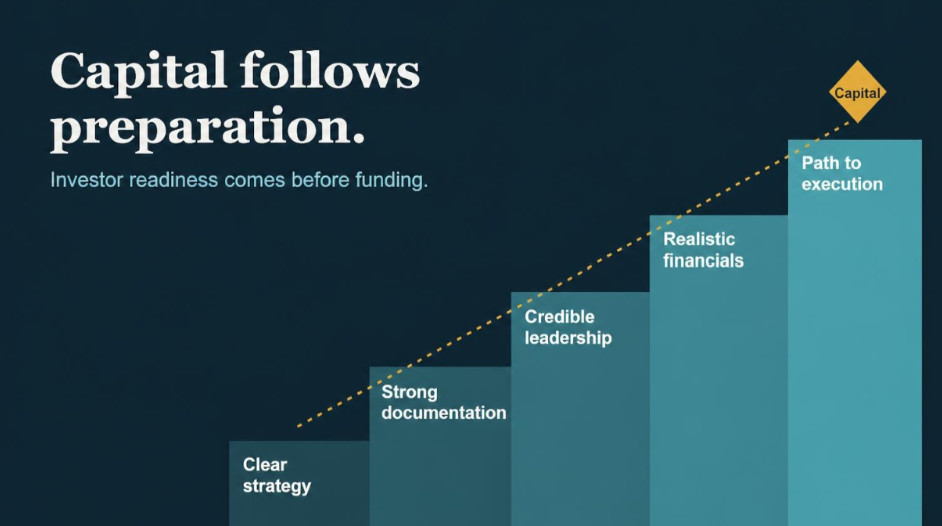
Mining Finance: Why Investor Readiness Comes First
Mining finance starts before investor outreach. Why investor readiness, a tested financial model and consistent documentation matter before a mining project meets investors.
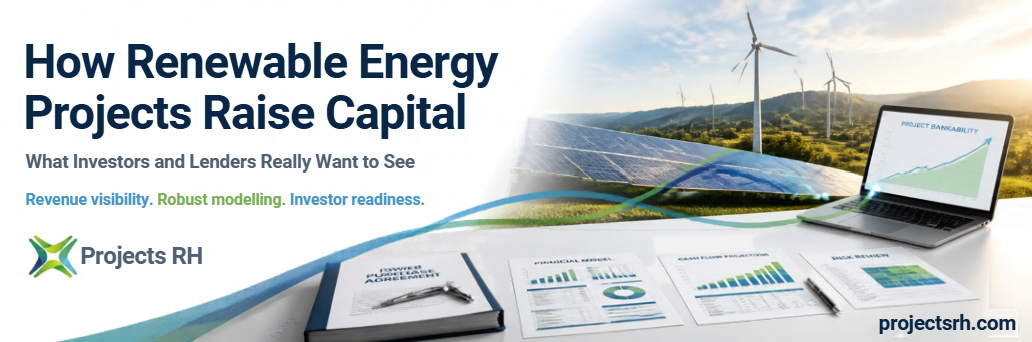
Renewable Energy Project Finance: How Projects Raise Capital
A strong resource is not enough. What investors and lenders assess in a renewable energy project, from revenue certainty and bankability to the model behind every figure.
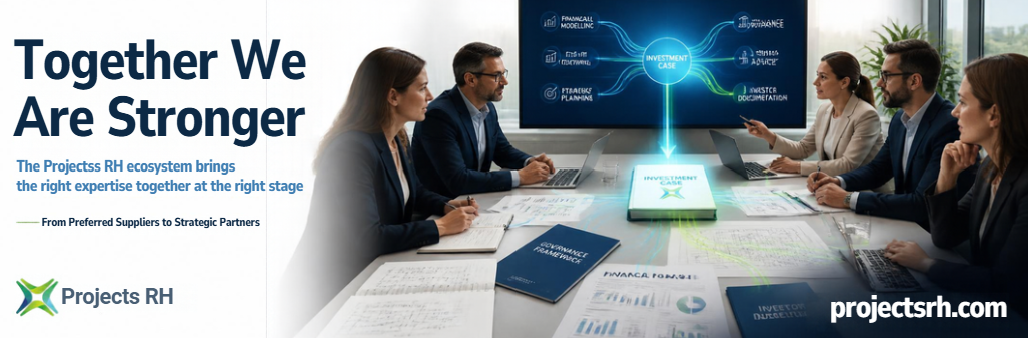
Capital Raising Partners: Why One Coordinated Case Matters
Capital raising draws on many disciplines. How Projects RH works with strategic partners on one coordinated investment case, and the two rules every referral follows.