
Investor Readiness: What Investors Test Before They Commit
Investor readiness starts before any outreach: what investors test, the documents they expect, and how to prepare a project for serious capital discussions.
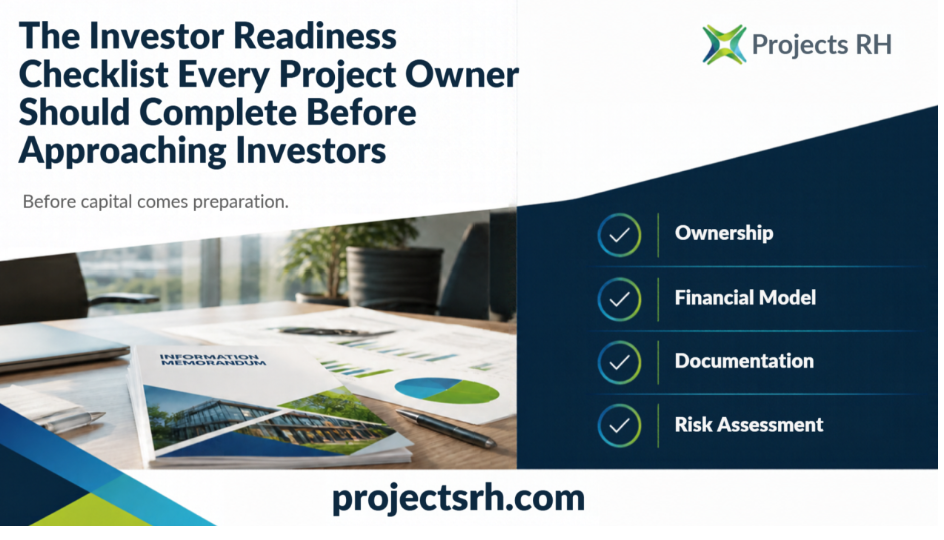
Investor Readiness begins long before the first investor meeting. It is the work of preparing a project or business so that a professional capital provider can understand the opportunity, test the assumptions, weigh the risks and decide whether further due diligence is worth their time. A promising project can still struggle to attract capital, and the reason is not always the project. Sometimes it is the preparation.
Investor Readiness Starts With a Different Question
Many project owners begin by asking where they can find investors. Professional capital providers begin somewhere else. They ask whether the opportunity is suitable for investment at all.
The distinction matters. Investors, lenders, family offices, infrastructure funds and strategic investors each work to a mandate. Mandates differ by sector, geography, transaction size, development stage, risk tolerance and investment horizon. Finding a name is only part of the challenge. The harder part is whether the opportunity is prepared well enough for the right investor to evaluate it.
This is the principle Projects RH works from: preparation comes before capital. The firm establishes the facts, builds or tests the model and prepares institutional documentation. Capital raising is a separate mandate, and it is never guaranteed.
What Investors Test Before They Commit
Requirements differ between transactions, but serious evaluation usually rests on confidence in four areas.
The opportunity. Investors look at what the project is, how it creates value, who the customers or counterparties are, and what stage it has reached. If the proposition cannot be explained clearly, the investor has to work harder just to understand it. That friction arrives before diligence has even started.
Management and governance. Investors want to know who is accountable for delivery and what experience they bring. They also look at how decisions are made, how the board and shareholders are structured, and how dependent the project is on one or two people.
The numbers. A sophisticated investor does not stop at a headline return or valuation. They want to know what produces it. That means revenue and pricing assumptions, capital and operating expenditure, working capital, cash flow, the funding requirement, sources and uses of funds, financing costs, capital structure and what happens under sensitivity cases.
Execution. Investors test how the project moves from where it is today to the outcomes in the investment case. Depending on the sector, that may mean permitting, procurement, construction strategy, supply-chain dependencies, infrastructure, project controls and the schedule.
A compelling concept is not the same thing as an executable investment opportunity. Investors test the difference.
The Capital Raising Documents Investors Expect
No single package applies to every transaction. What is needed depends on the investor, the jurisdiction, the type of financing, the project's maturity and the structure. Even so, the same core materials appear again and again. Projects RH prepares five documents that agree with each other:
- Financial model: the single point of truth for every figure the other documents use.
- Information memorandum: the written investment case, covering the business, the plan, the structure and the risks.
- Investor deck: the short form of the same case, for the first meeting.
- Teaser: the summary that goes out before identity does.
- Data room: contracts, permits, financials and diligence materials, organised before the first investor asks.
The word that matters is agree. If the information memorandum uses one assumption and the financial model uses another, an investor will notice. The question then becomes one of credibility rather than arithmetic.
Each document also has a job. An information memorandum should help an investor evaluate the opportunity; it is not a marketing brochure. A deck does not replace due diligence; it lets an investor decide whether due diligence is worth starting.
The data room deserves the same care. An unanswered material question found during investor due diligence can delay a process or end it.
An Investor Readiness Checklist Before Any Outreach
Before approaching professional capital providers, a project owner should be able to answer questions like these.
Ownership and authority. Is legal ownership clear and the cap table current? Can management show it has authority to undertake the transaction? Are any shareholder issues unresolved?
Capital requirement. How much is needed, why, when, and for what? Is the project seeking debt, equity, structured capital or a strategic partner?
Market. Is there credible evidence of demand? What supports the pricing assumptions?
Financial readiness. Can the principal assumptions in the model be traced to evidence? Does the funding requirement match the use of proceeds? Do the sensitivities show what happens if key assumptions fail?
Documentation. Is there a memorandum, a deck and a teaser, and do they say the same thing? Can each material claim be traced to a supporting document?
Risk and governance. Are the principal risks presented honestly, with realistic mitigation? Are responsibilities and decision-making authority documented, and is reporting fit for outside capital?
If the answers to fundamental questions here are unclear, investor outreach may be premature.
Why Projects Reach Investors Too Early
A project can have real value and still falter at an investor's first review. The causes tend to be familiar: incomplete documentation, unsupported assumptions, a weak model, an unclear capital requirement, inconsistent figures between documents, thin evidence of demand, a vague use of proceeds, or diligence materials that are not ready.
None of these is unusual, and most can be addressed. The cost comes from discovering them in front of an investor rather than before. An investment readiness assessment exists to find them earlier.
At Projects RH, the Investment Readiness Assessment combines AI-assisted research on the project and its sponsor with review and approval by a professional before the report is released. It produces a Preliminary Readiness Profile written in words, a gap analysis, and a recommended package of preparation work to address what the review finds.
What You Can Do Next With Projects RH
If you are preparing a project for capital, start with what already exists.
- Book a call. Twenty minutes, complimentary, with nothing to prepare. Every project is asked the same questions.
- Send your documents. Email them, upload them or connect SharePoint or OneDrive through the document intake page. A person at the firm reads what you send and replies in writing within 3 business days. No confidentiality agreement is in place at that point, so if your documents are confidential, ask for the firm's agreement first and send them once it is accepted.
- Read the process. How Projects RH works sets out the five steps from first call to capital, with a decision at the end of each.
Sending documents does not create an advisory, investment, mandate or funding relationship. Preparation comes first. Capital raising follows only under a separately accepted mandate, which can be declined, and funding, investor interest, terms and completion are never guaranteed.

What to do next
Projects RH prepares the company and the project first, then takes them to investors. The fastest way to find out where you stand is a short call.
Keep reading
Information Memorandum Development: Built to Be Tested
An information memorandum is evidence of how well an opportunity has been prepared. What it should contain, why it must agree with the model, and who should prepare it.
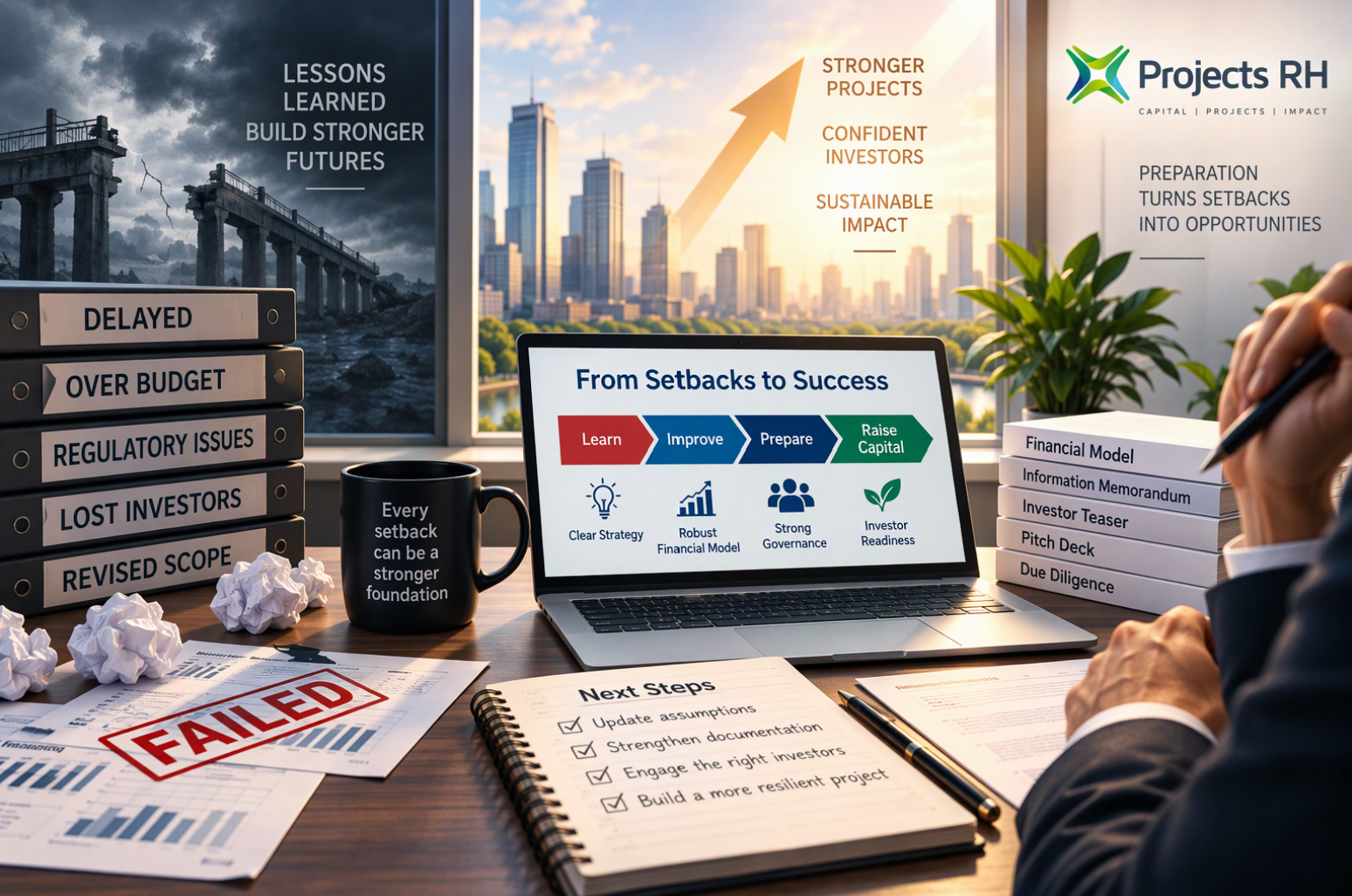
Lessons Learned from Failed Projects: Before You Raise Again
A setback need not end a project. What investors ask after one, and how to carry its lessons into a tested model and documents that agree before approaching capital again.
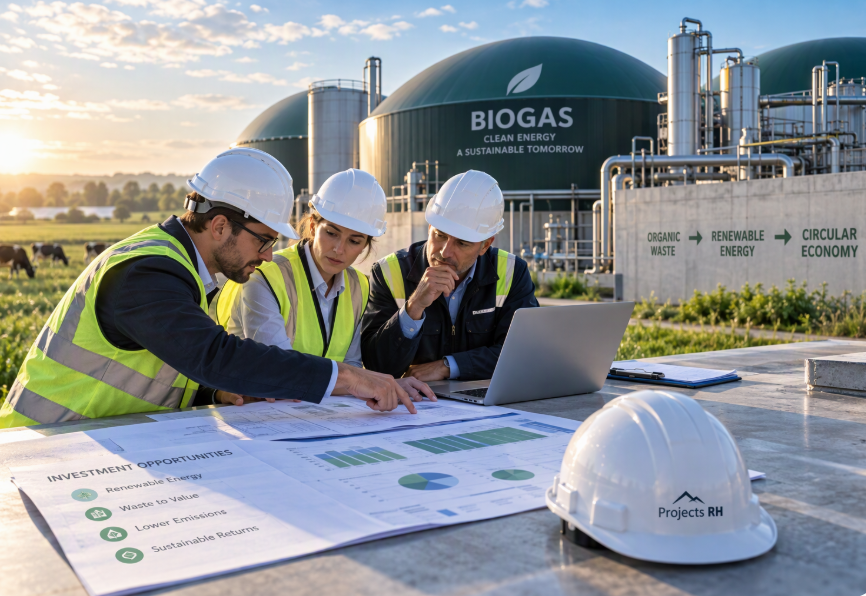
Biogas Project Investment Opportunities: What Investors Test
A growing sector does not make a biogas project investable. What investors test in feedstock, technology, offtake, policy and the financial model, and how to prepare before raising capital.