
Lithium vs Copper Project Finance: Investor Requirements
Lithium and copper projects face different financing tests. Compare pricing, offtake, processing, CapEx, risk and development timelines.
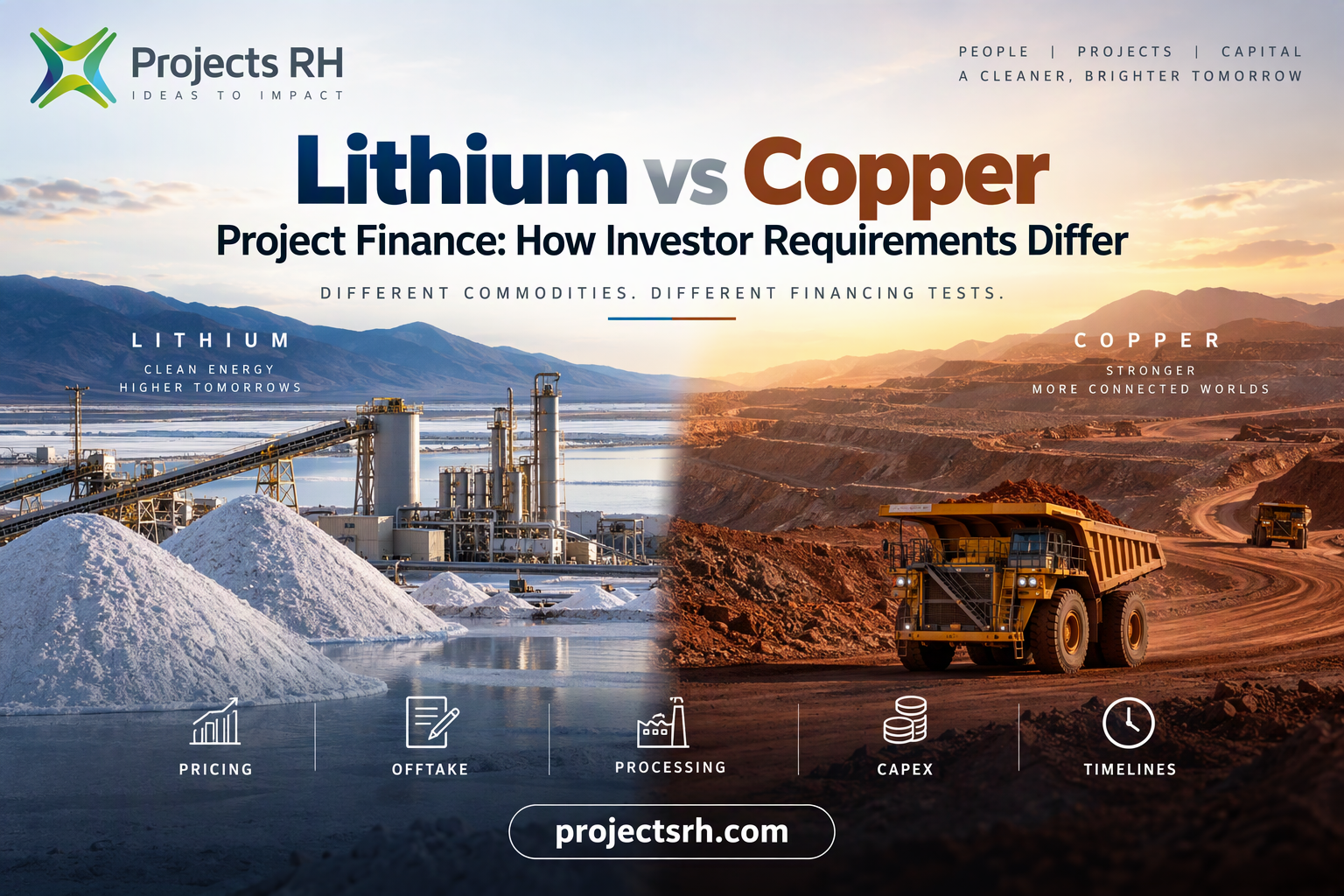
Lithium vs Copper Project Finance is not simply a comparison between two critical minerals. It is a comparison between two very different risk profiles, revenue structures, processing routes and financing propositions.
I have seen project sponsors make the mistake of assuming that because lithium and copper are both strategically important to electrification, investors will evaluate them in broadly the same way.
They will not.
A copper lender may spend considerable time analysing mine life, grade, concentrate specifications, infrastructure, treatment and refining charges, construction risk and long-term commodity-price assumptions.
A lithium investor may place significantly more emphasis on product specification, processing technology, qualification with customers, conversion risk, battery chemistry, pricing mechanisms and credible long-term offtake.
Both projects ultimately need to demonstrate sustainable economics.
But the route to bankability can be very different.
The mineral may attract the investor's attention. The project's risk structure determines whether the capital stays.
What Is Lithium vs Copper Project Finance?
Lithium vs Copper Project Finance is the comparison of how lenders, investors and strategic capital providers assess the technical, commercial, pricing, processing, offtake, CapEx and development risks of lithium projects relative to copper projects.
Both commodities are strategically important.
Both can require substantial development capital.
Both are exposed to commodity cycles, permitting, construction, infrastructure, ESG and execution risk.
But their financing cases diverge in several important areas:
- Commodity pricing
- Product definition
- Processing complexity
- Customer qualification
- Offtake structure
- Revenue predictability
- CapEx profile
- Technology risk
- Development timetable
- Strategic investor participation
- Debt capacity
- Downside sensitivity
Understanding those differences matters because a financing strategy that works for a copper project cannot simply be copied into a lithium project.
Lithium vs Copper Project Finance: The Key Differences
At a high level, I would frame the comparison as follows:
| Financing Factor | Lithium | Copper | |---|---|---| | Pricing | More fragmented by product, chemistry and region | More mature global benchmark structure | | Product | Spodumene, carbonate, hydroxide and other forms | Concentrate, cathode and other refined products | | Offtake | Often central to bankability | Important, but project economics can sometimes support broader market exposure | | Processing | Frequently a major technical and qualification risk | Metallurgy remains critical but processing routes are generally more established | | Customer qualification | Can be highly important | Usually less tied to individual battery qualification processes | | CapEx | Can vary significantly by deposit and processing route | Large greenfield projects can require multi-billion-dollar investment | | Development timeline | Can be shorter, but processing and qualification can create bottlenecks | Major mines can take many years from discovery to production | | Strategic capital | Battery, chemical, automotive and government capital can be important | Miners, traders, smelters, sovereign and infrastructure-linked capital | | Revenue risk | Product specification and pricing formula are critical | Benchmark pricing and concentrate terms are more established | | Lender focus | Technology, product quality, offtake and price protection | Resource, mine plan, CapEx, infrastructure, completion and long-term price |
The point is not that one commodity is inherently easier to finance.
They are difficult for different reasons.
1. Commodity Pricing Creates a Different Financing Problem
This is the first major distinction.
Copper benefits from a long-established, internationally traded commodity market with widely observed benchmark pricing.
That does not eliminate price volatility.
It does, however, provide lenders and investors with established reference points for financial modelling, hedging discussions and long-term price assumptions.
Lithium is different.
Lithium revenue can depend on whether the project produces:
- Spodumene concentrate
- Lithium carbonate
- Lithium hydroxide
- Another intermediate or refined product
The commercial value of those products is influenced by purity, product specification, regional market conditions, battery chemistry, conversion economics and customer requirements.
Recent lithium markets illustrate why this matters.
S&P Global has highlighted changing relationships between lithium carbonate, hydroxide and spodumene pricing, including significant movements in conversion spreads as supply disruptions, inventory rebuilding and different battery-chemistry demand patterns affected the market.
For an investor, that means the question cannot simply be:
"What is the lithium price?"
It must be:
"Which lithium product are we selling, at what specification, under what pricing formula, into which market and to whom?"
That is a much more detailed revenue question.
2. Lithium Price Volatility Places More Weight on the Downside Case
Lithium has experienced dramatic commodity cycles.
Strong long-term demand does not automatically protect a project against short-term oversupply, inventory movements or severe price corrections.
This changes investor behaviour.
A lender looking at a lithium development may place considerable emphasis on:
- Long-term price assumptions
- Price floors
- Offtake formulas
- Cost-curve position
- Operating flexibility
- Product premiums or discounts
- Contract duration
- Counterparty quality
The project needs to survive a weaker pricing environment, not simply demonstrate attractive returns at management's preferred price.
This matters particularly in a period when battery technology itself continues to evolve.
Changes in lithium iron phosphate (LFP), nickel-manganese-cobalt (NMC), sodium-ion technologies and energy-storage demand can alter the relative demand for different battery materials and lithium products.
In lithium finance, investors increasingly need confidence not just in demand for lithium, but in demand for the specific product the project intends to sell.
3. Copper Has a Different Long-Term Supply Problem
Copper presents a different financing challenge.
The long-term demand argument is broad.
Copper is required across:
- Electricity networks
- Renewable energy
- Electric vehicles
- Buildings
- Manufacturing
- Data centres
- Digital infrastructure
- Industrial equipment
The International Energy Agency's Global Critical Minerals Outlook 2026 projects copper to record the largest absolute increase in demand among the major critical minerals it analyses, adding approximately 7 million tonnes to 2040.
At the same time, developing new copper supply is slow and expensive.
Major projects frequently face:
- Lower ore grades
- Deepening deposits
- Water requirements
- Power infrastructure
- Tailings facilities
- Large processing plants
- Transport infrastructure
- Permitting complexity
- Community and social-licence requirements
The financing case can therefore be supported by powerful long-term demand fundamentals while still being constrained by enormous capital and execution requirements.
That distinction matters.
A strong copper market cannot make an overcapitalised project bankable.
4. CapEx Is Evaluated Differently
Copper projects can be extraordinarily capital-intensive.
FactSet's 2026 analysis of 96 active copper projects with development studies published since 2021 identified approximately USD 132 billion of aggregate capital requirements.
The analysis also found wide variation in capital intensity between brownfield and greenfield developments.
That should immediately tell a project sponsor something.
The investor is not simply going to ask:
"How much copper will you produce?"
The investor will ask:
"How much capital must be invested for each unit of sustainable production?"
For a large greenfield copper mine, capital may include:
- Mine development
- Pre-stripping
- Processing plant
- Tailings
- Power
- Water
- Roads
- Rail
- Port facilities
- Camps
- Environmental infrastructure
- Working capital
- Contingency
Lithium projects can also require substantial capital, but the profile depends enormously on the resource and processing route.
A hard-rock spodumene development has a different CapEx structure from a conventional brine operation.
A direct lithium extraction project introduces another set of technical, process and scale-up considerations.
Investors therefore need to understand not just how much capital is required, but what technical risks sit behind that CapEx.
5. Processing Risk Can Be More Central to Lithium Finance
This is perhaps one of the most important differences.
With lithium, investors are often financing more than a mine.
They may effectively be financing a mine plus a chemical-processing business.
Producing ore or brine is only part of the challenge.
The project may need to demonstrate that it can consistently produce a saleable product meeting demanding customer specifications.
Depending on the development route, lenders and investors may examine:
- Recovery
- Impurity removal
- Reagent consumption
- Water consumption
- Energy intensity
- Process stability
- Product purity
- Conversion efficiency
- Scaling from pilot to commercial operation
- Waste streams
- Tailings
- Customer qualification
This creates a technology and processing dimension that can become central to the financing decision.
A lithium deposit can therefore be geologically attractive while the processing route remains insufficiently proven for conventional project finance.
6. Copper Metallurgy Still Matters
Copper should not be viewed as technically simple.
It is not.
Copper lenders will examine:
- Metallurgical recovery
- Ore variability
- Grind size
- Concentrate grade
- Deleterious elements
- Throughput
- Plant availability
- Tailings design
- Water balance
- Power requirements
- Smelter terms
- Treatment and refining charges
Poor metallurgy can materially undermine copper economics.
However, the financing distinction is that many copper processing routes have decades of commercial operating history.
That can reduce technology risk relative to a lithium project relying on a process route without equivalent commercial operating history.
The more novel the processing technology, the more investors tend to ask:
Where has this operated successfully before, at comparable scale and with comparable feedstock?
That question can determine whether technology becomes financeable.
7. Offtake Can Play a More Fundamental Role in Lithium
For many lithium developments, offtake can become part of the financing architecture itself.
A strong agreement may provide:
- Revenue visibility
- Customer validation
- Product qualification
- Minimum volumes
- Contract duration
- Strategic alignment
- Potential price protection
- A route to debt
A real-world example demonstrates the point.
In 2026, the Smackover Lithium joint venture involving Standard Lithium and Equinor announced a binding 10-year take-or-pay lithium carbonate offtake with Trafigura covering 8,000 tonnes per year.
The significance is not simply that the project found a buyer.
The agreement provides long-term commercial validation, defined volumes and a creditworthy counterparty, all of which can contribute to the financing proposition.
That is qualitatively different from simply assuming future product can be sold.
8. Copper Offtake Works Differently
Offtake remains important in copper.
Commodity traders, smelters and strategic industrial groups may provide:
- Marketing agreements
- Offtake
- Prepayments
- Working capital
- Strategic equity
- Technical relationships
But a sufficiently credible copper project can potentially demonstrate revenue using established market benchmarks without requiring the entire production profile to be contracted to individual customers.
This is particularly relevant for standard concentrates or cathode.
Lenders still need to understand:
- Product quality
- Marketability
- Treatment and refining charges
- Penalties
- Transport
- Counterparty risk
- Destination market
But the financing dependence on specific customer qualification may be lower than it can be for battery-grade lithium chemicals.
9. Development Timelines Change Investor Strategy
Copper has a serious time problem.
Major discoveries can take many years to become operating mines.
BloombergNEF's Transition Metals Outlook 2026 estimates that bringing new copper mines into operation takes an average of approximately 17 years.
That changes financing.
A project requiring capital today may still face years of:
- Technical studies
- Permitting
- Environmental approvals
- Community engagement
- Infrastructure agreements
- Engineering
- Construction
- Commissioning
- Ramp-up
Long development periods increase exposure to:
- Inflation
- Interest rates
- Political change
- Commodity cycles
- Permitting changes
- CapEx escalation
- Technology changes
For investors, therefore, copper may offer compelling long-term fundamentals while still requiring considerable patience.
10. Lithium Can Move Faster, but the Market Can Move Faster Too
Some lithium developments can progress more quickly than major copper mines.
That sounds like a financing advantage.
Sometimes it is.
But a shorter construction pathway can coincide with a much faster-moving market.
Lithium prices, battery chemistries, supply additions and customer requirements can change materially during the period between feasibility study and production.
That creates a different risk.
A copper project may struggle because the development timeline is exceptionally long.
A lithium project may struggle because the market assumptions can change rapidly during a shorter development cycle.
That is why lithium financial models should contain compelling downside analysis rather than relying on a single long-term price forecast.
11. Strategic Capital Is Important to Both, but for Different Reasons
Both commodities are increasingly attracting strategic capital.
The World Bank Group identifies copper and lithium among the minerals central to electricity, transportation, digital technology and modern industry.
Its metals and minerals strategy also emphasises reliable infrastructure, private investment, long-term capital, environmental standards and strong institutions as foundations for successful mineral development.
In 2026, the World Bank Group announced plans to increase metals and minerals support fivefold to USD 19 billion between FY26 and FY30, using World Bank financing, IFC investment and private-capital mobilisation, and MIGA guarantees.
This matters.
Government-backed and development finance can increasingly participate alongside conventional private capital.
But the strategic case differs.
For lithium, strategic capital may come from:
- Battery manufacturers
- Automotive companies
- Chemical producers
- Commodity traders
- Sovereign institutions
- DFIs
- ECAs
For copper, it may include:
- Major miners
- Commodity traders
- Smelters
- Infrastructure investors
- Sovereign funds
- DFIs
- ECAs
- Industrial consumers
Strategic capital works best when there is a genuine alignment of interests.
It does not rescue poor economics.
12. What Lithium Investors Typically Test
If a lithium project came across my desk, I would expect investors to focus heavily on:
Resource
- Grade
- Scale
- Mineralogy or brine chemistry
- Resource confidence
- Mine or extraction plan
Processing
- Recovery
- Technology maturity
- Pilot results
- Scale-up
- Product specification
- Impurities
- Conversion requirements
Commercial
- Target product
- Customer qualification
- Offtake
- Pricing mechanism
- Market destination
- Contract duration
Economics
- CapEx
- Opex
- Cost-curve position
- Lithium price assumptions
- Conversion costs
- Downside case
Financing
- Strategic equity
- Government support
- DFI/ECA potential
- Offtaker participation
- Senior debt capacity
A lithium project that cannot explain its exact product and customer proposition is generally not ready for institutional capital.
13. What Copper Investors Typically Test
For copper, I would expect greater attention to:
Resource and Mine Plan
- Resource quality
- Reserve conversion
- Grade
- Strip ratio
- Mine life
- Production schedule
Metallurgy
- Recovery
- Concentrate specifications
- Deleterious elements
- Process design
- Throughput
Infrastructure
- Power
- Water
- Roads
- Rail
- Port
- Tailings
Capital
- Initial CapEx
- Sustaining CapEx
- CapEx intensity
- Contingency
- Completion risk
Revenue
- Copper-price assumptions
- Payability
- Treatment and refining charges
- By-product credits
- Offtake
Development
- Permitting
- Community agreements
- Environmental approvals
- Construction timeline
- Country and political risk
The copper financing discussion therefore often becomes a test of scale, capital efficiency and execution.
Lithium vs Copper Project Finance: Investor Requirements Compared
| Investor Question | Lithium Project | Copper Project | |---|---|---| | What product are you selling? | Critical | Important | | Customer qualification? | Often critical | Usually less dominant | | Long-term offtake? | Can be central to financing | Important but varies | | Processing technology? | Potentially decisive | Metallurgy critical, often more established | | Commodity-price volatility? | High concern | High concern, deeper benchmark market | | CapEx intensity? | Highly project-specific | Fundamental for greenfield projects | | Infrastructure? | Important | Often major financing issue | | Development timeline? | Potentially shorter | Frequently very long | | Strategic investors? | Battery and automotive ecosystem | Mining, trading, smelting and infrastructure ecosystem | | Downside case? | Essential | Essential | | Bankability driver | Product + process + offtake + economics | Resource + CapEx + infrastructure + execution + economics |
This, to me, is the heart of Lithium vs Copper Project Finance.
Investors are ultimately asking the same question:
Can this project convert geological potential into predictable, sustainable cash flow?
But the evidence required to answer that question differs materially.
Which Is Easier to Finance: Lithium or Copper?
There is no universal answer.
A low-cost brownfield copper expansion with existing infrastructure and established metallurgy may be considerably easier to finance than a lithium project using an unproven processing route.
A lithium project with excellent chemistry, proven technology, strong strategic shareholders and binding long-term offtake may be significantly more financeable than a remote multi-billion-dollar greenfield copper project facing major infrastructure and permitting risks.
The commodity is only one variable.
Bankability depends on:
- Technical maturity
- Cost position
- CapEx
- Product
- Market
- Infrastructure
- Permitting
- Management
- Offtake
- Risk allocation
- Capital structure
There is no inherently bankable commodity. There are bankable projects.
A Practical Financing Strategy for Lithium Projects
I would sequence a lithium financing process roughly as follows:
- Establish resource credibility.
- Prove the processing route.
- Define the exact commercial product.
- Demonstrate product quality.
- Build a credible financial model.
- Test downside lithium prices.
- Develop customer relationships.
- Secure credible offtake where appropriate.
- Map strategic investors, DFIs, ECAs and government programmes.
- Determine appropriate debt capacity.
- Complete investor-readiness work.
- Approach capital in a controlled sequence.
The mistake is attempting step 12 while steps two through eight remain uncertain.
A Practical Financing Strategy for Copper Projects
For copper, I would place greater emphasis on:
- Resource and reserve confidence.
- Mine plan.
- Metallurgy.
- Infrastructure strategy.
- Permitting.
- Environmental and community requirements.
- Credible CapEx.
- Construction and completion structure.
- Long-term copper-price sensitivities.
- Concentrate or cathode marketing.
- Capital-stack design.
- Investor and lender engagement.
Again, the sequence matters.
Major copper projects frequently fail to advance not because the resource is poor, but because the capital, infrastructure or development burden overwhelms the economics.
Investor Readiness Matters More Than Commodity Popularity
This is where I believe developers need to be particularly disciplined.
Lithium can be fashionable.
Copper can have compelling long-term fundamentals.
Neither fact guarantees financing.
Before approaching institutional capital, sponsors should understand:
- What is technically proven?
- What still needs to be demonstrated?
- What is the real funding requirement?
- How sensitive is the project to commodity prices?
- Which risks can be transferred?
- Which risks remain with the sponsor?
- What does the investor receive?
- Which type of capital actually fits the project?
A structured investment readiness assessment can help identify these financing gaps before formal investor outreach begins.
Frequently Asked Questions About Lithium vs Copper Project Finance
What is Lithium vs Copper Project Finance?
Lithium vs Copper Project Finance compares how investors and lenders assess financing risk across lithium and copper developments, particularly pricing, processing, offtake, CapEx, infrastructure and project timelines.
Is lithium project finance more dependent on offtake than copper?
Often, yes.
Lithium projects can depend heavily on product specification, customer qualification and long-term commercial arrangements. Strong offtake can therefore provide both market validation and revenue visibility.
Copper offtake remains important, but mature benchmark markets can sometimes provide lenders with wider alternatives for assessing future revenue.
Why is lithium processing important to investors?
Lithium projects may need to prove that their selected processing route can consistently produce a saleable battery-grade or industrial product at commercial scale.
Processing recovery, impurities, reagent use, product purity and technology scale-up can therefore become major financing risks.
Why are copper projects so capital intensive?
Large copper developments can require substantial investment not only in the mine and processing facility but also in power, water, tailings, roads, rail and port infrastructure.
This makes capital efficiency and completion risk central to financing.
Which commodity has the longer development timeline?
Large greenfield copper projects can have extremely long development periods. BloombergNEF estimates that bringing new copper mines into operation takes approximately 17 years on average.
Lithium projects can sometimes move faster, although technology, permitting, processing and customer qualification may extend development.
How do investors model commodity prices differently?
Copper benefits from established international benchmark markets.
Lithium pricing is more fragmented across products, specifications and regions. Investors therefore need to understand exactly which lithium product the project will sell and the commercial pricing mechanism attached to it.
What makes a lithium project bankable?
Bankability normally requires a credible resource, proven processing route, competitive cost position, realistic CapEx, appropriate permits, saleable product, commercial market strategy and a financing structure capable of surviving downside scenarios.
What makes a copper project bankable?
A copper project's bankability generally depends on resource and reserve quality, mine plan, metallurgy, CapEx, infrastructure, permitting, operating costs, marketability, risk allocation and the project's ability to generate sustainable cash flow across commodity cycles.
Can strategic capital finance both lithium and copper projects?
Yes.
Strategic investors, sovereign capital, DFIs, ECAs, commodity traders and industrial customers can participate in both sectors.
The appropriate source of capital depends on the project's jurisdiction, stage, product, strategic importance and financing requirements.
Sources
- International Energy Agency: Global Critical Minerals Outlook 2026
- International Energy Agency: Critical Minerals Outlook
- World Bank Group: Metals and Minerals
- World Bank: Technical and Economic Feasibility of Smelting and Refining in Developing Countries
- BloombergNEF: Transition Metals Outlook 2026
- S&P Global: Lithium Spreads and Battery Materials
- S&P Global: World Exploration Trends 2026
- FactSet: Copper CapEx Watch
Final Perspective: Different Commodities, Different Financing Tests
The energy transition may need both lithium and copper, but institutional capital does not finance them on the same assumptions.
For lithium, I would expect the financing conversation to focus particularly closely on product, processing technology, price assumptions, customer qualification and offtake.
For copper, I would expect the discussion to place greater weight on resource scale, mine planning, metallurgy, infrastructure, CapEx intensity, construction risk and the very long pathway from development to production.
Both require credible financial models.
Both need realistic downside cases.
Both need competent management.
Both require disciplined project preparation.
And both ultimately face the same test:
Can this project transform a strategic mineral resource into predictable cash flow at an acceptable level of risk?
That is the question serious capital will eventually ask.
The best time to answer it is before approaching the market.
If you are preparing a lithium or copper project for financing, the practical next step is to identify the technical, commercial, financial and transaction risks investors are likely to challenge before formal outreach begins. Start with an investment readiness assessment.

What to do next
Projects RH prepares the company and the project first, then takes them to investors. The fastest way to find out where you stand is a short call.
Keep reading
Critical Minerals Project Finance: Strategic Capital
Critical minerals need more than conventional debt. Strategic capital, DFIs, ECAs and offtake are reshaping how projects reach bankability.
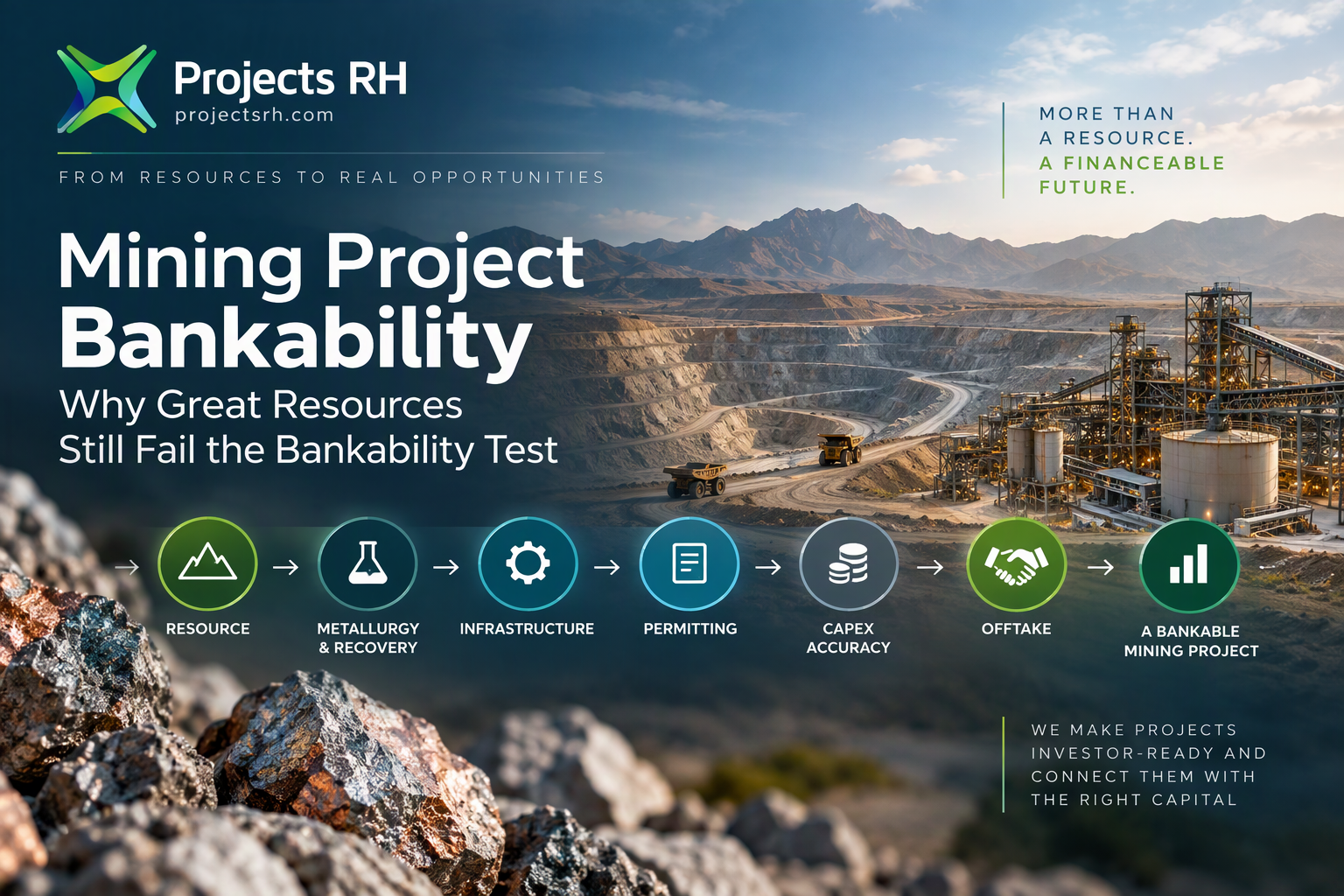
Mining Project Bankability: Why Great Resources Still Fail
A world-class resource is not automatically financeable. Discover how metallurgy, recovery, infrastructure, permits, CapEx and offtake shape mining bankability.
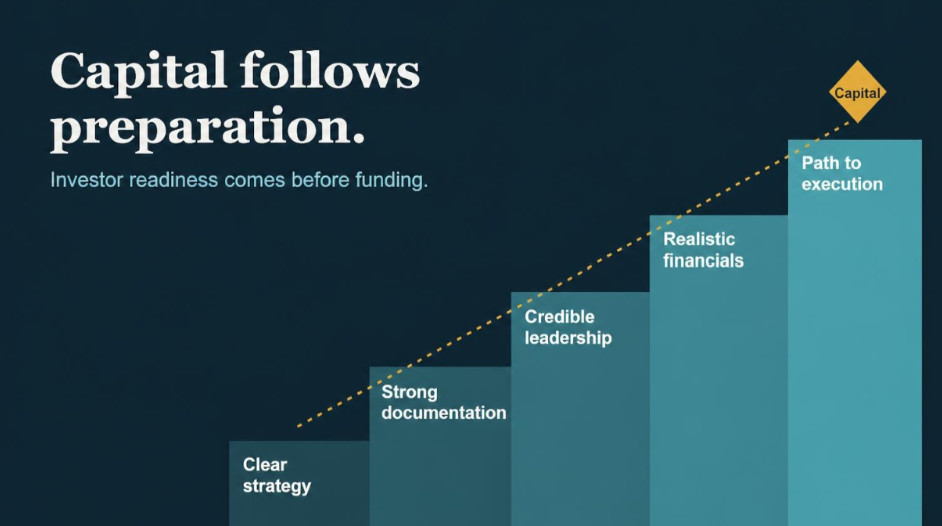
Mining Finance: Why Investor Readiness Comes First
Mining finance starts before investor outreach. Why investor readiness, a tested financial model and consistent documentation matter before a mining project meets investors.