
Mining Finance: Why Investor Readiness Comes First
Mining finance starts before investor outreach. Why investor readiness, a tested financial model and consistent documentation matter before a mining project meets investors.
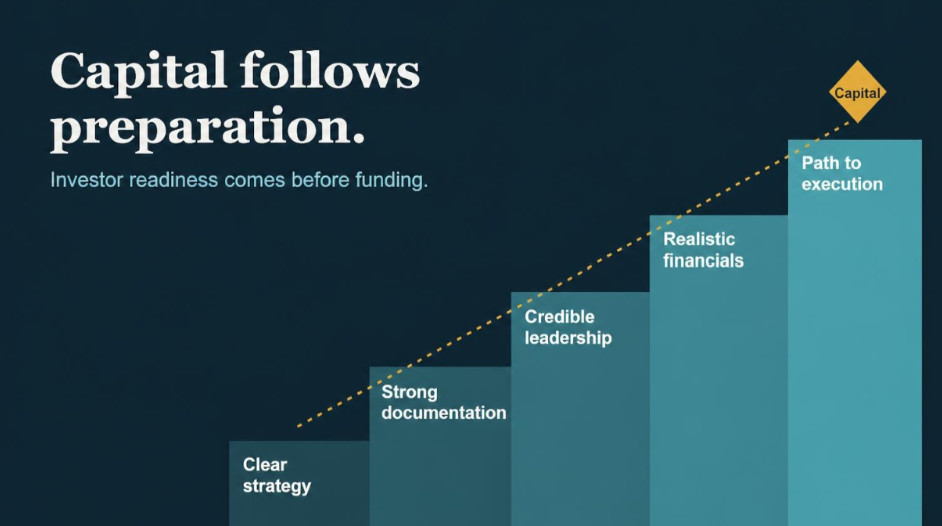
Mining finance is usually described as a search for the right fund, family office, strategic partner, trader or lender. For most mining projects, finding investors is the second problem. The first is becoming a project that investors can evaluate, test and trust. Funders may provide the capital in the end, but they rarely prepare a project to receive it. This article sets out why investor readiness comes first in mining finance, what investors typically look for before they commit, and how Projects RH prepares a project before any capital raising begins.
Mining finance starts with a different question
Mining conferences, roadshows and networking events tend to focus on introductions. Most sponsors arrive asking where to find investors. A more useful question comes earlier: is my mining project ready for investors?
Capital continues to look for opportunities in gold, copper, lithium, nickel, graphite, uranium, rare earth elements and other critical minerals linked to electrification and energy security. Institutional investors, private equity, family offices, strategic mining companies, development finance institutions and commodity traders all remain active in the sector. Often the question is not whether capital exists. It is whether investors can assess the opportunity in front of them.
A project can hold a significant resource, attractive grades, strong demand drivers and an experienced team, and still struggle to raise money. Investors do not finance geological potential alone. They finance opportunities they can understand, verify and rely on.
What mining investors weigh before they commit
Every mining investment decision is a risk decision. Behind each investor's questions sits one underlying question: can this project create value while managing the risks involved? To answer it, investors look at:
- geological and metallurgical risk
- technical, infrastructure and execution risk
- environmental and permitting risk
- market and commodity risk
- jurisdictional and governance risk
- financial and management risk
They need confidence in five things: the resource, the management team, the financial assumptions, the development plan and the information itself. The projects that attract capital do not always have the largest resource base. Preparedness, transparency and consistency count for a great deal, because investors want evidence rather than assumptions.
The building blocks of a mining project investors can test
Technical credibility comes first. Depending on the stage of the project, it may require:
- a JORC or NI 43-101 report
- a Competent Person's Report
- resource and reserve statements
- metallurgical testwork
- a scoping, pre-feasibility or feasibility study
The stronger the technical base, the more weight the rest of the case can carry.
Financial readiness follows. Investors expect a clear view of capital expenditure, operating costs, sources and uses of funds, production assumptions, cash-flow forecasts and sensitivity analysis. Serious readers usually open the mining financial model early, and they examine it closely.
Commercial validation matters too: commodity demand, supply dynamics, offtake prospects and the project's place in the market. This is particularly relevant for critical minerals, where strategic importance is part of the case.
Then there is the documentation. Projects RH prepares five documents that agree with each other:
- Financial model: the single point of truth for every figure the other documents use.
- Information memorandum: the written investment case, covering the business, the plan, the structure and the risks.
- Investor deck: the short form of the same case, for the first meeting.
- Teaser: the summary that goes out before identity does.
- Data room: contracts, permits, financials and diligence materials, organised before the first investor asks.
Consistency is the point. When the deck, the memorandum and the model tell different stories, investors lose confidence quickly, and during mining due diligence it is hard to win back.
Why investor readiness comes first in mining finance
Many mining companies set out to raise capital before they are ready for investor scrutiny. That order tends to create avoidable obstacles: questions with no prepared answer, figures that do not reconcile, and gaps that an investor finds before the sponsor does. A better sequence looks like this:
- Understand how investors are likely to evaluate the opportunity.
- Identify the weaknesses, risks and information gaps.
- Strengthen the technical, financial, commercial and governance foundations.
- Prepare investor materials that agree with each other.
- Set a realistic capital raising strategy.
- Then engage the investors who fit.
Verification is part of this. Investors understand that sponsors believe in their projects, and they look for more than conviction. Materials that simply repackage management information may look polished without adding confidence. When Projects RH lists a prepared project for registered capital partners, each piece of evidence is marked as either reviewed by Projects RH or stated by the sponsor, so a reader can see which is which.
How Projects RH prepares a mining project
The firm works on a simple principle: preparation comes before capital. Projects RH establishes the facts, builds or tests the model, identifies material gaps and prepares institutional documentation before any capital raising process begins. The work runs in five steps, with a decision at the end of each. You can read the full process on how we work:
- Book a call: twenty minutes, with nothing to prepare.
- Intake: you send the documents that already exist, and nothing new is prepared.
- Assessment: the Investment Readiness Assessment. This is AI-assisted research on the project and its sponsor, reviewed and approved by a professional before release. It gives you a Preliminary Readiness Profile written in words, a gap analysis and a recommended package.
- Preparation: one of three packages, producing the model, memorandum, deck and teaser, each reviewed by a professional.
- Capital raising: only under a separately accepted mandate, which can be declined.
The assessment matches the package to where the project stands. A project that already has strong documentation, a model and investor materials needs different work from one with a good foundation and important gaps remaining. Capital raising is a separate mandate, and it is never guaranteed.
What you can do next with Projects RH
If you are preparing a mining project for investors, start by finding out how an institutional reader is likely to view it.
You can book a 20-minute discovery call with Projects RH. There is nothing to prepare, and every project is asked the same questions.
You may already have documents, such as a technical report, a model, a deck or a draft memorandum. If so, you can send your project documents by upload, by email or by connecting SharePoint or OneDrive. A person at the firm reads what you send and replies in writing within 3 business days. No confidentiality agreement is in place at that stage. If your material is confidential, ask for the firm's agreement first and send it once the agreement is accepted.
Sending documents does not create an advisory, investment or funding relationship. It gives you a clear starting point: what the project already has, and what it needs before it meets investors.

What to do next
Projects RH prepares the company and the project first, then takes them to investors. The fastest way to find out where you stand is a short call.
Keep reading
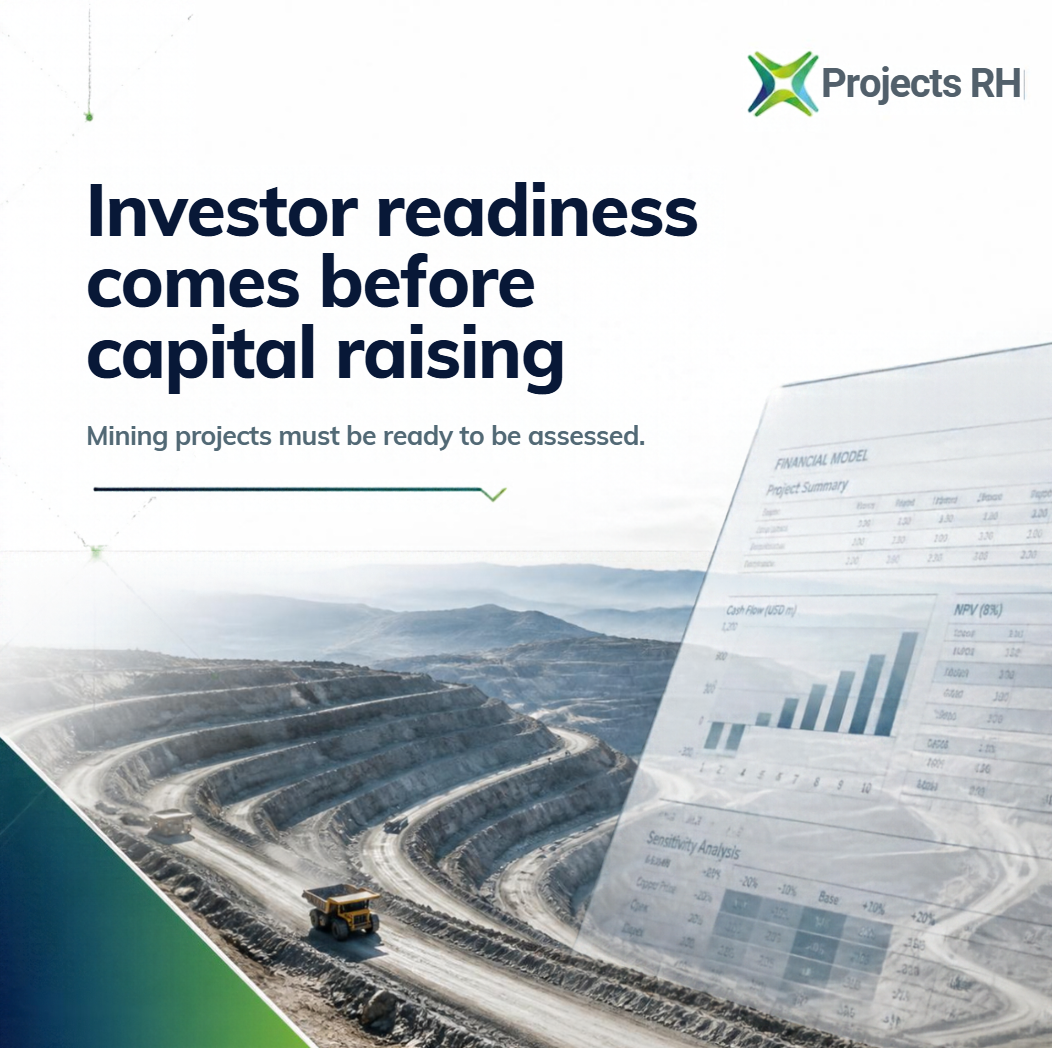
Mining Investor Readiness: Preparing a Project for Capital
Many mining projects reach investors before they are ready. Mining investor readiness means evidence an institutional reader can test, prepared before any approach to capital.
Mining industry trends in 2025: What investors and project leaders need to know?
Learn about the strategic crossroads, the crucial role of critical minerals, and the mounting ESG pressures
Is the Green Mining Revolution Turning Ore into Opportunity?
In the green mining revolution, Projects RH provides independent analysis and prepares investment materials to help secure funding and ensure project success.