
What Is Biogas? A Complete Guide to Renewable Energy
What is biogas? Learn how organic waste becomes renewable energy, how biomethane is produced, its uses and what investors assess before financing a project.
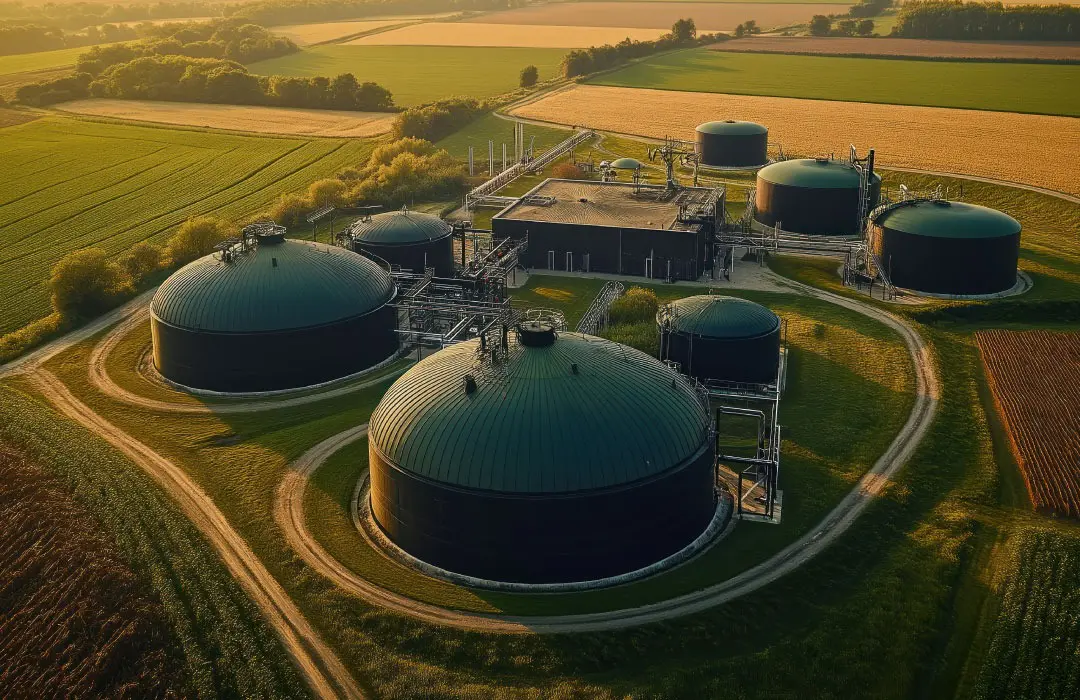
What Is Biogas?
What is biogas? Biogas is a renewable gas produced when microorganisms break down organic materials such as food waste, animal manure, agricultural residues and wastewater sludge in an oxygen-free environment. This biological process, known as anaerobic digestion, produces a methane-rich gas that can be used to generate electricity and heat or upgraded into biomethane, also known in some markets as renewable natural gas.
At Projects RH, we view biogas as more than a renewable-energy technology. A well-structured biogas project can sit at the intersection of waste management, agriculture, energy production, emissions management and the circular economy.
The International Energy Agency identifies biogas and biomethane as an important and growing part of modern energy systems. These gases can transform locally available organic waste into useful energy while contributing to energy security, waste management, emissions reduction and agricultural development.
Biogas vs. Natural Gas: What Is the Difference?
Biogas is produced from organic materials, while conventional natural gas is a fossil fuel extracted from geological formations.
Both gases can contain significant levels of methane, but their origins are fundamentally different. Biogas comes from renewable organic feedstocks, whereas conventional natural gas originates from finite fossil resources.
Raw biogas normally requires treatment before it can substitute directly for pipeline-quality natural gas. When biogas is upgraded by removing carbon dioxide, moisture, hydrogen sulfide and other impurities, the resulting gas is generally called biomethane or renewable natural gas (RNG).
The environmental performance of a biogas project should not be assumed simply because its feedstock is renewable. Feedstock selection, methane leakage, plant efficiency, digestate management, transportation and the energy source being displaced can all affect lifecycle performance.
Is Biogas Renewable?
Yes. Biogas is generally considered renewable because it can be produced from organic materials that are continually generated or replenished, including:
- Animal manure
- Food waste
- Agricultural residues
- Wastewater sludge
- Organic industrial waste
- Municipal organic waste
Waste and residue-based projects can be particularly valuable because they potentially combine renewable-energy production with a solution to an existing waste-management challenge.
However, renewable does not automatically mean sustainable or commercially viable. Feedstock sourcing, operational performance, methane management, transport requirements and digestate treatment all influence the environmental and economic performance of an individual project.
How Is Biogas Produced?
Anaerobic Digestion Explained
Biogas is commonly produced using anaerobic digestion, a biological process in which microorganisms break down biodegradable material in the absence of oxygen.
The process has four principal biological stages:
- Hydrolysis, in which complex organic materials are broken into simpler compounds.
- Acidogenesis, in which those compounds are converted into organic acids and other products.
- Acetogenesis, which produces compounds including acetate, hydrogen and carbon dioxide.
- Methanogenesis, in which methane-producing microorganisms generate much of the methane contained in the resulting biogas.
The process produces two principal outputs: biogas and digestate. Biogas can be used as an energy resource, while appropriately managed digestate may have agricultural value depending on its characteristics, treatment and applicable regulations.
The U.S. Environmental Protection Agency AgSTAR program provides technical guidance covering anaerobic digestion, feedstocks, project development, feasibility, economics, permitting, safety, operation and maintenance.
What Materials Can Be Used to Produce Biogas?
Potential feedstocks include:
- Livestock manure
- Food and beverage processing residues
- Food waste
- Crop residues
- Wastewater sludge
- Organic industrial waste
- Agricultural by-products
The feedstock strategy is critical. A plant designed around an unreliable or unsuitable feedstock supply can face technical and financial problems even when the underlying digestion technology is sound.
For investors and lenders, the question is not simply whether organic material can produce biogas. They also need to understand whether sufficient feedstock can be secured consistently, economically and for the required operating period.
What Is Biomethane?
Biomethane is produced by upgrading biogas to remove carbon dioxide, water and other contaminants, increasing the concentration and quality of methane.
Depending on local standards and infrastructure, upgraded biomethane may be suitable for applications requiring gas comparable with conventional natural gas.
In the United States, the term renewable natural gas (RNG) is commonly used for upgraded biogas. The U.S. Department of Energy Alternative Fuels Data Center describes RNG as pipeline-quality gas that can be interchangeable with conventional natural gas.
Potential uses include:
- Pipeline injection
- Industrial thermal applications
- Electricity generation
- Vehicle fuel
- Dedicated supply to industrial or commercial users
Whether upgrading biogas into biomethane is economically attractive depends on project scale, upgrading technology, gas specifications, infrastructure, interconnection costs, market access and potential offtake arrangements.
What Are the Main Uses of Biogas?
Biogas can support different commercial models depending on the location, scale and infrastructure available.
Electricity Generation
Biogas can fuel generators to produce electricity for on-site consumption or, where commercially and technically possible, export electricity to a network.
Heat and Combined Heat and Power
Biogas can provide thermal energy directly or be used in combined heat and power systems that generate electricity and useful heat simultaneously.
Biomethane and Renewable Natural Gas
Biogas can be upgraded into biomethane or RNG, potentially opening access to gas networks, transport markets or specialised industrial users where the necessary standards and infrastructure are available.
Waste Management
Anaerobic digestion can form part of a broader organic-waste management strategy. This can be particularly relevant for agricultural operations, food processors, wastewater facilities and businesses generating significant biodegradable waste streams.
Digestate
Anaerobic digestion also produces digestate. Depending on the feedstock, treatment quality, nutrient profile and applicable regulations, digestate may have value as a soil amendment or fertiliser product.
What Are the Benefits of Biogas?
The potential benefits of a properly designed biogas project can extend beyond energy production.
They may include:
- Conversion of organic waste into usable energy
- Capture and productive use of methane
- Local electricity or heat production
- Production of biomethane and renewable natural gas
- Improved management of certain organic waste streams
- Potential agricultural use of digestate
- Diversification of energy supply
- Development of circular-economy business models
The IEA Outlook for Biogas and Biomethane highlights the ability of biogases to contribute to energy security, waste management, emissions reduction and agricultural development.
However, those benefits depend on effective project design and operation. Poor methane management, inappropriate feedstock, weak operational controls or inadequate digestate management can reduce environmental and commercial advantages.
What Are the Main Risks in a Biogas Project?
Understanding the technology is only the beginning. A financeable biogas project requires multiple technical, commercial and financial elements to work together.
Feedstock Risk
Is there enough feedstock of suitable and reasonably consistent quality to operate the facility as planned? Developers should also determine how the feedstock will be contracted, transported, stored and priced.
Technology and Performance Risk
The selected digestion, gas treatment and upgrading systems should be appropriate for the feedstock characteristics and intended end product.
Offtake Risk
A project needs a credible strategy for selling or using its outputs. Depending on the business model, this could involve electricity, heat, biomethane, RNG, digestate or a combination of products.
Construction and Cost Risk
Capital expenditure, contingencies, construction schedules, contractor capability and potential cost overruns can materially affect project economics.
Regulatory and Permitting Risk
Environmental permits, waste approvals, grid connections, gas specifications, planning requirements and other regulatory matters should be identified early in project development.
Operational Risk
Anaerobic digestion facilities require active biological and technical management. Reliable operations, monitoring, preventive maintenance and appropriate technical expertise can be critical to long-term performance.
Financial Risk
Projects need realistic assumptions for revenue, operating expenditure, capital expenditure, financing costs, ramp-up periods, working capital and downside scenarios.
These factors illustrate why technical potential alone does not make a project investment-ready.
Is Biogas a Good Investment?
Biogas can represent an attractive renewable-energy and infrastructure opportunity, but its investment quality depends on the fundamentals of the specific project.
Investors are unlikely to fund a project simply because it operates in renewable energy. They need to understand how the project creates value, how risks are allocated and whether key assumptions are supported by credible evidence.
Typical areas of investor and lender review include:
- Feedstock availability and contracting
- Feedstock composition and expected gas yield
- Technology selection
- Engineering assumptions
- Capital expenditure
- Operating expenditure
- Permits and regulatory status
- Electricity or gas interconnection
- Offtake arrangements
- Revenue assumptions
- Construction schedule
- Operations and maintenance strategy
- Financial model
- Funding structure
- Management capability
- Risk allocation
- Sensitivity and downside analysis
This is where investor readiness becomes particularly important. Before approaching capital providers, project sponsors should be able to present a coherent technical, commercial and financial investment case.
Projects RH follows a preparation-first approach to capital engagement. Explore our Services to understand how investor readiness, financial modelling, transaction preparation and project finance can help strengthen an investment proposition.
You can also review How We Work to understand the pathway from project preparation to potential capital engagement. `
Why Investor Readiness Matters for Biogas Projects
A promising renewable-energy concept and a financeable investment opportunity are not the same thing.
A project may have strong technology and attractive environmental benefits but still struggle to attract capital if its financial model is incomplete, feedstock assumptions are unsupported, permits remain unclear or the revenue model has not been adequately tested.
Before approaching investors, a project developer should be able to explain:
- What is being built
- Why the selected technology is appropriate
- Where the feedstock comes from
- How the feedstock supply will be secured
- What the project will sell
- Who may purchase its outputs
- How much capital is required
- How that capital will be deployed
- How revenues and costs have been modelled
- What the principal risks are
- How those risks can be mitigated
- What potential investors are being asked to finance
A professional financial model can then test assumptions, sensitivities and alternative financing structures rather than relying only on headline projections.
Projects RH places this preparation stage before investor engagement because a disciplined investment case can make discussions with potential capital providers clearer, more efficient and more credible.
What Is the Future of Biogas?
The outlook for biogas and biomethane is increasingly connected to organic-waste management, agriculture, energy security and the transition toward lower-emissions energy systems.
The IEA's global assessment examines substantial potential for biogas and biomethane from organic waste streams across agriculture, municipal waste and forestry residues.
Future development will depend not only on technological capability but also on project economics, infrastructure, policy, methane management, feedstock availability and access to capital.
This creates an important distinction for project developers: growth in the biogas sector does not guarantee that an individual project will secure financing.
Projects still need credible engineering, realistic economics, appropriate commercial agreements, risk analysis, supporting evidence and professional investor documentation.
For developers, management teams and project sponsors, the opportunity lies in combining sound renewable-energy technology with disciplined project preparation, investor readiness and project finance.
Is Your Biogas Project Ready for Investment?
A biogas or biomethane project needs more than a strong renewable-energy concept to attract serious capital. Investors and lenders need to understand the feedstock, technology, permits, commercial model, financial assumptions, risks, funding requirement and pathway to execution.
Projects RH helps companies and project sponsors assess investor readiness, strengthen financial and commercial foundations, prepare investor-facing documentation and structure suitable capital strategies before formal investor engagement.
Sources
- International Energy Agency: Outlook for Biogas and Biomethane
- U.S. Environmental Protection Agency: AgSTAR Biogas Recovery in the Agriculture Sector
- U.S. Environmental Protection Agency: AgSTAR Project Development Handbook
- U.S. Department of Energy: Alternative Fuels Data Center - Renewable Natural Gas Production

What to do next
Projects RH prepares the company and the project first, then takes them to investors. The fastest way to find out where you stand is a short call.
Keep reading

How Can Waste Products Be Used as a Renewable Resource?
How can waste products be used as a renewable resource? Explore biogas, recycling, waste-to-energy and what makes resource-recovery projects investable.
Is Anaerobic Digestion Profitable? Costs and Returns
Is anaerobic digestion profitable? Learn how feedstock, CAPEX, OPEX, biogas revenue, biomethane, offtake and financing determine project returns.
Methane Gas Used as Fuel: What Investors Test in RNG Projects
Methane gas used as fuel can supply power, heat, industry and transport. Here is how biogas becomes renewable natural gas, and what investors test before an RNG project is financeable.