
Is Anaerobic Digestion Profitable? Costs and Returns
Is anaerobic digestion profitable? Learn how feedstock, CAPEX, OPEX, biogas revenue, biomethane, offtake and financing determine project returns.
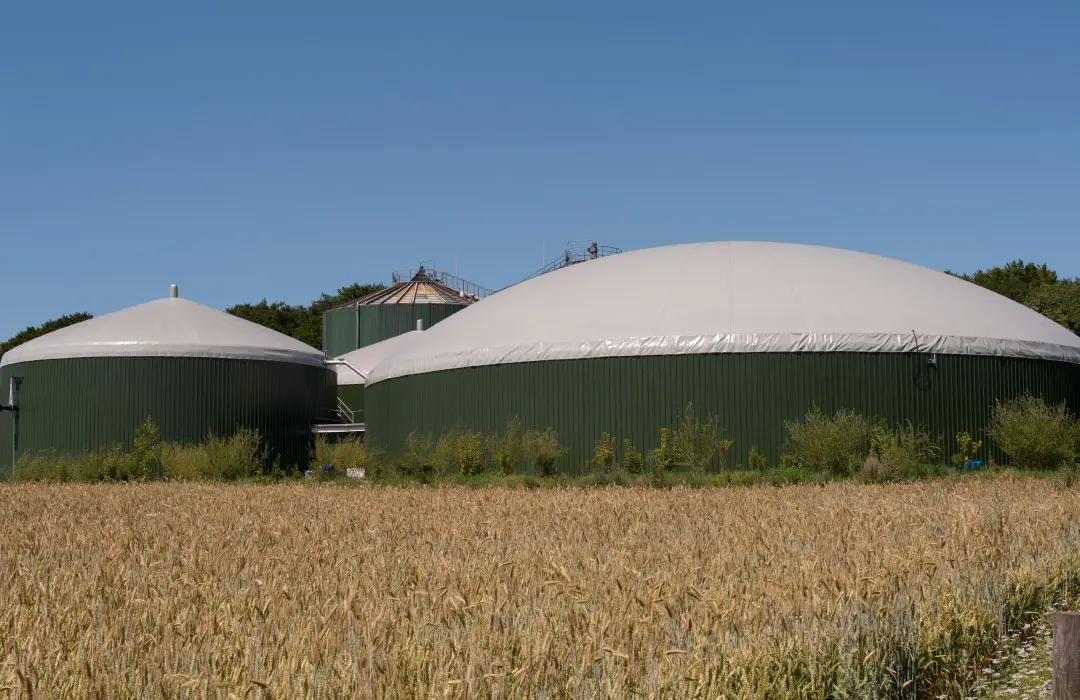
Is anaerobic digestion profitable? It can be, but there is no universal return, payback period or financial model that applies to every project. Profitability depends on feedstock security, biogas yield, plant availability, CAPEX, OPEX, energy or biomethane pricing, offtake, infrastructure, financing and the ability to manage technical and commercial risks.
For developers and investors, the right question is therefore not simply whether anaerobic digestion can produce renewable energy. It is whether a specific project can convert organic waste into predictable revenue and cash flow at a return that justifies its risks and capital requirements.
Is anaerobic digestion profitable?
Anaerobic digestion can be commercially viable when the technical, commercial and financial elements of the project work together.
The U.S. EPA AgSTAR program describes financial feasibility assessment for anaerobic digestion as an iterative process. Developers first assess technical feasibility and then model revenues, expenses, financing and potential returns.
That distinction matters.
Two anaerobic digestion projects using similar technology can produce very different investment outcomes because of differences in feedstock, location, scale, gas yield, infrastructure, energy prices, offtake arrangements and financing.
For investors, profitability therefore needs to be demonstrated through project-specific assumptions rather than generic industry benchmarks.
What is anaerobic digestion?
Anaerobic digestion, or AD, is a biological process in which microorganisms break down biodegradable materials in an oxygen-free environment.
Typical feedstocks can include:
- Livestock manure
- Food waste
- Agricultural residues
- Wastewater solids
- Municipal organic waste
- Suitable industrial organic residues
The process produces biogas and digestate.
Biogas contains methane and carbon dioxide and can potentially be used for heat or electricity. It may also be upgraded into biomethane, which can substitute for conventional natural gas where applicable specifications and infrastructure allow.
Digestate contains nutrients from the original feedstock and may have agricultural applications, although its economic value depends on quality, regulation, storage, transport and local demand.
What determines anaerobic digestion profitability?
AD profitability results from several interdependent variables.
The most important normally include:
- Feedstock availability
- Feedstock cost or tipping-fee revenue
- Methane yield
- Plant availability
- Capital expenditure
- Operating expenditure
- Energy consumption
- Biogas or biomethane production
- Electricity or heat sales
- Offtake pricing
- Digestate economics
- Infrastructure
- Financing costs
- Tax
- Incentives where applicable
- Construction and commissioning schedules
Changing any one of these assumptions can materially change projected cash flow, debt requirements and investor returns.
That is why a credible financial model should include sensitivity analysis rather than presenting a single headline return.
Feedstock is the foundation of the economics
Feedstock determines much more than how much material enters a digester.
Its composition influences biogas production and methane yield, while its location influences transport and handling costs.
Project developers should be prepared to answer:
- What feedstock will be used?
- How much is available?
- Who controls it?
- Is supply contracted?
- For how long?
- How consistent is its composition?
- How far must it travel?
- Who pays for collection and transport?
- Are there competing uses?
- What happens if supply declines?
Some projects may pay for feedstock.
Others may receive tipping fees for accepting organic waste.
That difference can fundamentally change project economics.
For a deeper investor perspective, read Biogas Project Investment Opportunities: What Investors Test.
CAPEX: What does an AD project need to build?
There is no useful universal CAPEX figure for anaerobic digestion because projects differ substantially by scale, technology, location and end use.
Capital expenditure may include:
- Feedstock reception
- Pre-treatment
- Digester vessels
- Heating and mixing systems
- Gas storage
- Gas cleaning
- Biomethane upgrading
- Combined heat and power equipment
- Digestate storage or processing
- Buildings
- Electrical infrastructure
- Gas-grid interconnection
- Compression
- Roads and civil works
- Engineering
- Construction
- Development costs
- Permitting
- Contingency
Scale can affect unit economics, but a larger project is not automatically more profitable.
The additional feedstock, infrastructure and capital required to support that scale still need to be commercially justified.
OPEX: What does an AD project cost to operate?
Operating expenditure needs the same level of attention as construction cost.
OPEX may include:
- Staffing
- Feedstock handling
- Maintenance
- Utilities
- Biological monitoring
- Equipment replacement
- Consumables
- Insurance
- Digestate management
- Gas cleaning and upgrading
- Transport
- Compliance
- Administration
Plant availability also matters.
A project whose financial model assumes near-perfect production but whose maintenance plan cannot support that availability may overstate expected cash flow.
Professional investors will therefore want to understand not only the expected operating cost but also the evidence supporting that assumption.
Revenue streams in anaerobic digestion
A project may have several potential sources of revenue or avoided cost.
Biogas, electricity and heat
Biogas can be used directly in certain thermal applications or converted into electricity.
Combined heat and power systems can produce both electricity and useful heat where sufficient thermal demand exists.
The commercial value depends on energy prices, equipment efficiency, plant availability and who consumes or purchases the output.
Biomethane
Additional treatment can upgrade biogas into biomethane.
The International Energy Agency describes biomethane as an upgraded form of biogas that can act as a substitute for natural gas where specifications and infrastructure permit.
Upgrading can create access to additional markets, but it also introduces additional capital cost, operating cost, energy consumption and infrastructure requirements.
Higher-value output does not automatically mean higher project returns.
Tipping fees
Some AD facilities receive organic materials that would otherwise incur disposal costs.
Where the market supports it, accepting suitable waste can generate tipping-fee revenue.
However, developers need to model waste volumes, competing facilities, contamination, transport and contractual arrangements carefully.
Digestate
Digestate can potentially provide value as a nutrient-containing product.
Its financial contribution should be treated conservatively unless there is a credible market, appropriate quality and a practical route to customers.
Environmental attributes and incentives
Depending on the jurisdiction, a project may potentially qualify for grants, renewable-energy certificates, low-carbon fuel programs, tax incentives or other policy support.
These mechanisms can materially improve project economics.
They should not, however, be treated as universal or permanent.
A robust model should make clear how the project performs both with and without material incentive assumptions.
Biogas versus biomethane economics
Choosing between direct biogas use and biomethane production can materially change project economics.
Direct use for heat or combined heat and power may involve a simpler commercial pathway where suitable onsite demand exists.
Biomethane upgrading adds processing requirements but may provide access to gas networks, industrial demand or transport markets.
The International Energy Agency's global assessment demonstrates that biomethane production costs vary materially according to feedstock, project scale and location.
Infrastructure is particularly important.
Access to roads, electricity grids, gas pipelines and customers can materially change both CAPEX and OPEX.
The optimal solution is therefore project-specific.
How to model anaerobic digestion returns
A financial model should translate physical project assumptions into financial outcomes.
For an AD project, inputs may include:
- Annual feedstock throughput
- Feedstock pricing
- Tipping fees
- Biogas yield
- Methane concentration
- Plant availability
- Internal energy use
- Electricity generation
- Heat output
- Biomethane production
- Product prices
- CAPEX
- OPEX
- Construction schedule
- Working capital
- Debt
- Equity
- Interest rates
- Tax
- Incentives
- Cash flow
- Debt service
- IRR
- NPV
The model should include base, downside and upside scenarios where appropriate.
Investors should be able to see what happens if:
- Feedstock volumes decline
- Methane yield is lower than forecast
- Construction costs increase
- Commissioning is delayed
- Plant availability falls
- OPEX increases
- Energy prices decline
- Financing becomes more expensive
This is more informative than relying on a generic claim that anaerobic digestion has a particular payback period.
What makes an AD project investment-ready?
Technical feasibility is necessary, but it does not automatically make a project investable.
Professional capital providers typically need evidence supporting:
- Feedstock
- Technology
- Site control
- Permitting
- Construction assumptions
- CAPEX
- OPEX
- Infrastructure
- Offtake
- Revenue assumptions
- Financial model
- Financing requirements
- Management capability
- Risk allocation
This is where Investor Readiness: What Investors Test Before They Commit becomes particularly relevant.
Preparation should make the project easier for an investor or lender to evaluate, not simply more attractive on a presentation slide.
Revenue certainty and offtake
A strong technical project can still struggle to secure financing when its route to revenue is unclear.
Professional investors and lenders will want to understand:
- What is being sold?
- Who will buy it?
- At what price?
- For how long?
- What volumes are contracted?
- How is pricing indexed?
- What happens if the buyer defaults?
- How creditworthy is the counterparty?
Revenue visibility can be particularly important for project debt.
The current Projects RH guide Renewable Energy Project Finance: How Projects Raise Capital explains why capital providers focus on the cash flow behind a renewable asset rather than the installed capacity alone.
Financing an anaerobic digestion project
The appropriate funding structure depends on development stage, risk and expected cash flow.
Early-stage capital may support:
- Feasibility studies
- Feedstock analysis
- Engineering
- Environmental studies
- Site work
- Permitting
- Commercial agreements
- Financial modeling
Construction requires significantly more capital and stronger evidence around costs, contracts, schedules and revenues.
Potential funding sources can include:
- Sponsor equity
- External equity
- Project debt
- Strategic investment
- Development finance
- Grants and incentives where eligible
The cheapest capital is not necessarily the right capital.
Timing, security, tenor, repayment requirements, covenants and dilution all need to be evaluated within the complete capital structure.
For projects considering debt, grants or development finance, see Non-Dilutive Funding for Projects: Grants, Debt and DFIs.
Investor documentation for AD projects
Professional investors should be able to trace the investment case back to evidence and the financial model.
A preparation package may include:
- Financial model
- Information Memorandum
- Investor deck
- Teaser
- Data room
The financial model should be the numerical foundation.
The Information Memorandum should explain the opportunity, development plan, commercial arrangements, economics, financing requirement and material risks.
For more detail, read Information Memorandum Development: Built to Be Tested.
The model, memorandum, deck and teaser should agree on material figures and assumptions.
Key risks that affect AD profitability
Feedstock risk
Insufficient volume, changing feedstock quality, competing uses or increased logistics costs can reduce gas production and margins.
Technology risk
Digester design, gas yield, gas cleaning, upgrading equipment and plant availability must perform at the levels assumed in the model.
Construction risk
Cost overruns and delays can increase capital requirements and defer revenue.
Operating risk
Maintenance, biological stability, utilities, staffing and replacement costs can materially affect long-term cash flow.
Offtake risk
Weak or uncertain arrangements for energy, gas, biomethane or other outputs can reduce revenue visibility.
Infrastructure risk
The distance to gas pipelines, electricity grids, roads and end users can materially influence feasibility and cost.
Policy risk
Incentives and environmental attributes can improve returns but may be exposed to regulatory change.
A project should therefore demonstrate underlying economics as clearly as possible rather than relying entirely on policy support.
Environmental value and commercial value
Anaerobic digestion can create environmental benefits by treating organic waste, capturing methane and producing usable energy.
However, investors still need to understand the economics.
Environmental value can strengthen the investment proposition, but it does not replace:
- Commercial contracts
- Cost discipline
- Operational reliability
- Revenue visibility
- Financial modeling
- Governance
The strongest projects are able to demonstrate both environmental relevance and commercial credibility.
Future outlook for anaerobic digestion economics
The long-term biogas and biomethane opportunity remains substantial.
The International Energy Agency estimates current sustainable global biogases potential at nearly 1,000 billion cubic metres equivalent, increasing toward 1,400 billion cubic metres equivalent by 2050.
The IEA also finds that biomethane production costs vary substantially by scale, feedstock composition and location, reinforcing the importance of project-specific analysis.
For investors, the implication is straightforward:
A growing market does not make an individual anaerobic digestion project profitable. Project economics still have to work.
FAQ: Is anaerobic digestion profitable?
Is anaerobic digestion profitable?
Anaerobic digestion can be profitable, but returns vary by project. Feedstock, gas yield, CAPEX, OPEX, plant availability, offtake, infrastructure, financing and policy support all affect financial performance.
How long does an anaerobic digestion project take to pay back?
There is no reliable universal payback period. Project-specific financial modeling is required because construction cost, feedstock economics, revenues, financing and operating performance vary significantly between facilities.
What are the main revenue sources for an AD project?
Potential sources include electricity, heat, biogas or biomethane sales, tipping fees, digestate products and, where applicable, environmental attributes or policy incentives.
What costs affect anaerobic digestion profitability?
Important costs include feedstock logistics, construction, digester equipment, gas treatment, biomethane upgrading, interconnection, labor, maintenance, utilities, digestate management, financing and compliance.
What makes an anaerobic digestion project attractive to investors?
Investors generally need credible evidence supporting feedstock, technology, CAPEX, OPEX, site, permits, infrastructure, offtake, revenue, management, financial assumptions and material project risks.
How can Projects RH support an AD project?
Projects RH helps project sponsors strengthen investor readiness, build or test financial models and prepare institutional-quality investment documentation. Capital raising is handled separately when an appropriate mandate is accepted.
Sources and further reading
- U.S. EPA: Project Planning and Financing for Anaerobic Digestion
- International Energy Agency: Outlook for Biogas and Biomethane
- International Energy Agency: Key Findings - Outlook for Biogas and Biomethane
- International Energy Agency: Feedstock Potential and Costs for Biogas and Biomethane
Related Projects RH insights and services
- Biogas Project Investment Opportunities: What Investors Test
- Investor Readiness: What Investors Test Before They Commit
- Renewable Energy Project Finance: How Projects Raise Capital
- Information Memorandum Development: Built to Be Tested
- Non-Dilutive Funding for Projects: Grants, Debt and DFIs
- Projects RH Services
- How Projects RH Works
`
Is your anaerobic digestion project ready for institutional capital?
A promising AD technology is only the starting point. Capital providers need credible feedstock assumptions, defensible project economics, realistic financial modeling, reliable offtake and consistent investment documentation.
Projects RH helps project sponsors establish the facts, identify investor-readiness gaps, build or test the financial model and prepare institutional-quality investment materials before formal capital raising begins.
Developing an anaerobic digestion, biogas or biomethane project? Book a FREE 20-Minute Discovery Call with Projects RH to discuss your project's readiness and next steps.
What to do next
Projects RH prepares the company and the project first, then takes them to investors. The fastest way to find out where you stand is a short call.
Keep reading
What Is Biogas? A Complete Guide to Renewable Energy
What is biogas? Learn how organic waste becomes renewable energy, how biomethane is produced, its uses and what investors assess before financing a project.

How Can Waste Products Be Used as a Renewable Resource?
How can waste products be used as a renewable resource? Explore biogas, recycling, waste-to-energy and what makes resource-recovery projects investable.

Methane Gas Used as Fuel: What Investors Test in RNG Projects
Methane gas used as fuel can supply power, heat, industry and transport. Here is how biogas becomes renewable natural gas, and what investors test before an RNG project is financeable.