
Anaerobic Digestion Technology: Process, Risks and Readiness
How anaerobic digestion technology turns organic waste into biogas and biomethane, and the feedstock, technology, offtake and financial questions an AD project must answer for investors.
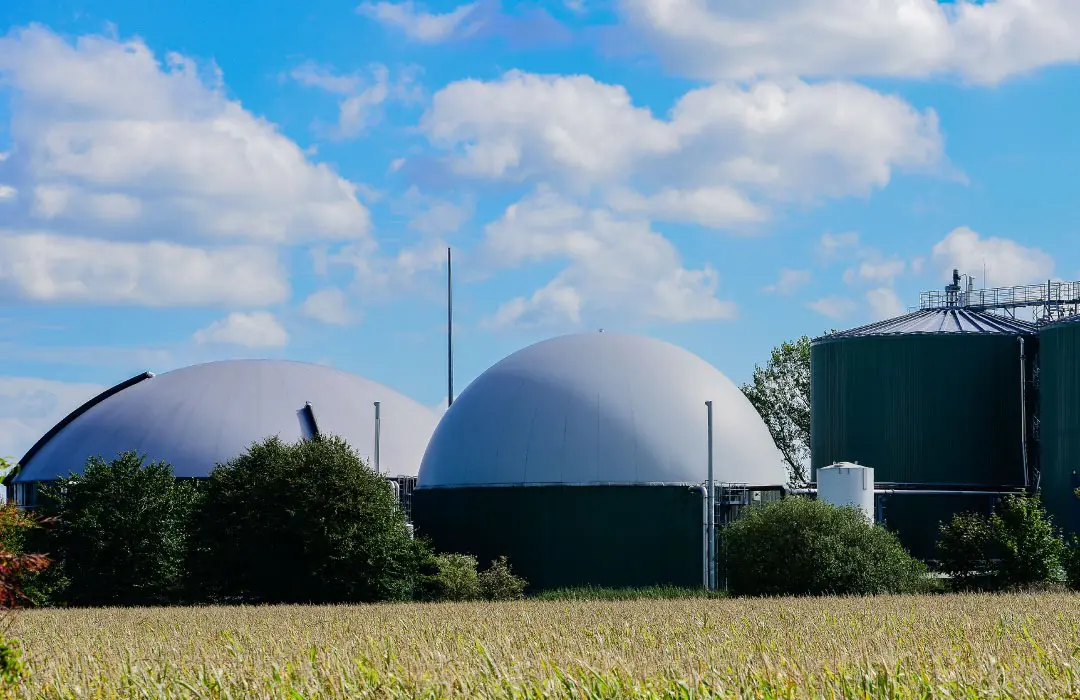
Anaerobic digestion technology converts organic materials such as manure, food waste, agricultural residues and wastewater solids into biogas and digestate through a biological process that takes place without oxygen. Depending on the system and project design, biogas can be used for heat or electricity or upgraded into biomethane for suitable gas, industrial or transport applications.
For project developers and investors, understanding the technology is only the beginning. Feedstock security, gas yield, equipment selection, plant availability, permitting, infrastructure, offtake and project economics must work together before an anaerobic digestion project can become commercially credible and investment-ready.
What is anaerobic digestion technology?
Anaerobic digestion (AD) is a controlled biological process in which microorganisms break down biodegradable material in an oxygen-free environment.
The process produces two principal outputs:
- Biogas, which principally contains methane and carbon dioxide.
- Digestate, the remaining nutrient-containing material that may have agricultural applications, subject to composition, treatment and local requirements.
The U.S. EPA AgSTAR program provides resources covering the development, operation and maintenance of anaerobic digestion and biogas recovery systems.
The International Energy Agency's Outlook for Biogas and Biomethane also examines the role of biogas and biomethane in energy security, waste management, emissions reduction and agricultural development.
How does anaerobic digestion technology work?
Anaerobic digestion depends on a sequence of biological processes that progressively transform complex organic material into simpler compounds and ultimately methane-rich biogas.
Hydrolysis
Complex organic materials such as carbohydrates, proteins and fats are broken into smaller soluble compounds that microorganisms can process more readily.
Acidogenesis
The products of hydrolysis are converted into organic acids, alcohols, hydrogen and carbon dioxide.
Acetogenesis
Intermediate compounds are further converted into substances including acetate, hydrogen and carbon dioxide.
Methanogenesis
Methanogenic microorganisms convert suitable intermediate compounds into methane-rich biogas.
Successful operation depends on maintaining appropriate biological and operating conditions. Temperature, pH, feedstock composition, loading rates, retention time and process stability can influence gas production and overall plant performance.
What feedstocks can anaerobic digestion systems use?
The appropriate feedstock depends on digester design, location and project objectives.
Potential feedstocks include:
- Livestock manure
- Food waste
- Agricultural residues
- Wastewater solids
- Organic industrial residues
- Other suitable biodegradable materials
Feedstock is not simply a technical input. It is also central to project economics. Developers need to understand feedstock quantity, composition, seasonality, transport distance, contamination, competing uses and contractual availability.
For capital providers, the important question is not simply whether organic waste exists. It is whether sufficient quantities of suitable feedstock can be secured economically and reliably for the project's expected operating life.
Main types of anaerobic digestion systems
There is no single digester configuration suitable for every project. System selection depends on feedstock characteristics, solids content, throughput, location, climate, available space and the intended use of the resulting biogas.
Continuous stirred-tank reactors
Continuous stirred-tank reactors, commonly referred to as CSTRs, mix feedstock inside a controlled digestion environment. They can be appropriate for relatively pumpable feedstocks and applications requiring continuous operation.
Plug-flow digesters
Plug-flow systems move material progressively through the digester. They may be appropriate for certain manure and higher-solids feedstocks, depending on project conditions and design requirements.
Covered lagoons
Covered lagoon systems capture biogas produced from suitable liquid waste streams held in covered basins. Their suitability depends particularly on climate, feedstock characteristics, available space and the intended use of the recovered gas.
Dry digestion systems
Dry or high-solids digestion systems process feedstocks containing more solids than conventional wet digestion systems. They can be relevant for certain food, municipal and agricultural organic waste streams.
Technology selection should therefore be based on project-specific technical and economic analysis rather than preference for a particular design.
From raw biogas to biomethane
Raw biogas ordinarily requires treatment before certain end uses.
Depending on its composition, treatment can address:
- Carbon dioxide
- Hydrogen sulfide
- Moisture
- Other contaminants
Biogas can potentially be used directly for heat or converted into electricity through suitable generating equipment. Further upgrading can increase methane concentration and produce biomethane.
The most appropriate commercial pathway depends on location, infrastructure, energy prices, available offtake and the additional capital and operating costs associated with upgrading.
A project should therefore compare alternative routes to market rather than assume that the highest-value energy product will automatically deliver the strongest investment return.
Why anaerobic digestion matters for renewable energy
Anaerobic digestion combines renewable energy production with organic waste treatment, creating several potential sources of value.
Renewable energy production
Biogas can support heat and electricity generation and, after appropriate upgrading, biomethane applications.
Organic waste management
AD can provide a controlled pathway for processing suitable organic waste streams while recovering usable energy.
Methane management
Capturing methane generated during controlled digestion can reduce uncontrolled releases associated with certain manure and organic waste management practices.
Circular use of resources
Digestate can retain nutrients from the original feedstock and, subject to quality requirements and local regulations, may have agricultural applications.
These characteristics make AD relevant not only to renewable energy developers but also to agricultural businesses, municipalities, wastewater operators and industries managing significant organic waste streams.
Technology alone does not make a project investable
A technically sound digester is only one part of an investment-ready project.
Professional capital providers need to understand whether the complete project works technically, commercially and financially.
A credible AD investment case should typically address:
- Feedstock availability and contracts
- Technology selection
- Expected gas and methane yield
- Plant availability
- Site control
- Permitting
- Construction cost
- Operating expenditure
- Energy consumption
- Grid or gas infrastructure
- Offtake arrangements
- Revenue assumptions
- Project management capability
- Financing requirements
- Sensitivity analysis
- Downside scenarios
For a deeper investor perspective, read Biogas Project Investment Opportunities: What Investors Test.
The principle is straightforward: growth in the biogas and biomethane sector does not automatically make an individual project investable. The investment case must demonstrate that a specific project, in a particular location, with its contracts and assumptions, can withstand professional scrutiny.
Anaerobic digestion technology and investor readiness
An AD developer should address material technical, commercial and financial questions before approaching institutional capital.
Investor readiness means preparing the opportunity so that a professional capital provider can understand it, test its assumptions, consider its risks and determine whether further due diligence is justified.
For an AD project, evidence may be required to support:
- Feedstock volumes and quality
- Technology performance assumptions
- Site and infrastructure
- Development status
- Environmental and regulatory requirements
- CAPEX and contingency
- OPEX
- Construction schedule
- Revenue assumptions
- Offtake arrangements
- Funding requirements
- Financial model
- Management and governance
- Risk allocation
For further guidance, read Investor Readiness: What Investors Test Before They Commit.
You can also review How Projects RH Works to understand the process from initial discovery through project preparation and, where appropriate, a separate capital raising mandate.
Building the financial model for an AD project
The financial model should translate technical and commercial assumptions into financial outcomes.
For an anaerobic digestion project, this may include:
- Feedstock throughput
- Feedstock costs or tipping fees
- Methane yield
- Plant availability
- Internal energy consumption
- Biogas or biomethane production
- Electricity or heat output
- Energy and offtake pricing
- Digestate economics
- CAPEX and OPEX
- Construction timetable
- Debt and equity structure
- Interest expense
- Tax
- Working capital
- Cash flow
- Sensitivity scenarios
- Internal Rate of Return (IRR)
- Net Present Value (NPV)
The model should become the numerical foundation of the investment case. CAPEX, throughput, revenue, financing requirements and return assumptions should remain consistent across all investor documentation.
Learn more about the preparation framework on Projects RH Services.
Preparing investor documentation
Once the project's technical, commercial and financial foundations can withstand review, the opportunity can be translated into investor-facing documentation.
A professional investment package may include:
- Financial model
- Information Memorandum
- Investor deck
- Teaser
- Data room
An Information Memorandum provides investors and lenders with a structured view of the project, economics, risks, capital requirement and investment proposition.
For a deeper explanation, read Information Memorandum Development: Built to Be Tested.
The model, memorandum, deck and teaser should remain consistent on material assumptions, figures and funding requirements.
Financing anaerobic digestion projects
Funding requirements change as a project progresses through development.
Early-stage capital may finance:
- Feasibility studies
- Feedstock analysis
- Engineering
- Site development
- Environmental studies
- Permitting
- Financial modeling
- Commercial agreements
Construction financing requires significantly greater certainty because considerably more capital is at risk.
Depending on the project, the eventual capital structure may combine sponsor equity, external equity, project debt, strategic capital, grants or development finance.
The financing structure should match the development stage, contractual position, revenue visibility, risk allocation and capacity to service debt.
For projects considering debt, grants or development finance, see Non-Dilutive Funding for Projects: Grants, Debt and DFIs.
Capital structure is not simply about finding the cheapest source of money. Each financing instrument has different requirements, repayment obligations, risks and implications for the project and its sponsors.
Key risks investors will test
Feedstock risk
Insufficient volume, changing composition, transport costs or weak supply arrangements can undermine production and project economics.
Technology and performance risk
Expected gas yield, methane content, plant availability, internal energy consumption and maintenance assumptions require credible technical support.
Construction risk
Cost overruns, delays and commissioning problems can increase the funding requirement and postpone revenue generation.
Offtake risk
A project requires a credible route to market for its output. Electricity, heat, biogas or biomethane revenue depends on commercial agreements, pricing and counterparty quality.
Regulatory risk
Permits, environmental requirements, waste regulation and gas specifications vary considerably between jurisdictions.
Operating risk
Process control, mechanical performance, biological stability, maintenance and safety all influence reliable operation.
These risks should not simply be listed in investment documentation. The project team should demonstrate how each material exposure is allocated, monitored and, where possible, mitigated.
Future outlook for anaerobic digestion technology
Anaerobic digestion is increasingly relevant at the intersection of renewable energy, organic waste management, methane reduction and biomethane production.
However, sector growth does not make every project financeable. Commercial success still depends on project-specific factors including feedstock security, technology performance, infrastructure, offtake, project economics and financing.
Can this project secure its feedstock, operate reliably, sell its output, control its costs and generate returns proportionate to its risks?
That is where technology, project preparation and capital strategy come together.
FAQ: Anaerobic digestion technology
What is anaerobic digestion technology?
Anaerobic digestion technology uses microorganisms to break down biodegradable material in an oxygen-free environment, producing biogas and digestate.
What can biogas be used for?
Depending on treatment, infrastructure and local regulations, biogas can be used for heat or electricity. Upgraded biogas can become biomethane for suitable gas, industrial or transport applications.
What is the difference between biogas and biomethane?
Biogas is produced through anaerobic digestion. Biomethane is upgraded biogas with a higher methane concentration that can potentially substitute for natural gas where applicable quality and infrastructure requirements are satisfied.
Which feedstocks can be used in anaerobic digestion?
Potential feedstocks include livestock manure, food waste, agricultural residues, wastewater solids and other suitable organic materials. The appropriate feedstock strategy depends on composition, availability, logistics, technical suitability and long-term supply security.
Is anaerobic digestion profitable?
Anaerobic digestion can be commercially viable, but profitability depends on project-specific factors including feedstock, gas yield, CAPEX, OPEX, plant availability, offtake, financing and regulation.
What makes an anaerobic digestion project investment-ready?
An investment-ready AD project should provide credible evidence supporting feedstock, technology, site, permits, development status, CAPEX, OPEX, offtake, financial assumptions, funding requirements, management capability and material project risks.
How can Projects RH support an anaerobic digestion project?
Projects RH prepares capital-intensive projects for institutional review through investor readiness, financial modeling and investment documentation. Capital raising and project finance are handled separately when an appropriate mandate is accepted.
Sources and further reading
- U.S. EPA AgSTAR: Biogas Recovery in the Agriculture Sector
- International Energy Agency: Outlook for Biogas and Biomethane
- International Energy Agency: Key Findings on Biogas and Biomethane
Related Projects RH insights and services
- Biogas Project Investment Opportunities: What Investors Test
- Investor Readiness: What Investors Test Before They Commit
- What Is an Information Memorandum?
- Information Memorandum Development: Built to Be Tested
- Non-Dilutive Funding for Projects: Grants, Debt and DFIs
- Projects RH Services
- How Projects RH Works
Is your anaerobic digestion project ready for institutional capital?
A technically credible AD project still needs defensible economics, clear commercial assumptions and consistent investment documentation before professional capital providers can evaluate it effectively.
Projects RH helps project sponsors establish the facts, build or test the financial model, identify investor-readiness gaps and prepare institutional-quality investment materials.
Developing an anaerobic digestion, biogas or biomethane project? Book a FREE 20-Minute Discovery Call with Projects RH to discuss your project's readiness and next steps.
What to do next
Projects RH prepares the company and the project first, then takes them to investors. The fastest way to find out where you stand is a short call.
Keep reading
What Is Biogas? A Complete Guide to Renewable Energy
What is biogas? Learn how organic waste becomes renewable energy, how biomethane is produced, its uses and what investors assess before financing a project.

How Can Waste Products Be Used as a Renewable Resource?
How can waste products be used as a renewable resource? Explore biogas, recycling, waste-to-energy and what makes resource-recovery projects investable.
Is Anaerobic Digestion Profitable? Costs and Returns
Is anaerobic digestion profitable? Learn how feedstock, CAPEX, OPEX, biogas revenue, biomethane, offtake and financing determine project returns.